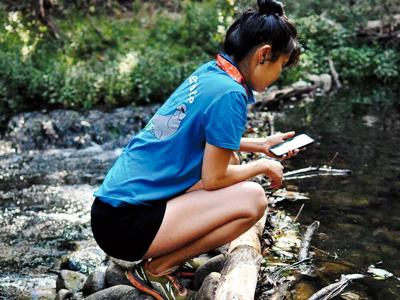
Whether you’re in your local park and the sight of some puffball fungi gives you pause, or hiking in Big Sur and the scent of the nearby bay laurel trees stops you in your tracks, nothing gives little breaks in nature more added meaning than learning about the flora and fauna in front of you. Next time you take a walk in your neighborhood, decide to romp through a river, go tidepooling or hike in the nearby forests, do some research beforehand about what native plants and animals live in that area and keep your eyes open for them. Or download an app like iNaturalist for ease of use and ID plants on the spot. If you have a strict no-technology policy, consider lugging around a birding book or a forager’s book. We’re not saying to eat what you find – a lot of that’s illegal – but it is a great guide to identifying certain species anyway. We suggest books like The Sea Forager’s Guide to the Northern California Coast or The Bay Area Forager. Just… don’t touch anything that looks poisonous, OK?


(0) comments
Welcome to the discussion.
Log In
Keep it Clean. Please avoid obscene, vulgar, lewd, racist or sexually-oriented language.
PLEASE TURN OFF YOUR CAPS LOCK.
Don't Threaten. Threats of harming another person will not be tolerated.
Be Truthful. Don't knowingly lie about anyone or anything.
Be Nice. No racism, sexism or any sort of -ism that is degrading to another person.
Be Proactive. Use the 'Report' link on each comment to let us know of abusive posts.
Share with Us. We'd love to hear eyewitness accounts, the history behind an article.