
In the 1990s, the ailing Carmel River, long tamed by two dams and overpumping, flashed its wild side: The Highway 1 bridge over the river was swept out to sea by floodwaters. A similar flooding event occurred in 1998 – minus the bridge failing – causing even costlier damage to homes in the lower valley.
It was the cumulation of those two floods that planted the seeds for the nonprofit Big Sur Land Trust’s Carmel River FREE project, a “green” infrastructure project on 128 acres that will restore part of the historic floodplain in the lower valley, creating a second point where water can flow under the highway as well as numerous side channels that will direct rising waters into a floodplain rather than a neighborhood.
It’s been a project that, from the outset, has received widespread community and governmental support – including a pending $27 million FEMA grant – but over the past decade has been delayed by one setback after another.
Now, the project is in its final stages: public comment closed May 30 on its federal environmental review. For the grant money to then be unlocked, there will be a “large project” notification to Congress. What happens then is somewhat of an unknown.
“There’s a lot going on,” notes Rachel Saunders, BSLT’s vice president of conservation. She adds that the $27 million is still there and allocated, and BSLT hasn’t heard otherwise.
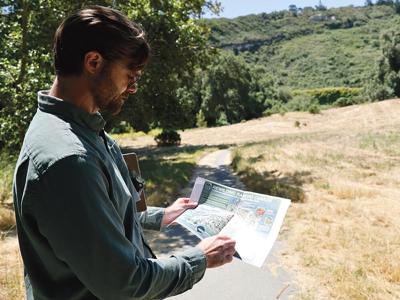
Meanwhile, just east and upriver, an entirely different floodplain restoration project is getting started on around 40 acres at Palo Corona Regional Park. The Rancho Cañada Floodplain Restoration Project will restore a mile-long section of the Carmel River by excavating and lowering the landscape around the river, letting water flow into its historic riparian footprint.
The project is fully funded with $35 million from state and federal sources, and unlike FREE, was able to take advantage of the state Department of Fish and Wildlife’s “Cutting Green Tape” program, which was launched in 2021 and removes red tape for habitat restoration projects.
Now begun, the project will take until roughly fall 2027 to complete. The first phase, this summer and into the fall, will be excavation and revegetation on the western portion of the riparian corridor, which will close off that section of the park.
The Rancho Cañada project will involve moving an extraordinary amount of dirt: Excavating along the one-mile section of riparian corridor, mostly on the south side of the river, will create 667,000 cubic yards of fill. That fill will then be moved to various places on the property to provide visual and sound barriers, including for a wildlife corridor that will be created where the existing cross country course is located.
Jake Smith, Monterey Peninsula Regional Park District’s planning and conservation program manager, says he’s always dreamed about doing a restoration project, and he’s thrilled to help return the land to its natural state and let the river take it from there.
“The river will do what it wants to do, eventually,” he says.


(1) comment
Both Carmel River restoration projects have admirable objectives – habitat restoration and flood damage reduction; however, failure to fully fund the Carmel River FREE project would be a dereliction of duty. The inadequacy of the Highway 1 bridge over the Carmel River became widely known with the April 2, 1958 flood that inundated the newly built Mission Ranch area. In 1978, Monterey County’s consultant for the (eventually adopted in 1983) FEMA flood study recommended building a causeway across the river to alleviate flood concerns. So, here we are, multiple floods and at least 67 years after it was clear that the CRFREE project was needed. And funding is in doubt for this project? Larry Hampson, retired District Engineer, Monterey Peninsula Water Management District
Welcome to the discussion.
Log In
Keep it Clean. Please avoid obscene, vulgar, lewd, racist or sexually-oriented language.
PLEASE TURN OFF YOUR CAPS LOCK.
Don't Threaten. Threats of harming another person will not be tolerated.
Be Truthful. Don't knowingly lie about anyone or anything.
Be Nice. No racism, sexism or any sort of -ism that is degrading to another person.
Be Proactive. Use the 'Report' link on each comment to let us know of abusive posts.
Share with Us. We'd love to hear eyewitness accounts, the history behind an article.