Celia Jiménez here, thinking about ethnic studies and Assembly Bill 1468, which seeks to develop standards, frameworks and materials for this subject, similar to what other topics such as math, chemistry and other social sciences already have.
“We want to understand, embrace, uplift, the diverse stories that shape California, and the bill is going to move us in the right direction to be able to do that in school districts across California,” says Assemblymember Dawn Addis, D-Morro Bay, who co-authored the bill that was recently introduced.
This bill would include other ethnicities and religions, going beyond the four core disciplines of ethnic studies: African American, Asian American and Pacific Islanders, Native American and Latino/Chicano studies.
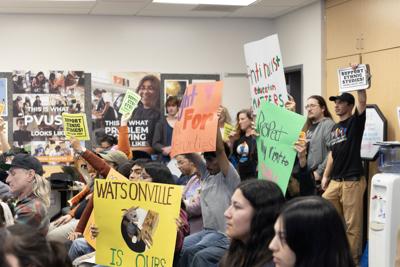
Over the past few years, the state has pushed to implement ethnic studies classes in high schools. Schools across the state have developed and implemented their own ethnic studies classes. These classes provide a base framework any school can use, plus additions from local history. An example of this could be talking about the farmworker labor movement in California; and then, diving in about the people from the Salinas and Pajaro valleys that were involved in the movement and pushed for change.
Since each school district has different demographics, ethnic studies curricula across the state don’t look the same; so some classes could have a stronger African American or AAPI focus based on the student population.
In 2021, the state passed Assembly Bill 101, which will make ethnic studies a high school graduation requirement starting with the 2029-2030 school year, and schools have to offer ethnic studies classes by the upcoming school year, 2025-2026.
The implementation of ethnic studies classes in high schools has been paved with controversy, lawsuits and allegations of bias and antisemitism. There are teachers and students who have felt targeted or discriminated against when the Israel-Gaza conflict was discussed in classes.
In other instances, teachers weren’t prepared to teach it and required additional training. In Pajaro Valley Unified School District, there was controversy around the program as some teachers had to get trained up on ethnic studies. “It was really just teaching ourselves ethnic studies,” Bobby Pelz, an English and ethnic studies teacher at Watsonville High, told me last year.
To close this gap, state representatives Addis, Rick Chavez Zbur and Josh Becker introduced AB1468, adding another layer—state oversight—before approving the curriculum. “It would build on [existing law] so it would add standards and framework that would go through a rigorous public engagement process, and ultimately provide teachers with guidance about what to teach and how to teach it in a way that welcomes and affirms all students within a classroom,” Addis says.
Addis was a teacher for more than 20 years. “I know how important it is for children to see themselves reflected in the curriculum and to learn accurate information about one another,” Addis says. “We want to make sure that every child, no matter where they are, is one, getting high-quality ethnic studies, and two, that the instruction and materials are happening in a way that children feel welcomed and affirmed in their classrooms and schools.”
Addis says having resources, guides and approved curricula would help smaller districts and teachers on what and how to teach their students.


(0) comments
Welcome to the discussion.
Log In
Keep it Clean. Please avoid obscene, vulgar, lewd, racist or sexually-oriented language.
PLEASE TURN OFF YOUR CAPS LOCK.
Don't Threaten. Threats of harming another person will not be tolerated.
Be Truthful. Don't knowingly lie about anyone or anything.
Be Nice. No racism, sexism or any sort of -ism that is degrading to another person.
Be Proactive. Use the 'Report' link on each comment to let us know of abusive posts.
Share with Us. We'd love to hear eyewitness accounts, the history behind an article.