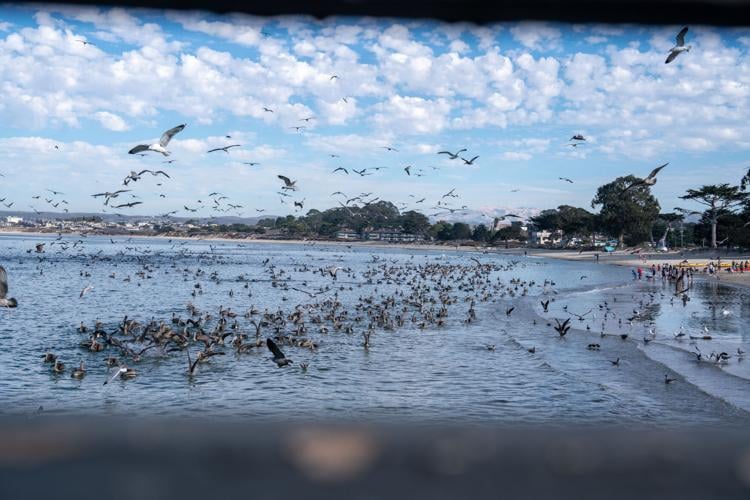
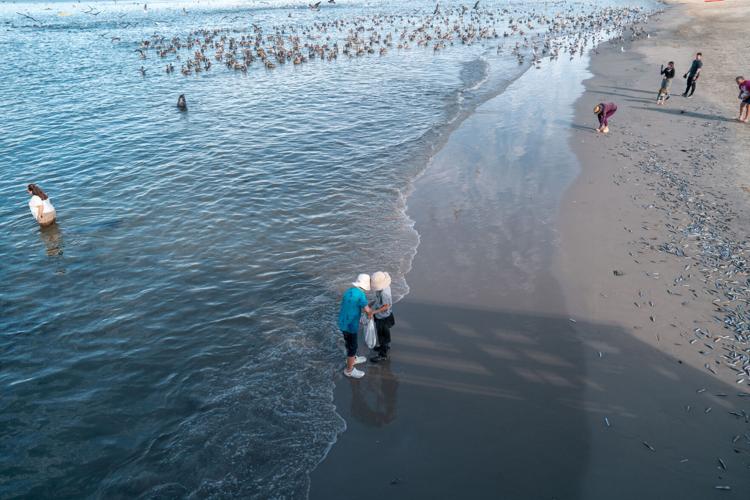
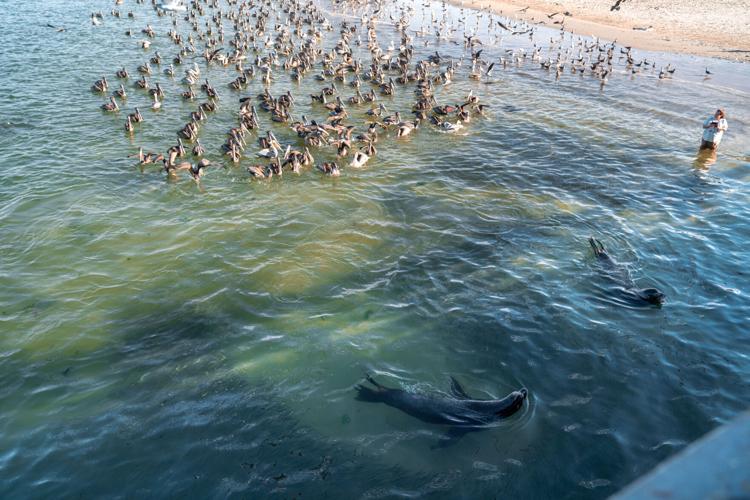
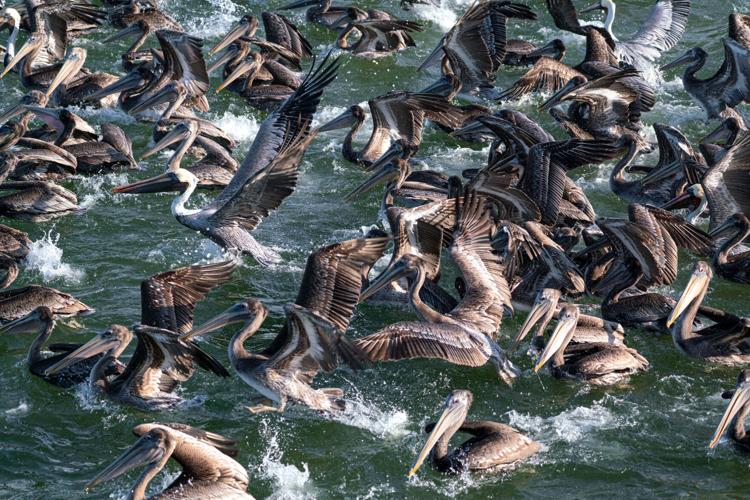
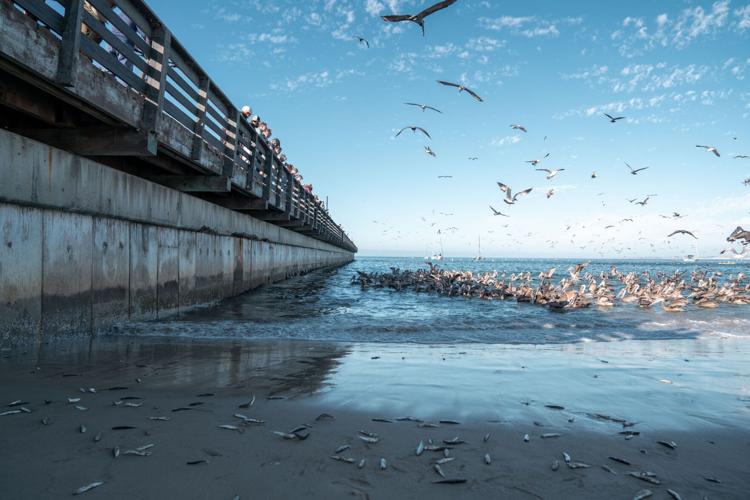
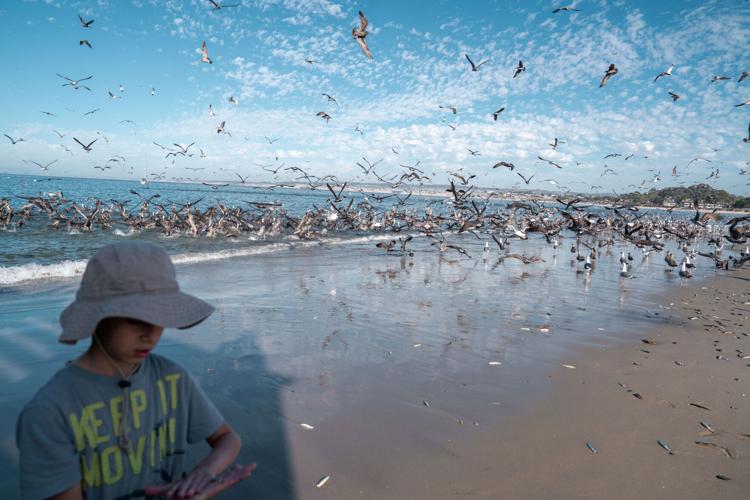
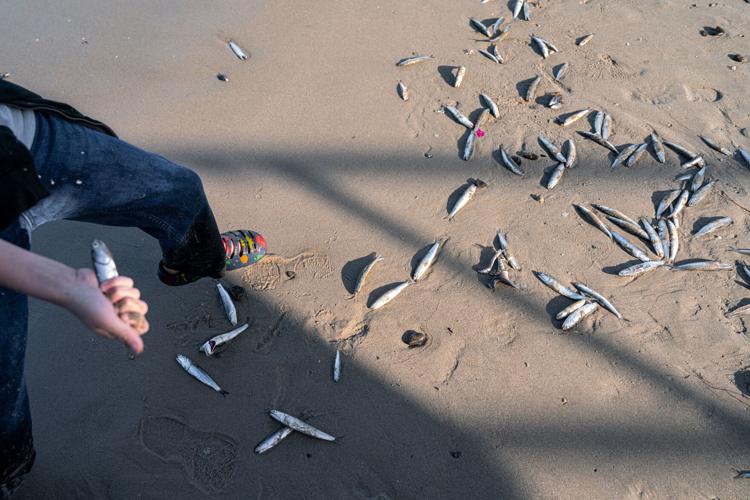
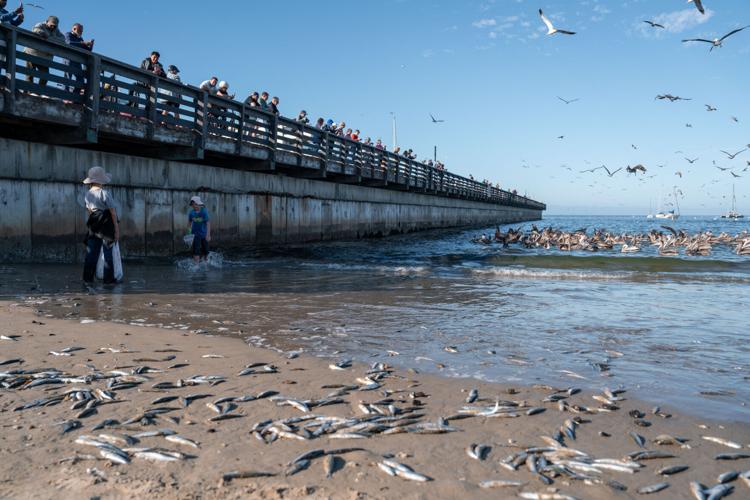
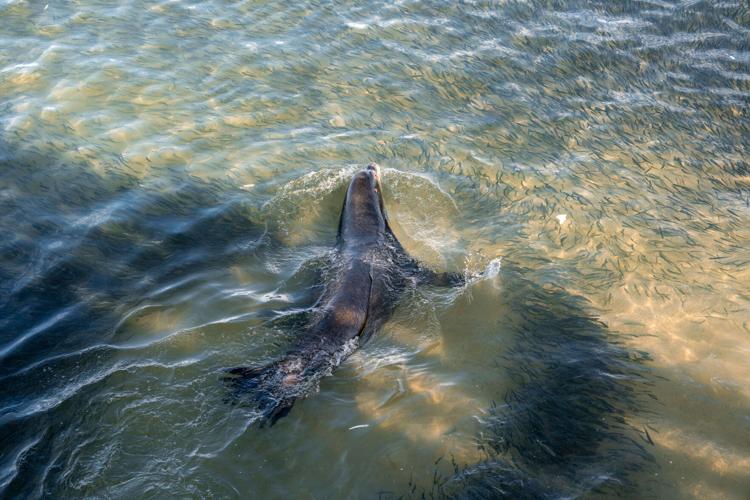
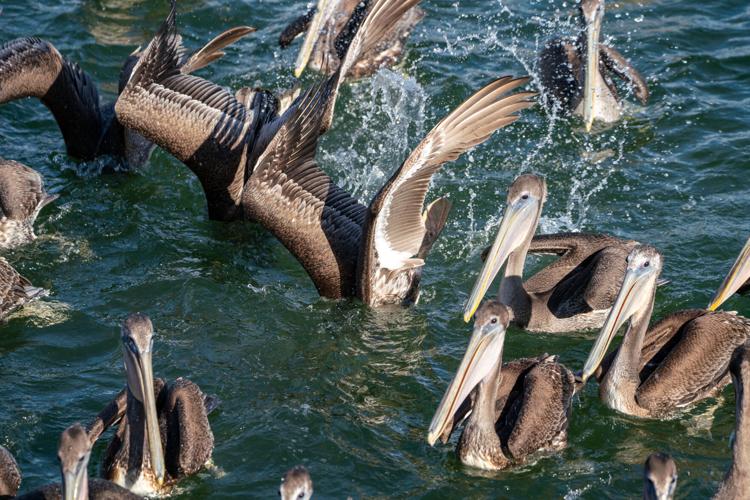
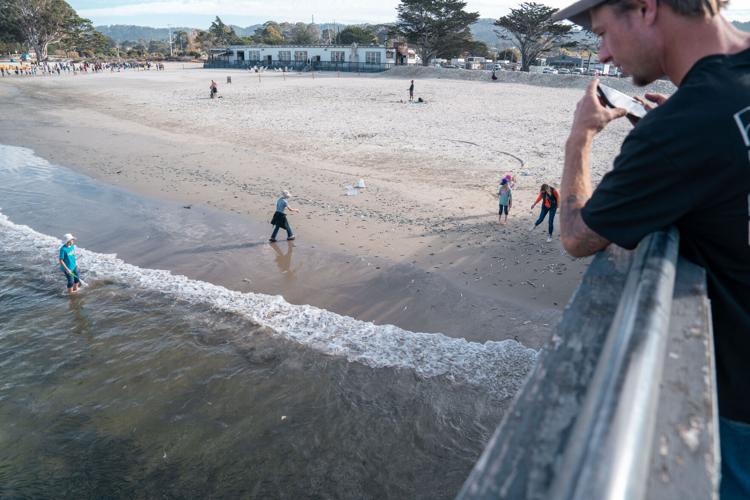
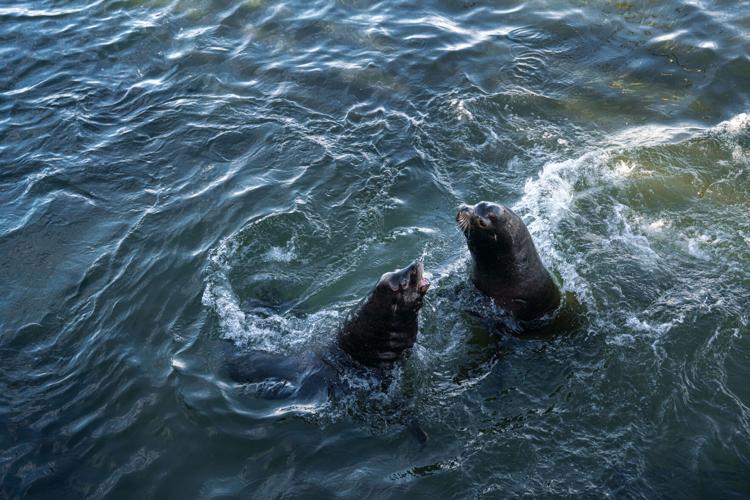
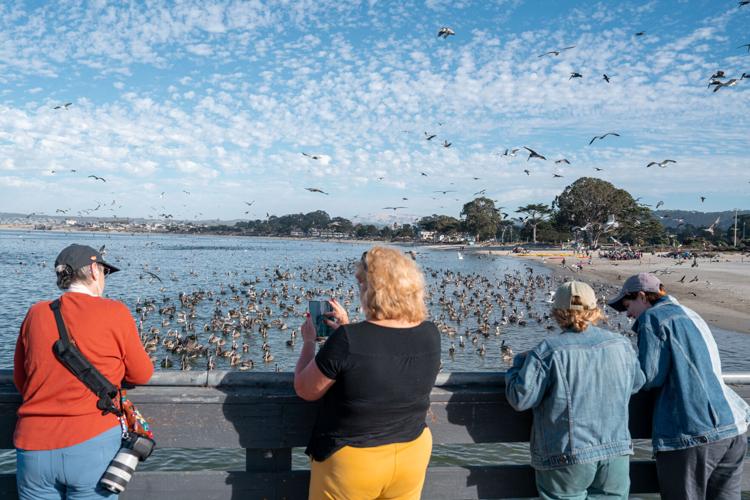

Over the last couple of weeks, anchovies have been showing up en masse, causing a local frenzy amongst the marine mammals, sea birds and beachgoers.
Francisco Chavez of the Monterey Bay Aquarium Research Institute (MBARI) has been tracking these fish for the last nine years since their arrival. He explains that it’s a well-known phenomenon that anchovy and sardine populations correlate with specific oceanic cycles, but that much of our understanding is still a mystery.
“We have no idea how all of this happens, but in California, Japan and Peru, the fluctuations in the anchovies and sardines are coincident,” Chavez says. “Recently, things have changed a little bit. Climate cycles have changed, and a new cycle has become more prevalent.”
In short, while anchovies appear to follow certain ocean cycles, the exact forces driving these population changes remain unclear. Questions still remain—such as whether their presence depends on food availability during specific life stages, or if there’s a more direct link to climate shifts.
Anchovies used to show up when it was cold, while sardines would show up when it was warm. But now, that link is less clear.
“We don't know if it’s the temperature. Temperature is a proxy,” Chavez says.
In 2014, the presence of such a large amount of anchovies in Monterey’s local waters drew the attention of marine biologists and people from across the country. At that time, local fishers were blown away by what felt like a sea change after the collapse of the sardine fishery.
Advances in ocean science have greatly enhanced our ability to study marine environments, including anchovy populations. Chavez and his team at MBARI use fleets of aquatic robots, drones and underwater forensic techniques like environmental DNA (eDNA) to monitor animal populations both above and below the water.
Chavez shares that anchovy populations travel up and down the coast, as well as up and down the water column, seeking refuge from whales and other predators in the depths and darkness of the Monterey Canyon. He explains that on trips where they sent their remotely operated vehicles (ROVs) into the submarine canyon, they captured large amounts of the bony fish on camera.
“Our ROV went down to the bottom [of the canyon] and when it got down there, it could not see, even with the lights on,” Chavez says. “It ended up being that there were so many anchovies—they were so thick that they couldn't see where they were going.”
The team at Monterey Bay Whale Watch, a whale watching tour company at the wharf staffed with marine biologists, believes that upwelling has driven anchovies up from the depths for food, and closer to shore to escape predation from whales.
Last Wednesday, Oct. 23, they noted 71 humpbacks on a morning trip, which is an extraordinary number of humpbacks for this time of year. Recently, they have also noted a high number of orcas hanging around the area for longer than usual.
“About two weeks ago, there was a week straight where we saw them every day,” says Levi Blair with Monterey Bay Whale Watch. "That's pretty much unheard of for orca sightings—being able to see them every day of the week for seven days straight.”


(1) comment
Thanks for your excellent report on the current invasion of the large schools of anchovies. As reported, this happens every so many years. It reminded me of Monterey sport fisherman, J. Parker Whitney, who wrote about his adventure fishing salmon on Monterey Bay in the late 19th century.
…coming in the summer and the early autumnal months into and adjoining Monterey for spawning are largely anchovies and sardines. These fishes are about the size of herrings, though there are two sizes of the sardines smaller than the regular full size. These come in countless numbers, as well as the anchovies, swimming near the surface, and often cover acres in extent; and, the squid, a miniature octopus in appearance, soft and boneless, which come in prodigious
quantities, and keeping at the surface more than the small fish, are more easily captured by the seabirds, although they seem like the favorite food not only of the birds, but of the salmon and a dozen
other kinds of fishes, as well as of seals and sea-lions, but the quantity is so immense that little impression is made upon them, or even upon the anchovies and sardines. These schools can be
observed a long distance off in a clear sea, though not immediately at the surface, by the reflection of their color.
In a later fishing trip to Carmel Bay, Mr. Whitney made this observation
… the great body of anchovies moved on toward the beach shore of the bay, driven on by their relentless pursuers (salmon), followed by the circling clouds of shags, Muir’s and gulls, and less rapidly by my boat impeded by the necessity of fighting hooked salmon. But we followed on, finally into the jaws of the ground swell, where for half a mile in length on the sandy beach the salmon held the anchovies for at least two hours. Back, probably, from the advancing school of pursuers, were other contingents of breakfasting salmon taking the places of those which had made their fill, and no cessation of quick striking occurred until the sun was an hour high. Many of the anchovies in their fright were driven up upon the sandy beach, where a long line was visible of flopping fish, of which, however, the most managed to regain their native element. At eleven o'clock, when I ceased fishing for the time -- as the salmon had retired to deeper water -- I had seventeen in my boat. In the afternoon I renewed my fishing, securing twelve more, making a total of twenty-nine
J. Parker Whitney Monterey Bay, 1895
Welcome to the discussion.
Log In
Keep it Clean. Please avoid obscene, vulgar, lewd, racist or sexually-oriented language.
PLEASE TURN OFF YOUR CAPS LOCK.
Don't Threaten. Threats of harming another person will not be tolerated.
Be Truthful. Don't knowingly lie about anyone or anything.
Be Nice. No racism, sexism or any sort of -ism that is degrading to another person.
Be Proactive. Use the 'Report' link on each comment to let us know of abusive posts.
Share with Us. We'd love to hear eyewitness accounts, the history behind an article.