It's hard to imagine holes in the sand being quite so controversial, but these aren't the kind of holes kids can dig with plastic beach shovels.
It took lengthy public testimony and an appeal by the Monterey Peninsula Regional Water Authority to get a 3-1 nod from Marina City Council for California American Water contractors to proceed with two 350-foot deep bore holes in North Marina, where the water purveyor is looking to drill a slant well to suck up brackish water for its proposed desal plant.
The question at hand: Is the water supply there attached mostly to the ocean—which would be good news for Cal Am—or the Salinas Valley groundwater basin, which would raise red flags over agricultural water rights and saltwater intrusion.
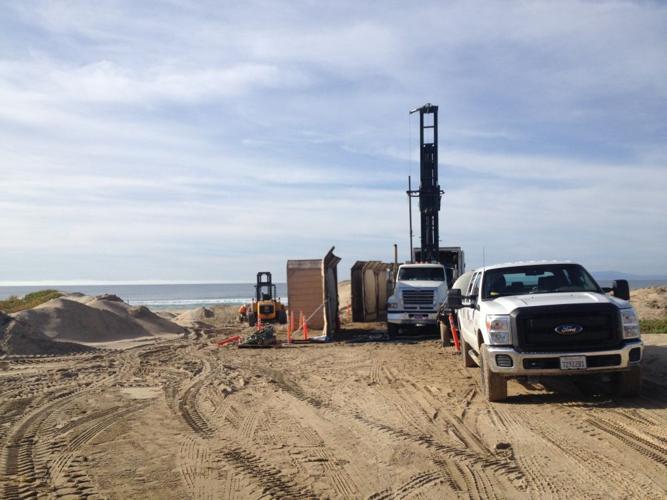
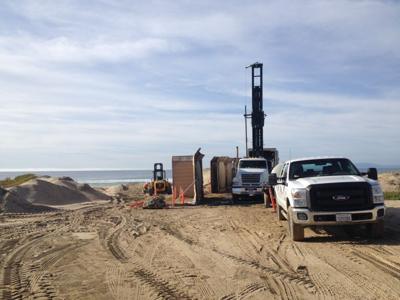
To get at those samples, a drilling crew spent almost two weeks drilling in about 20-foot increments. They finished hole number one on Thursday, and begin the second of two on Monday—when they'll be butting up against snowy plover nesting season.
The threatened birds could arrive to the dunes as soon as next weekend, which might limit project activity.
And this isn't fast work. It's slow and tedious—one might even say boring.

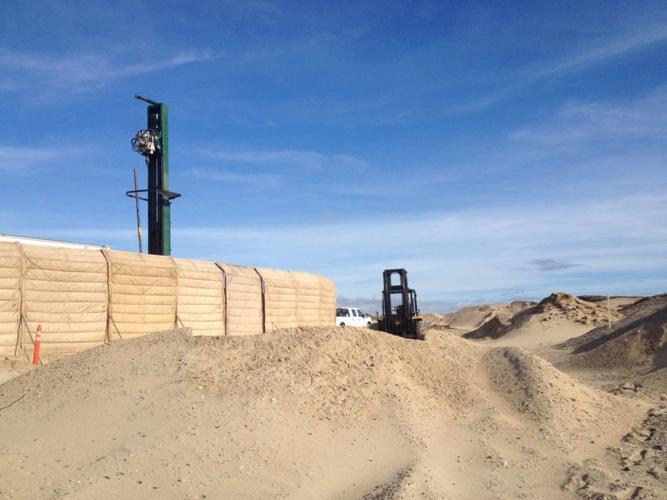
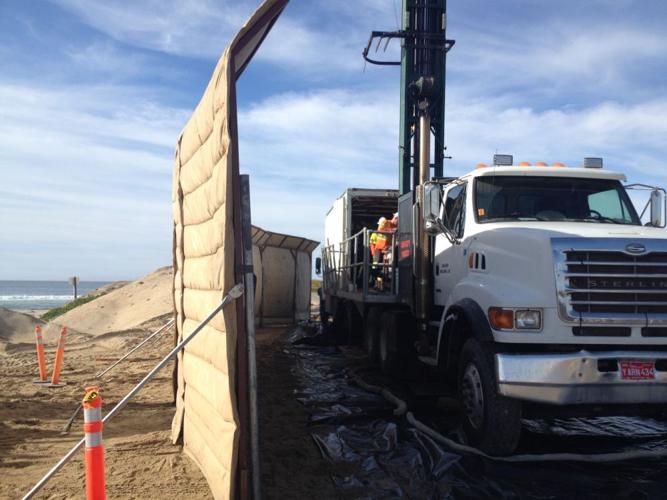
A sound wall is constructed next to the drill rig, to try and protect nesting birds and other wildlife.
A sound wall is constructed to help keep the hum of the drilling rig at bay, but based on a visit to the first day of the first bore hole, clanking machinery is loud even with a sound barrier. And the rusty parts are squeaky, even with grease applied to the threads of drill bits as they connect.

Everyone on site wears earplugs. Standing near the rig, you can feel a rumble and vibration in the ground as they work.
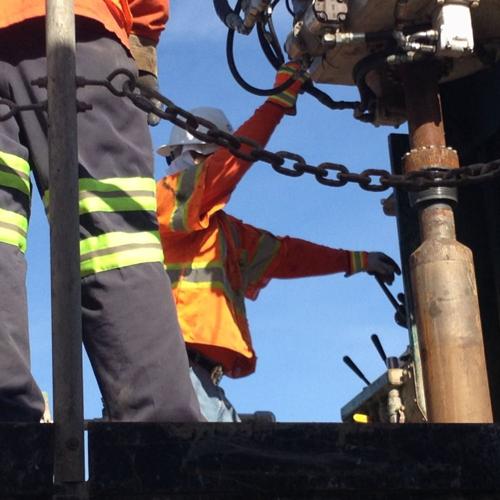
The team employs high-frequency sonic vibration to get into the ground, one length of about 20-foot-long drill bit at a time, then insert a hollow bit to keep the surrounding soil from caving in; that keeps getting pushed deeper and deeper down. The crew pulled up dark, wet heaps of slurry, and dump them into a bin, and later onto the surrounding dunes.

The actual water pumping takes place over a few hours, using small water pumps available at Ace Hardware that fit into the six-inch-diameter hole. It's the drilling to depth that's so tedious. "As they get deeper and deeper, it takes long and longer," says Cal Am's manager of engineering, Ian Crooks.

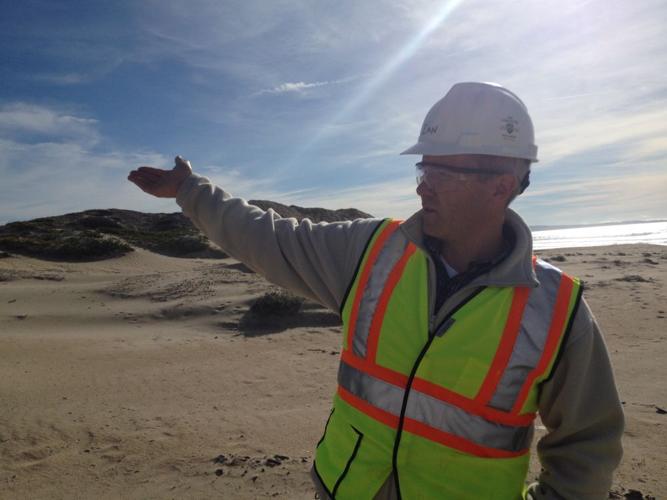
Cal Am's manager of engineering, Ian Crooks, on the project site where snowy plovers may begin nesting within about about a week.
At least the second hole is further inland, and Crooks got the sign-off last week from the Department of Fish and Wildlife to go ahead and drill there, even if birds get nesting before the crew is done.


(0) comments
Welcome to the discussion.
Log In
Keep it Clean. Please avoid obscene, vulgar, lewd, racist or sexually-oriented language.
PLEASE TURN OFF YOUR CAPS LOCK.
Don't Threaten. Threats of harming another person will not be tolerated.
Be Truthful. Don't knowingly lie about anyone or anything.
Be Nice. No racism, sexism or any sort of -ism that is degrading to another person.
Be Proactive. Use the 'Report' link on each comment to let us know of abusive posts.
Share with Us. We'd love to hear eyewitness accounts, the history behind an article.