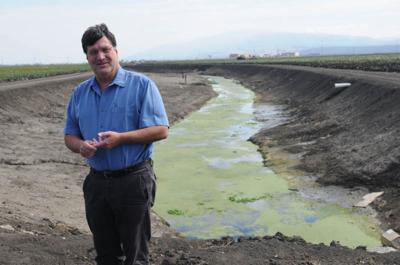
Regulators, environmental groups and growers have been hotly debating for years about the finer points of how to most effectively improve water quality and cut back on agricultural runoff.
They never agreed, and they still don't—but the State Water Quality Control Board finalized the rules, known as the "ag waiver," on Tuesday.
"In the end, what they came up with is balanced," says Ken Harris, executive director of the Central Coast Regional Water Quality Control Board.
Harris just took over the regional board a couple of months ago, after years of wrangling over the ag waiver. It's a five-year rule that first took effect in 2004, then expired while the regional board muddled through due to a lack of a quorum, awaiting appointments by the governor.
Finally, the regional board approved a new ag waiver—and environmental groups and ag interests promptly appealed, kicking it up from the regional board to the state board to reconcile the disagreement, with enviros arguing it wasn't tough enough, and ag arguing it was too tough.
"I think at the end of the day, everyone thought it was something we moved forward with, and everyone came away with what they were looking for," Harris says.
But Harris' sense of kumbaya doesn't jive with what environmental groups are saying. They are considering a possible lawsuit. "We’re not happy," Monterey Coastkeeper Steve Shimek says.
"[One section] eviscerates the ag order. Even if data shows that you are discharging, all you have to do is change your practices and you are in compliance."
Shimek's beef is with section 87.5, one small piece of the 73-page document. To comply with water quality rules, growers "must implement improved management practices."
The section effectively gives growers a chance to meet runoff compliance rules by trying for—but not necessarily achieving—water quality improvements.
The state board's decision does appear to lay to rest some questions about the big picture of whether ag has an impact on water quality at all. The Salinas Valley suffers from notoriously poor groundwater quality, but the causes have been disputed throughout the ag waiver deliberations. (Are nitrates left over from century-old dairies, as ag experts have said, or from contemporary farming practices?)
"The most serious water quality impacts are caused by fertilizer and pesticide use and runoff and percolation of such chemicals to surface
water and groundwater," according to an announcement by the state board.
The state board's modification's to the ag waiver include convening an expert panel to consider the effectiveness of certain farming practices in improving water quality.
The ag waiver approved this week expires in March 2017. Harris says the process of working on the next five-year waiver will begin in September 2014—hopefully enough time to beat that deadline.


(0) comments
Welcome to the discussion.
Log In
Keep it Clean. Please avoid obscene, vulgar, lewd, racist or sexually-oriented language.
PLEASE TURN OFF YOUR CAPS LOCK.
Don't Threaten. Threats of harming another person will not be tolerated.
Be Truthful. Don't knowingly lie about anyone or anything.
Be Nice. No racism, sexism or any sort of -ism that is degrading to another person.
Be Proactive. Use the 'Report' link on each comment to let us know of abusive posts.
Share with Us. We'd love to hear eyewitness accounts, the history behind an article.