

When a lithium-ion battery caught fire at PG&E's Moss Landing Elkhorn battery storage facility on Tuesday, Sept. 20, it was 1:30am. Few people were out and about, and there was little disruption beyond the footprint of the plant itself and the firefighters who responded to the scene.
A few hours later, Highway 1 was closed and rush hour traffic backed up for miles. Amid shifting wind and concerns about potential hazards from inhaling the combustion products of a battery fire, officials advised the public to shelter in place and close their windows.
It was a closure that lasted all day, with the road reopening and shelter-in-place advisory lifted by 6:50pm. That decision was based on air quality sampling data collected around the site. And on Sept. 30, a week-and-a-half after the fire, authorities have released their findings: There was not a hazard to human health.
The component of concern is hydrogen fluoride. "The analytical results indicate that particulate fluoride and hydrogen fluoride airborne concentrations around the perimeter of the site were below the detection limit for the method, and well below the applicable permissible exposure limit for both chemicals," according to the statement released by Monterey County.
County health officials coordinated air monitoring with the U.S. Environmental Protection Agency. The EPA and contractor NES Consulting conducted testing at locations around the battery fire, according to the county's Environmental Health Bureau.
(The incident command team decided it was safe to lift advisories at 6:50pm, but authorities indicate the air monitoring went on for longer; it was not immediately clear on Friday for how much longer.)

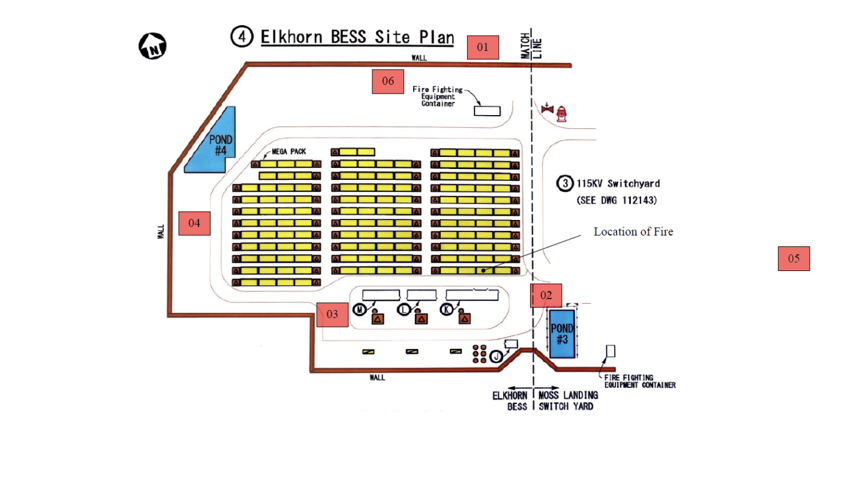
The red boxes show the locations of air monitors around the Elkhorn Battery plant in Moss Landing.
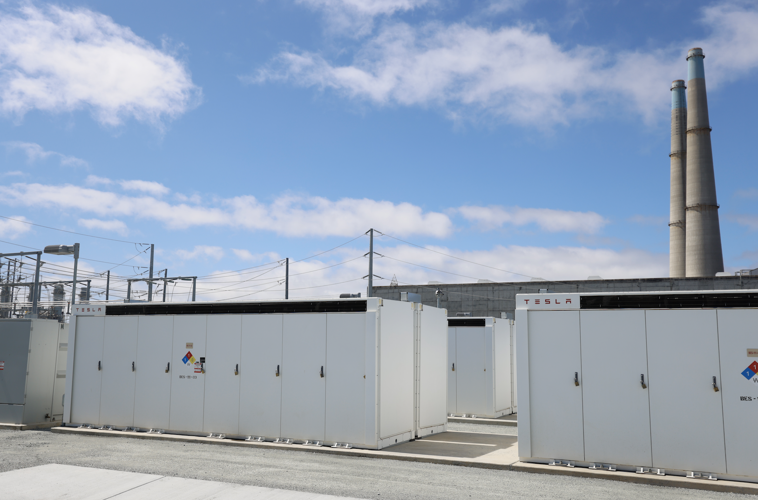
The Elkhorn battery plant was built by Tesla and PG&E, and features 256 Tesla battery units on 33 concrete slabs. It's one of the largest utility-owned, lithium-ion battery energy storage systems in the world and it first came online in April of this year.
The county Environmental Health Bureau will continue monitoring the site and plans to coordinate with PG&E and Tesla on mitigations to cleanup. Specifically, that means a water sampling plan in advance of disposal of discharge of fire water, and a soil sampling plan near the fire.


(1) comment
What were the actual toxin levels and what else was tested for since more than one toxin is generated from battery fires? How soon was the testing done after the fire?
Welcome to the discussion.
Log In
Keep it Clean. Please avoid obscene, vulgar, lewd, racist or sexually-oriented language.
PLEASE TURN OFF YOUR CAPS LOCK.
Don't Threaten. Threats of harming another person will not be tolerated.
Be Truthful. Don't knowingly lie about anyone or anything.
Be Nice. No racism, sexism or any sort of -ism that is degrading to another person.
Be Proactive. Use the 'Report' link on each comment to let us know of abusive posts.
Share with Us. We'd love to hear eyewitness accounts, the history behind an article.