The hammerhead worm
In his 35 years in the business, Richard Perry had never seen anything like it.
The pictures came to his personal cell phone, as they always do, about two weeks ago. The owner of Virginia Wildlife Management and Control's cell phone is the one the 24/7 venomous snake hotline reports come through. The pest control service based out of Powhatan gets messages constantly inquiring about whether the slithery serpents people stumble upon are dangerous or not.
And usually, they can provide an answer. But not this time.
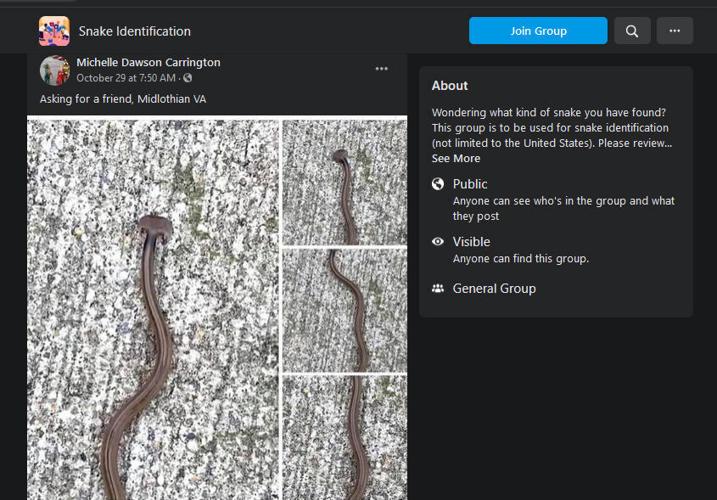
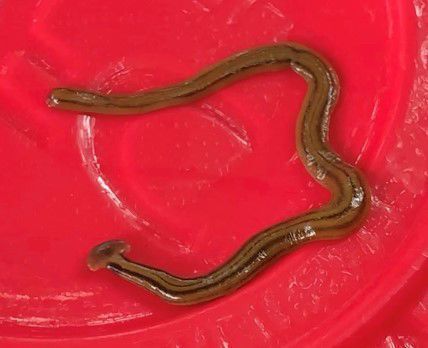
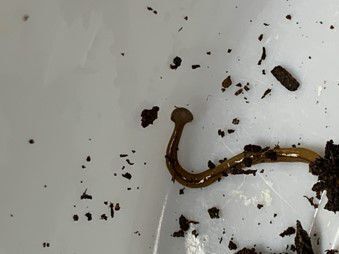
The creature Perry received a message about was 10-12 inches, the Chesterfield County resident submitting the report said. In pictures, the serpentine thing was long and brown with a head shaped like a sliced mushroom.
To the untrained eye, it looked like a snake and it appeared to slither like a snake. But Perry, who's also his company's creature identification expert, didn't know what it was. The man reporting sent a video. Perry still couldn't tell.
“I had no idea what to think of it,” Perry said. “I thought for sure that it had to be some kind of a, you know, freak of nature or something like that.”
Maybe it was a snake, Perry said. Maybe it was just deformed. The 35-year-old Powhatan company had experience with those before. In the past they'd gone viral for helping to identify a rare two-headed copperhead when one was spotted in Virginia.
But this time, Virginia Wildlife took to Facebook for help. In a since-deleted post, they outlined the story, the hotline, the hard-to-identify creature. They posted the pictures and the video.
And they got an answer -- thousands of them.
“[The post] went absolutely crazy,” Perry said. “And I mean, literally thousands and thousands of people all jumped on and got in a hype about it, and that's when we found out just how invasive and how bad this worm is.”
Turns out, what was originally thought to be a snake is actually a hammerhead worm.
It's originally from Southeast Asia, according to the Texas Invasive Species Institute, and came into the states with horticulture plants.
The "predatory land planarians" are carnivorous, hermaphroditic, invasive - and come with their own neurotoxin, according to LiveScience.com. They're also creepy, according to everyone.
Their diet consists of earth worms and they can be killed with either orange essence or salt. (Hopefully.)
Hammerhead worms like to spend their time in humid environments, the site says, and can be found under leaf litter or logs. They might venture to driveways or sidewalks if it rains.
Virginia isn't listed as a natural habitat, but the worm's been spotted in the 757, too. In 2013, a Virginia Beach woman found one on her patio.
Virginia Wildlife's Perry said he's still learning about the worm, but it's not as rare as they thought originally. And they're difficult to get rid of: if one is chopped in half, he said it'll turn into two.
That's right, double the fun.
And be warned, Richmonders, the Midlothian one is still out there slithering. And Virginia Wildlife has already gotten three or four more reports about the same creature since the initial message came in -- all in Richmond.



(0) comments
Welcome to the discussion.
Log In
Keep it Clean. Please avoid obscene, vulgar, lewd, racist or sexually-oriented language.
PLEASE TURN OFF YOUR CAPS LOCK.
Don't Threaten. Threats of harming another person will not be tolerated.
Be Truthful. Don't knowingly lie about anyone or anything.
Be Nice. No racism, sexism or any sort of -ism that is degrading to another person.
Be Proactive. Use the 'Report' link on each comment to let us know of abusive posts.
Share with Us. We'd love to hear eyewitness accounts, the history behind an article.