
In 2021, the Central Coast Regional Water Quality Control Board issued an order, after years of public hearings and review, calling for a limitation on runoff from agricultural fields.
It instantly became a matter of controversy. Agricultural groups filed a petition to the State Water Resources Control Board urging them to find the order too stringent. Environmental and public health groups also petitioned, arguing it was too weak.
Now, two years later, the State Water Board is scheduled to weigh in on Wednesday, Sept. 20, at a meeting in Sacramento. In a proposed order released on Sept. 8, staff are asking the board to amend the order, weakening in significant ways.
At the heart of the matter is regulating how much nitrogen growers can apply to fields, and that can run off into waterways. Excessive application of nitrogen – i.e. fertilizer that is not absorbed by crops – percolates in the soil and eventually reaches groundwater and is toxic to humans.
The original version of the Central Coast Water Board’s policy was first approved in 2004. Its fourth iteration was approved in 2021. Nearly the entire county relies on groundwater for its water supply – residents and growers alike – and that pollution can put lives at risk.
On the other side, however, are the agricultural interests. As the State Water Board’s report, which advises that the board weaken the Central Coast Water Board’s restrictions, states: “The issues are especially complicated because the same activities that are essential to producing a crucial, reliable food supply – e.g., pesticide use to control pests, nitrogen to fertilize crops, irrigation to water crops – also underlie many of the critical impacts.”
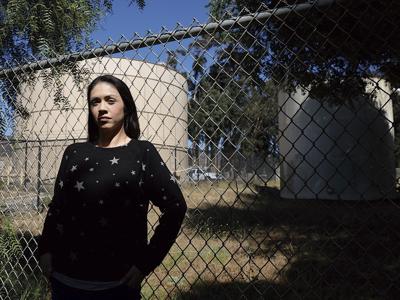
One of the places where those critical impacts have been felt is in the San Jerardo housing cooperative south of Salinas, which is surrounded by agricultural fields. Since 1990, the community has been drilling one well, and then another and another, and since 2010, has been living off water from a fourth well, two miles uphill from the community. The reason those wells continue to be drilled is because of nitrate contamination.
“It’s frustrating that the state, instead of trying to strengthen this order, it’s trying to weaken it,” says Ileana Miranda, general manager of the cooperative, where there are 64 homes. Even with the new well, she says, residents can develop rashes. “We just want people to be healthy.”
Miranda says about a dozen of the cooperative’s 250 or so residents will be heading to Sacramento for the hearing to advocate for their health. Also attending will be Chelsea Tu, executive director of Monterey Waterkeeper, a nonprofit devoted to ensuring communities have drinkable and fishable waters.
Tu is deeply concerned about the proposed changes. “It’s literally killing people. Without the enforceable limits, growers are not going to significantly change. The only way they’re going to change is if the State Water Board maintains these limits to protect our waters.”
If approved, the changes would essentially take the teeth of the Central Coast Water Board’s 2021 version, Tu says: “The limits are like speed limits on highways, and these limits have to be enforceable. You have to understand there are real consequences – it’s like having speed limits without the cops to make sure people are really slowing down.”



(2) comments
People should not be forced to drink water with pesticides/herbicides in it. Until the issue is resolved satisfactorily, those impacted should use bottled water for culinary. This is a minor inconvenience, but far better than adverse health consequences. It might even be covered under some health insurance policies.
That's good personal advice in the short term. But since we are going to go to all the expense of treating all our water to be consumed, we need to do what else it takes to protect that huge investment and ourselves. If we're not going to have drinkable water, then there should be a huge reduction in our water and sewer bills.
If we are, then we need to follow the health standards set by scientists. That we are not, shows, once again, that the Ag industry has way too much power over everyone else. It also shows we need to work harder to separate money from politics.
Welcome to the discussion.
Log In
Keep it Clean. Please avoid obscene, vulgar, lewd, racist or sexually-oriented language.
PLEASE TURN OFF YOUR CAPS LOCK.
Don't Threaten. Threats of harming another person will not be tolerated.
Be Truthful. Don't knowingly lie about anyone or anything.
Be Nice. No racism, sexism or any sort of -ism that is degrading to another person.
Be Proactive. Use the 'Report' link on each comment to let us know of abusive posts.
Share with Us. We'd love to hear eyewitness accounts, the history behind an article.