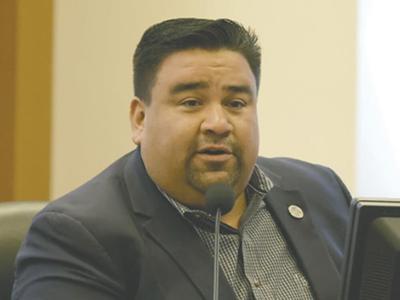

After weeks of hearings and deliberations, the Monterey County Board of Supervisors is set to meet on Thursday, June 22 to approve a $1.9 billion budget for the 2023-24 fiscal year beginning July 1.
But while this year’s county budget – largely considered “status quo” and relatively unchanged from last year’s – is all but done and dusted, the conversation is already shifting toward next year, when the county will have to grapple with the loss of American Rescue Plan Act (ARPA) funding from the federal pandemic stimulus bill.
The loss of one-time APRA funds is “one of the biggest challenges” facing the county government’s near-term fiscal outlook, County Administrative Officer Sonia De La Rosa says. Having been allocated $84.3 million in ARPA dollars since its 2020-21 budget, the county will go through the last of the federal money – $24.6 million – in the upcoming fiscal year.
“In years to come we’re not going to have those dollars, and are going to have to contract the number of services we can provide while also seeing increases in [county employee] salaries and benefits,” De La Rosa notes.
County Budget Director Ezequiel Vega adds that the absence of ARPA funds may require cutbacks to some government-funded positions in the 2024-25 fiscal year. “We’ll have to see what the priorities are, and then we will have to try to match those priorities with available funding,” Vega says.
Among the most significant changes in this year’s budget include a 30-percent reduction in funds – over $1.2 million – to administer the county’s cannabis program, meant to correspond with declining tax revenues from a struggling cannabis sector.
“The intent was to ensure we didn’t have to use general fund money to subsidize cannabis program operations,” Supervisor Wendy Root Askew says. She notes that declining cannabis revenues mean “there’s no longer cannabis money rolling into general fund expenditures [for other county programs].”
Among departments to see increased funding is the Sheriff’s Office, which is projected to receive around 19 percent of the roughly $848 million general fund (the second-most behind social services, which receives 33 percent). The Sheriff’s Office received an additional $1 million on top of its $157.7 million recommended budget to fund seven new positions, mostly tied to county jail operations.
With county coffers benefiting from higher transient occupancy tax (TOT) revenues thanks to a recovering tourism sector, there is momentum on the Board of Supervisors to use more TOT money on county roads. Supervisor Glenn Church has pitched diverting a higher percentage of TOT funds – a proposed 25 percent – toward the county’s road fund in next year’s outlay. (Road fund expenditures are projected at $76.2 million in 2023-24.)
County staff are set to examine Church’s proposal for potential inclusion in the 2024-25 budget. Supervisor Chris Lopez, whose South County district is heavily reliant on county infrastructure, agrees with the idea: “I’d like to see a percentage [of TOT revenue] added to bolster our roads,” he says.



(0) comments
Welcome to the discussion.
Log In
Keep it Clean. Please avoid obscene, vulgar, lewd, racist or sexually-oriented language.
PLEASE TURN OFF YOUR CAPS LOCK.
Don't Threaten. Threats of harming another person will not be tolerated.
Be Truthful. Don't knowingly lie about anyone or anything.
Be Nice. No racism, sexism or any sort of -ism that is degrading to another person.
Be Proactive. Use the 'Report' link on each comment to let us know of abusive posts.
Share with Us. We'd love to hear eyewitness accounts, the history behind an article.