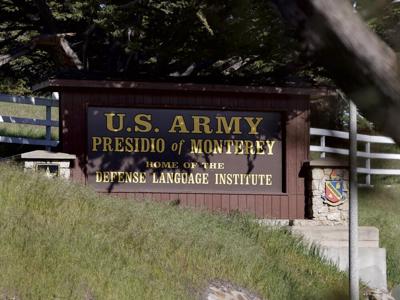

That there are military students at the Defense Language Institute at the Presidio of Monterey who think about or attempt suicide was publicly acknowledged by U.S. Army command staff in October 2020, after an increase in suicide-related incidents that first year of the pandemic. It turns out students are not the only ones at risk. Last year, DLI experienced three deaths by suicide among its nearly 1,600 instructors. There was also an attempted suicide by an assistant professor at a DLI satellite campus.
Death certificates signed by the Monterey County Coroner’s Office provide details on the three deaths, two in July less than two weeks apart and one in November. Two of the people were in their 50s and one was in their 30s. Two were military veterans. (The Weekly is not identifying them to protect family privacy.) Monterey County’s suicide rate from 2018-2020 was 9.6 deaths per 100,000 residents, according the California Department of Public Health; California’s rate was 10.5. Three in a community of DLI’s size is a rate of 187.5 per 100,000.
What led to the educators deciding to end their lives is not exactly known. And while DLI cannot be directly blamed, current and former DLI colleagues say they are not entirely surprised. They describe the school as a high-pressure and toxic work environment, where instructors – most are from other countries with few local job opportunities beyond DLI – live in fear they will lose their limited-term employment contracts based on negative evaluations or if they raise objections to employment issues. (Sources asked not to be identified for fear of retaliation.)
“There is a lot of stress among the workforce writ large across the U.S.,” says DLI Chief of Staff Steven Collins. While workplace issues could play a role in suicides in general, he says, there are “cascading” issues – including relationships, finances, physical health and mental health – that could also play a role.
Collins says the Department of Defense mandates annual training on suicide prevention and that DLI devotes the month of September to the issue with lectures and events. Collins also details a list of initiatives promoting physical and emotional wellness among civilian staff. “If you look at larger employers on the Peninsula, I don’t know of too many that are putting more of an effort into it than we are,” he says.
The assistant professor who survived his attempt at the satellite location in March 2022 put the blame for his mental state on a “toxic and hostile work environment” and says he was not offered help. He resigned from his position.
One source who knew one of the three who died says supervisors “aggressively suppressed” any reference to suicide. “It became a very touchy subject right away and there was a zero-tolerance policy of discussing the suicide,” they say. The result was a feeling that leadership didn’t care about the emotional health of employees: “We now understand pretty explicitly that they don’t care about our problems. They’re not going to address them.”
Collins calls the accusation “ridiculous,” and suggests that supervisors may have been telling people to not speculate on a cause of death before a death certificate was issued.
“We care deeply about each and every individual,” he says. “We don’t take these things lightly.”




(0) comments
Welcome to the discussion.
Log In
Keep it Clean. Please avoid obscene, vulgar, lewd, racist or sexually-oriented language.
PLEASE TURN OFF YOUR CAPS LOCK.
Don't Threaten. Threats of harming another person will not be tolerated.
Be Truthful. Don't knowingly lie about anyone or anything.
Be Nice. No racism, sexism or any sort of -ism that is degrading to another person.
Be Proactive. Use the 'Report' link on each comment to let us know of abusive posts.
Share with Us. We'd love to hear eyewitness accounts, the history behind an article.