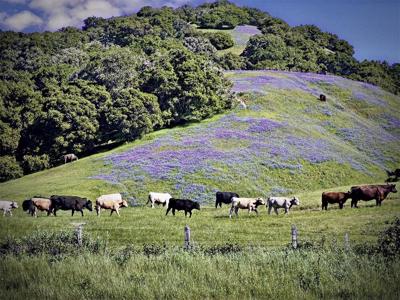

The 2020 River Fire, which was sparked by a dry lightning storm near Mt. Toro, burned over 40,000 acres and destroyed 30 structures, including 13 homes. But it also burned a lot of infrastructure that doesn’t show up on a Cal Fire report: cattle fences.
Many of those damaged fences are – or were – in the large swath of Toro Park that burned in the fire, and given the cost to replace that fencing, the county is considering discontinuing its grazing lease for 1,500 acres in the western portion of the 4,756-acre park.
The conundrum was outlined in an October report to the county Parks Commission. (The presentation was continued to the next meeting date, Nov. 3, due to a lack of quorum.)
The cost to replace the damaged fencing, the county estimates, is $900,000. Meanwhile, the annual revenue from the grazing lease is only $11,280. And while up to 75 percent of the replacement cost could be reimbursed by FEMA, the county would still have to pay the entire sum up front.
And in the absence of the fencing, real harm is being done: Per the county’s report, the cattle are damaging picnic areas, feeding on the green grass, and in other parts of the park, are treading on environmentally sensitive habitat damaged by the fire in search of feed. The instability of the burnt soil is another concern, as the cattle could create or exacerbate erosion issues.
“If cattle aren’t managed effectively, they can be harmful for the environment,” says Bryan Flores, the county’s interim chief of parks. “The only reason to do it is for fuel reduction, and if the cattle and the rancher are not achieving these goals, there’s no reason to do it.”
Flores adds that it’s not only fencing that burned – so did a lot of shrubs that acted as their own kind of fence to protect sensitive areas. “Where there wasn’t fencing, there were shrubs – chaparral. Now they’re all gone, and [the cattle] are going wherever they want,” he says. “We’re stewards of the lands, and we’re not just going to let cattle graze because it’s a nice thing to do for the ranchers.”
The county’s lease to graze the 1,500 acres was entered into in 2006 with Roth Cattle, and has since expired and is operating on a month-to-month basis. Ed Roth, who manages the operation, did not respond to a request for comment.
Grazing might still continue in the future on the park’s eastern border in Marks Ranch, where the operation is managed by nonprofit Big Sur Land Trust, which Flores says goes “about range management much more effectively, and you could say scientifically.”
But a lot of cattle fencing burned in that area too, says Patrick Riparetti, BSLT’s director of stewardship, who adds that they’ve stopped grazing in the areas impacted by the fire. Riparetti is hopeful funding can be found to replace the grazing infrastructure at Marks Ranch – where the nonprofit is also currently working on a carbon sequestration project – because “if done well, it can do amazing things.”


(0) comments
Welcome to the discussion.
Log In
Keep it Clean. Please avoid obscene, vulgar, lewd, racist or sexually-oriented language.
PLEASE TURN OFF YOUR CAPS LOCK.
Don't Threaten. Threats of harming another person will not be tolerated.
Be Truthful. Don't knowingly lie about anyone or anything.
Be Nice. No racism, sexism or any sort of -ism that is degrading to another person.
Be Proactive. Use the 'Report' link on each comment to let us know of abusive posts.
Share with Us. We'd love to hear eyewitness accounts, the history behind an article.