
President Barack Obama issued an executive order in November 2014 to give undocumented parents of U.S. citizens a way to come out of the shadows and obtain a legal, renewable work permit. Millions who have lived under the threat of deportation were given a newfound hope that their immigration status would be normalized.
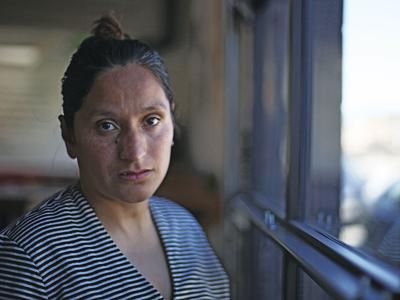
Those include Seaside resident Estela, who asked that the Weekly not publish her last name due to her immigration status.
“It was great news,” Estela says. “I thought it would help give a better future for me and my daughters. A lot of people had that sense.”
But a deadlocked U.S. Supreme Court – currently one justice short – ruled 4-4 on June 23 against Obama’s Deferred Action for Parents of Americans (DAPA) and the expansion of the 2012 executive action Deferred Action for Childhood Arrivals (DACA).
DAPA applies to parents whose children were born in the U.S., and would allow them to apply for a three-year renewable work permit and would exempt them from deportation. DACA allows undocumented immigrants who were brought to the country as children to apply for a renewable two-year work permit.
“There is a big population in Monterey County who would have benefited from a positive ruling,” says Juan Gomez, site supervisor at the UFW Foundation in Salinas. The foundation, the nonprofit wing of the United Farm Workers, helps undocumented residents navigate the immigration process.
“People now have to continue to live in the shadows, not feeling super-confident about the situation they’re in,” Gomez says. The number of people in Monterey County affected by the ruling is well into the thousands, he says.
The Supreme Court ruling stems from United States v. Texas, a 2014 federal lawsuit by Texas and 25 other states with Republican governors against the Obama Administration. They sued over the delayed deportation of 3.6 million people in the U.S.
In February 2015, the U.S. District Court in Texas ruled in favor of the states and issued a temporary injunction blocking the president’s policy. Nine months later, the Fifth Circuit Court of Appeals in New Orleans upheld the decision, and the Department of Justice then appealed to the Supreme Court.
Estela, 36, has worked as a teacher’s aide at a public elementary school for seven years. She says she’s surprised and disappointed by the ruling – which would have enabled her to do her job legally. The Supreme Court ruling means she will continue to work with the lingering fear of deportation.
Many kids she works with have parents in a similar immigration situation, she says. With her daughters, one 12 and the other just 3 months old, by her side, Estela says that she is lucky to be where she is with a rewarding family, job and home. But she still feels a lack of security working without papers.
After her parents died and her brothers moved to the U.S., Estela left her home in Jalisco, Mexico when she was 17 to join them. Now, having lived more than half her life in the U.S., she is looking for ways to get a visa or green card.
“What I really want,” she says, “is a pathway to citizenship.”



(1) comment
This is such a complex issue. Any person who is living in the USA and working productively ought to have opportunity. This does not mean, however, they ought to have citizenship because they want it. Salinas, CA is a sea of gang violence, homicides, low education, and predominantly Mexican. Seaside used to be African American, until Fort Ord closed. It's hard to believe that paving a path of citizenship for individuals in communities already rife with everything wrong in a culture will thrive if those cultural norms from a country are brought to America as an immigration plan to help improve lives. Whose lives?
Welcome to the discussion.
Log In
Keep it Clean. Please avoid obscene, vulgar, lewd, racist or sexually-oriented language.
PLEASE TURN OFF YOUR CAPS LOCK.
Don't Threaten. Threats of harming another person will not be tolerated.
Be Truthful. Don't knowingly lie about anyone or anything.
Be Nice. No racism, sexism or any sort of -ism that is degrading to another person.
Be Proactive. Use the 'Report' link on each comment to let us know of abusive posts.
Share with Us. We'd love to hear eyewitness accounts, the history behind an article.