With one decision on a recent afternoon, Gov. Gavin Newsom terminated a thousand local battles over education – and launched a thousand more.
Newsom’s announcement on July 17 laid out the rules for which schools would be allowed to open for in-person classes in the coming school year, and which would be relegated to “distance learning.”
“Learning is non-negotiable,” Newsom said. “The virus will be with us for a year or more, and school districts must provide meaningful instruction in the midst of this pandemic. In California, health data will determine when a school can be physically open – and when it must close – but learning should never stop.”
Based on the rate of infection in Monterey County, local schools – public and private – will not open their doors to students when summer break ends. Only counties that stay off the state’s Covid-19 Monitoring List for 14 consecutive days will be allowed to resume classroom instruction. Monterey County was added to the list on July 2. The county public health officer, Edward Moreno, said the infection rate is not improving as of July 20.
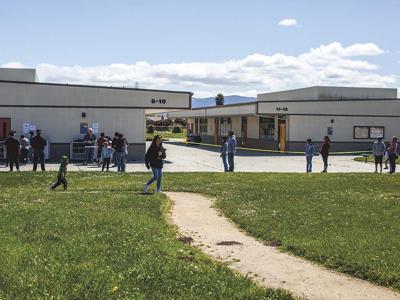
The state decision came as Monterey County’s 24 school districts, eight charter schools and 22 private schools were deciding how to start the school year. Several private schools had already decided to bring students onto campus. Carmel Unified School District was set to vote on the question after holding a town hall meeting to gather community input. Alisal Union School District in Salinas preempted the governor, deciding to open with remote instruction.
More than the rules on whether to open, educators welcomed the state’s guidelines on operating school campuses safely, for when they do reopen.
“The governor’s directions gave us the clarity we have been waiting for for months,” says Karina Barger, the head of school at Bay View Academy in Monterey. “It would have been nice to receive it earlier.”
The guidelines include masks for all staff and students in third grade and above; six-foot physical distancing; health screening upon arrival; and contact tracing. The guidelines say all school staff should be tested every two months.
“That much testing is a huge ask but I think it’s spot on,” Barger says. “It’s the correct path forward to keep our students and teachers safe – how is the state going to make that happen?”
Jill Lewis, a parent in Carmel, organized a petition with nearly 1,300 signatures calling on CUSD to resume in-person instruction in the fall. With that option gone, she is focusing her energy on demanding the ramp-up of testing.
“If we all want to go back to school or work, we can all come together to demand more testing,” Lewis says. “I am not saying go back to school willy nilly. I am saying, ask our government to do more.”
Other pressures are mounting at the same time. To justify funding, the state wants each district to draft a Local Control and Accountability Plan, a public process that will take place in August and September. Teachers unions, meanwhile, are in negotiations with administrators. One flashpoint is whether teachers can work from home or if they’ll have to teach remotely but be present on campus.




(0) comments
Welcome to the discussion.
Log In
Keep it Clean. Please avoid obscene, vulgar, lewd, racist or sexually-oriented language.
PLEASE TURN OFF YOUR CAPS LOCK.
Don't Threaten. Threats of harming another person will not be tolerated.
Be Truthful. Don't knowingly lie about anyone or anything.
Be Nice. No racism, sexism or any sort of -ism that is degrading to another person.
Be Proactive. Use the 'Report' link on each comment to let us know of abusive posts.
Share with Us. We'd love to hear eyewitness accounts, the history behind an article.