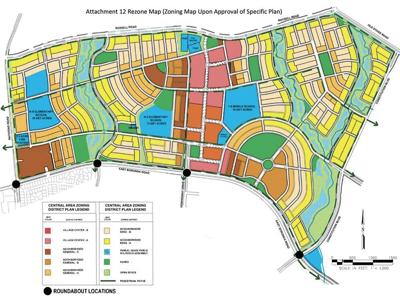

In less than five years, Salinas residents will have access to more affordable homes, after the City Council on Dec. 1 unanimously approved the Central Area Specific Plan (CASP), a 760-acre development project that includes a large affordable component.
The Salinas Affordable Housing Coalition, a group of residents and organizations working to get more affordable housing in the city, and Stone Bridge, a Salinas-based developer, agreed to build affordable housing instead of paying fees that would allow them to avoid building.
“Housing affordability does not happen on its own; it takes thoughtful, careful consideration and investment,” Matt Huerta, an affordable housing consultant, said before CASP was approved. The CASP development project is part of the city’s future growth area in North Salinas and has been in the works for over a decade.
According to Census data from 2014 to 2018, nearly 45 percent of the homes in Salinas are owner-occupied. The Monterey Covid-19 Pandemic Disparate Impact report says that at least 56 percent of renters use 30 percent of their income or more to pay for rent and utilities.
The Covid-19 pandemic has also highlighted how overcrowded conditions have a direct impact for local residents. Of the 16,602 Covid cases in Monterey County as of Dec. 7, 43 percent are in the two most populated areas in Salinas: zip codes 90905 and 90906.
Alfred Diaz-Infante, president and CEO of affordable housing developer CHISPA, says the last time Salinas had adequate housing supply was 20 years ago. “When you restrict the supply, you end up with extremely high prices that we have now,” he adds. According to the real estate site Redfin, the median price in Salinas in 2020 is $630,000.
Salinas’ inclusionary housing ordinance has two options for developers: Once 70 percent of market-rate houses are built they either pay fees, or build affordable housing. After negotiations with pro-housing organizations, including LandWatch Monterey County and Monterey Bay Economic Partnership, Stone Bridge resolved to do the latter.
Huerta says the agreement went a step further to ensure locals will have access to those homes, “because we know we are competing against Bay Area renters and homeowners.” The developer will notify local groups when houses will be on the market. Normally, market-rate houses are built first, but as part of CASP, one of every six built homes will be affordable housing.


(0) comments
Welcome to the discussion.
Log In
Keep it Clean. Please avoid obscene, vulgar, lewd, racist or sexually-oriented language.
PLEASE TURN OFF YOUR CAPS LOCK.
Don't Threaten. Threats of harming another person will not be tolerated.
Be Truthful. Don't knowingly lie about anyone or anything.
Be Nice. No racism, sexism or any sort of -ism that is degrading to another person.
Be Proactive. Use the 'Report' link on each comment to let us know of abusive posts.
Share with Us. We'd love to hear eyewitness accounts, the history behind an article.