Salinas’ Chinatown, unlike its counterparts in San Francisco and New York, doesn’t give off a particularly touristy vibe. It’s a destination for the city’s homeless, and often a destination for drug dealers. But a destination in itself? Given the neighborhood’s unsightly buildings and seedy reputation, the prospect seems dubious.
A group of Chinatown preservationists say it can be, with a little cash and a lot of hard work.
Over the summer, Salinas nonprofit Asian Cultural Experience (ACE), in collaboration with CSU Monterey Bay, received three grants totaling more than $50,000 to help preserve Chinatown history.
The largest grant will contribute to designing a Chinatown museum, which will share the stories of the Chinese, Japanese, Filipino and Mexican immigrants who came in waves from the mid-1800s to the 1950s. With $40,000, preservationists including professors from CSUMB’s humanities and service-learning departments will work with New York-based design firm Batwin and Robin to conceptualize a long-planned museum at the Republic Cafe, a nearly renovated former Chinese restaurant.
The history of Chinatown won’t be relegated to museum displays, though. It lives in the very streets themselves, says Wellington Lee, an ACE co-chair who spent his childhood in the area.
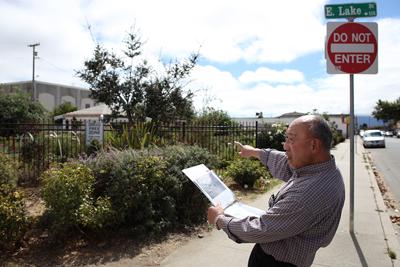
He barely contains his enthusiasm as he strolls across the dilapidated streets, pointing out relics of the neighborhood’s storied past. The Copacavana, he says, gesturing to a building, was once a thrilling night club. He waves toward another spot by a community garden, which he says is the former site of an opium den.
Listening to Lee almost brings the neighborhood back to life. “This was a place for all these hundreds of hardworking farm workers that were barely making ends meet,” he says. “This was the place for them to come find their herbs, find their food, find companionship, find music.”
Since returning to Salinas in 2008, Lee says, he’s given dozens of walking tours to curious visitors. That curiosity may be harnessed by another one of the grants: $10,000 to help set up walking tours, along with a website and mobile app about the neighborhood. ACE envisions an online tour to showcase buildings and guided audio tours that incorporate oral histories collected by CSUMB students.
The third grant, for $3,500, is to collect and scan historic photos of the area. ACE, with the assistance of student volunteers, will reach out to at least 25 former residents for photos and interviews.
The projects are tied, in part, to the city’s efforts to revitalize the neighborhood. ACE started as part of the Downtown Community Board, a mix of government agencies, businesses and nonprofits committed to improving Chinatown. Salinas has been in talks with an affordable housing developer to build apartments and retail in the area.
ACE organizers hope the homeless situation will not dissuade visitors. Co-chair Cathy Chavez-Miller says the homeless are a continuation of the story, another group marginalized by society. “During the day there is a high level of safety,” she adds. “Big cities all have this challenge, and they still have museums, commerce and parks.”

(0) comments
Welcome to the discussion.
Log In
Keep it Clean. Please avoid obscene, vulgar, lewd, racist or sexually-oriented language.
PLEASE TURN OFF YOUR CAPS LOCK.
Don't Threaten. Threats of harming another person will not be tolerated.
Be Truthful. Don't knowingly lie about anyone or anything.
Be Nice. No racism, sexism or any sort of -ism that is degrading to another person.
Be Proactive. Use the 'Report' link on each comment to let us know of abusive posts.
Share with Us. We'd love to hear eyewitness accounts, the history behind an article.