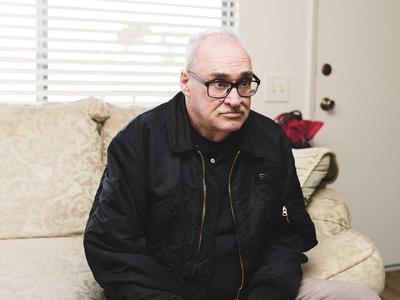

In 2017, Robert Morris, a 61-year-old veteran, was given an ultimatum by his landlord: Pay the new rent, or leave. The new price for his apartment on Palm Avenue in Marina was $1,475/month. Previously, he and his neighbors had been paying about $900, depending on the unit. Although the apartment complex wasn’t designated as affordable housing, some tenants, including Morris, used some sort of housing assistance to make rent.
His voucher, through HUD and the VA, only covered rentals that cost $1,200/month or less. So he moved out, and found a place in Monterey.
Three years later, he’s back in Marina in a different apartment complex on Carmel Avenue that costs $1,475/month. (His voucher allowance has been adjusted.) “It’s becoming unreasonably priced everywhere,” Morris says. “As a matter of fact, I had to barter the deposit to get this place, but I’m still subject to the whims of the ownership.”
Morris’ story is not uncommon. A renter finds a below-market-rate apartment and lives there for years. Then the place sells. The new owner wants to improve the place and shifts the financial burden of improvements on the tenants, raising the rent. In Morris’s case, that was a 64-percent increase.
It’s bittersweet that AB 1482, the California Tenant Protection Act, which took effect on Jan. 1, caps rent increases in apartments at 5 percent – two years too late for Morris. “This is exactly the kind of law that would’ve helped [Morris and his neighbors] out,” says Seaside City Councilmember Jon Wizard, an affordable housing advocate and founding member of the Monterey Peninsula Housing Coalition.
The city of Marina owns the residential communities Preston Park and Abrams Park, which both include affordable units. The city caps rent increases at 3 percent – stricter than AB 1482. Even so, City Councilmember Gail Morton says many units are still unaffordable: “Many of our residents are working jobs that are $15-an-hour jobs, so unfortunately, fair market rate isn’t affordable.”
In another statewide housing effort, SB 50, the California Legislature was positioned to advance a sweeping change that would encourage greater density and more units near transit centers. But it died on the floor of the State Senate on Jan. 30 after Southern California senators rallied in opposition. (State senators Anna Caballero, D-Salinas, and Bill Monning, D-Carmel, both voted in favor; Caballero, along with Assemblymember Robert Rivas, D-Hollister, are co-authors.)
“The overarching goal was to expand housing stock to deal with our housing crisis,” Monning says. “California has a housing crisis, nobody disputes that. In my district, we have a housing crisis and it’s amplified by the diversity between the low-income workforce and, at the other end of the spectrum, absentee property owners of the wealthiest property owners in the world.”
Supporters of the bill included Wizard and local groups Monterey Peninsula YIMBY and LandWatch, but the opponents included dozens of cities, Salinas and Monterey among them.
“You can build higher, reduce parking so people take public transit and build more intensely on a property [to comply with SB 50],” Caballero says. “That scenario happens for counties with over 600,000 residents, so Monterey County wouldn’t be affected.”


(0) comments
Welcome to the discussion.
Log In
Keep it Clean. Please avoid obscene, vulgar, lewd, racist or sexually-oriented language.
PLEASE TURN OFF YOUR CAPS LOCK.
Don't Threaten. Threats of harming another person will not be tolerated.
Be Truthful. Don't knowingly lie about anyone or anything.
Be Nice. No racism, sexism or any sort of -ism that is degrading to another person.
Be Proactive. Use the 'Report' link on each comment to let us know of abusive posts.
Share with Us. We'd love to hear eyewitness accounts, the history behind an article.