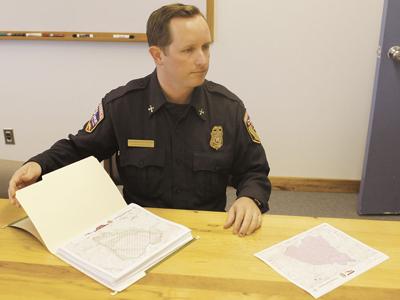

When Rat Camp Ranch first started burning around 1pm on March 19, 2014, it was no surprise. It was a prescribed burn, and the California Department of Forestry and Fire Protection had granted a burn permit to Bill Massa for his ranch near Chualar.
By late afternoon, things had changed dramatically. Shortley after 6pm, Massa’s son called 911 to report a gust of wind came up and the fire got out of control. It quickly ran up a slope after dark, posing an intense and challenging firefight at first. The Encinal Fire burned a total of 400 acres over two days.
Fast-forward to Sept. 21, 2015, when Brian Tominaga, a Cal Fire case manager, sent Massa a certified letter, obtained by the Weekly via a Public Records Act request. “Please consider this a letter of demand for Cal Fire’s cost of suppressing and investigating the Encinal Fire,” Tominaga wrote. Those costs: $527,000.
Massa, a well known figure in the produce shipping industry, declined repeated interview requests for this story, but a coalition of fire experts are using his invoice as a test case, and taking their complaints to Sacramento.
“It’s the first time [Cal Fire] has been sent a bill for an act of god,” says Joe Rawitzer, a retired fire captain and project coordinator for Central Coast Prescribed Fire Council. He’s also president of the Monterey County/San Benito County Range Improvement Association, which meets annually at Rat Camp to talk about strategic prescribed burning.
It’s a practice the council and association view as a tool to improve rangeland for cattle, and also to remove dense vegetation that can make fires devastating – effectively, a way of undoing longstanding fire protection policy.
“It’s 100-percent suppression of fires that has the ecosystem out of whack and has created the heavy fuel loads we saw in this summer’s fires,” Rawitzer says. “The reason the Tassajara Fire was so intense was overgrown fuel.”
There are two ways to perform a prescribed burn: Seek a permit from Cal Fire to do it yourself, or ask Cal Fire to do it for you, which requires preparation of extensive environmental and planning documents. In the latter method, property owners shoulder part of the cost and customarily provide dinner to firefighters, but Cal Fire shoulders the liability.
But there are downsides to letting Cal Fire do it, mostly a long wait.
Jonathan Pangburn, a forester and spokesman for Cal Fire’s San Benito-Monterey Unit, says it can take up to seven or eight years from the time an application is submitted to actually do the burn. (This winter, he expects to complete just one, in the Gabilan foothills east of Soledad.)
Along with the Northern California and Southern Sierra prescribed burn councils, Rawitzer is asking state lawmakers and Gov. Jerry Brown to clarify the liability policy and extending protections to trained landowners who do prescribed burning.
“The letter Mr. Massa got is a precedent we can’t allow to stand,” Rawitzer says. “Ranchers have been burning in Monterey County basically since the beginning of time.”




(0) comments
Welcome to the discussion.
Log In
Keep it Clean. Please avoid obscene, vulgar, lewd, racist or sexually-oriented language.
PLEASE TURN OFF YOUR CAPS LOCK.
Don't Threaten. Threats of harming another person will not be tolerated.
Be Truthful. Don't knowingly lie about anyone or anything.
Be Nice. No racism, sexism or any sort of -ism that is degrading to another person.
Be Proactive. Use the 'Report' link on each comment to let us know of abusive posts.
Share with Us. We'd love to hear eyewitness accounts, the history behind an article.