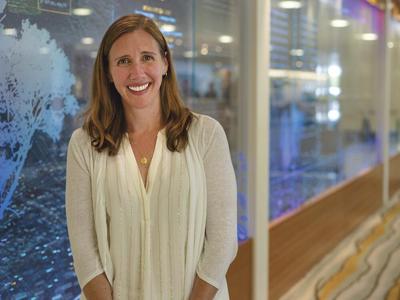

As the Covid-19 pandemic drove school online, Monterey County Deputy District Attorney Amy Patterson was sharing the problems her office was facing combating truancy with Reb Close, an emergency room doctor at Community Hospital of the Monterey Peninsula. Patterson wondered where the students not showing up might be. “I’ll tell you where the kids are. They’re in my ER with substance abuse issues and unintentional overdoses,” Close recalls replying.
Patterson and Close, who co-founded the Montage Health initiative Prescribe Safe, turned to David Diehl, coordinator of student support services with the Monterey Peninsula Unified School District, and asked what could be done. Realizing mental health services were needed, they pulled in others, including Susan Swick, executive director of Ohana, CHOMP’s center for child and adolescent behavioral health. Together they formed the Youth Collaborative and got busy working to end teen addiction before it begins.
They quickly realized they needed “subject matter experts” – namely, the youth they hoped to reach. They recruited students from middle schools and high schools all over the county. Students chose the name of the program, MY PATH. They aren’t shy about letting the grown-ups know what messages work, which will fall flat and who teens will listen to. When Close brought up Facebook, they immediately shot down the idea: “Oh please, Facebook? Really?” she recounts.
The program became official last fall with grants to the Montage Health Foundation from two sources: the Monterey Peninsula Foundation, which awarded $275,000; and $625,000 from the Centers for Disease Control/White House Drug-Free Communities program. The CDC grant equals $125,000 for five years, with the option to renew for another five years.
Under the Prescribe Safe banner, Close is acting as coalition leader. They have officially partnered with MPUSD, Ohana, local treatment centers and the county’s District Attorney’s Office and Department of Behavioral Health. They used grant money to hire a full-time coordinator. Close says the program is led by the students’ insights. “‘We are your support staff, you tell us what you need, and I’ve got all of these adults on this team to help,’” she told students.
Since the CDC grant specifically named MPUSD as a focus, the plan for the 2022-23 school year is to start clubs at the district’s three high schools and at one or two middle schools. Eventually Close wants the program to expand to the rest of the county. Led by trained student leaders, the clubs will explore certain topics outlined by the CDC. One month the clubs might talk about and complete projects on the topic of cannabis, for example. They will also talk about how to care for their bodies and what it’s like to change through adolescence.
Swick says there is strong evidence that shows teens and pre-teens delivering messages to their peers about drugs and alcohol carries a powerful weight compared to adults. “It’s a very effective delivery system,” Swick says. “It matters a lot what kids are saying.”


(0) comments
Welcome to the discussion.
Log In
Keep it Clean. Please avoid obscene, vulgar, lewd, racist or sexually-oriented language.
PLEASE TURN OFF YOUR CAPS LOCK.
Don't Threaten. Threats of harming another person will not be tolerated.
Be Truthful. Don't knowingly lie about anyone or anything.
Be Nice. No racism, sexism or any sort of -ism that is degrading to another person.
Be Proactive. Use the 'Report' link on each comment to let us know of abusive posts.
Share with Us. We'd love to hear eyewitness accounts, the history behind an article.