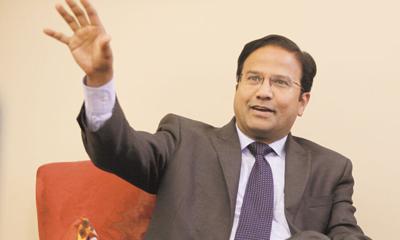

The global economy was in freefall when Sunder Ramaswamy became president of the Monterey Institute of International Studies in January 2009. Ramaswamy, an economist, remembered reading the news just a few months earlier when Bank of America bought Merrill Lynch. “B of A took over in a weekend,” he says. “I’m glad in education it takes a little longer.”
Make that a lot longer. A merger between MIIS and Middlebury College was formalized in 2005, and nearly a decade later, the governance structure is still in transition. Spurred on by concerns raised in 2010 from each school’s accrediting agency, the colleges are moving toward a reorganization that will solidify Middlebury’s place in the higher-education ecosystem.
“Middlebury’s organizational structure has yet to catch up with the rapid rate of change in the institution,” according to the New England Association of Schools and Colleges (NEASC) 2010 report.
Accrediting agencies like NEASC conduct evaluations every five years, meaning Middlebury and MIIS have until 2015 to follow through.
The college convened a working group that devoted a year to rethinking Middlebury’s governance. A report published last December lays out big changes that will take effect July 1.
Chief among them: Instead of having its own board, MIIS, along with other Middlebury-affiliated schools, will be governed by one central Middlebury board of trustees. (Besides MIIS, Middlebury also operates summer language schools in Vermont, schools abroad in 17 countries and the Bread Loaf School of English, with campuses in Vermont, New Mexico and the U.K.)
MIIS and the other affiliated programs will each get its own board of overseers, including one student, one staff person and one faculty member. The overseers won’t be the final authorities, but they will be able to make motions that get passed on to the Middlebury board for a vote.
That deferential system is similar to what’s in place today, since the Middlebury board gets the final say after the MIIS board votes.
“They ask some good questions, but basically, they have enough faith in the Monterey board that they say, ‘Pass,’” Ramaswamy says. “This just formalizes what we’ve been doing.
“I don’t think there should be any worries that this becomes Middlebury West Coast.”
However, Ramaswamy says, MIIS’s name might actually change to make Middlebury more central – to something like “A Middlebury Graduate School at Monterey,” the inverse of what it is today. Ideas might be presented as soon as May 10, when the Middlebury business committee meets in Vermont.
When Middlebury President Rob Liebowitz announced the structural changes to the boards on Dec. 12, he also announced plans to step down from his post June 30 next year, after the changes take effect.
The changes come at a time when higher ed is costlier than ever, and student loans are shaping up to be the next big bubble. The Middlebury-MIIS merger – a partnership between a $45,000-per-year liberal arts college and a $36,000-per-year graduate school – originated due to financial pressure on MIIS.
Correction: An earlier version of this story stated Ron Liebowitz was retiring on June 30 of this year; he is retiring on June 30, 2015.



(0) comments
Welcome to the discussion.
Log In
Keep it Clean. Please avoid obscene, vulgar, lewd, racist or sexually-oriented language.
PLEASE TURN OFF YOUR CAPS LOCK.
Don't Threaten. Threats of harming another person will not be tolerated.
Be Truthful. Don't knowingly lie about anyone or anything.
Be Nice. No racism, sexism or any sort of -ism that is degrading to another person.
Be Proactive. Use the 'Report' link on each comment to let us know of abusive posts.
Share with Us. We'd love to hear eyewitness accounts, the history behind an article.