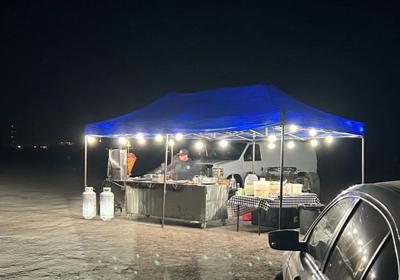

Issues with unpermitted food vendors have continued in Monterey County, with 223 complaints being filed in the past 18 months to the county’s Environmental Health Bureau.
Most of them are pop-up taco vendors that operate in unincorporated areas (clustered in Pajaro, Castroville and near Salinas) selling food out of a cart, truck or tent without permits and may not follow procedures such as maintaining proper temperatures.
Ric Encarnacion, the county’s director of environmental health, says it is dangerous and could cause illness resulting in symptoms ranging from stomachaches and vomiting to death. (There are no reports of illnesses from eating at unpermitted food vendors in Monterey County, but one person died while on their way to or from an unpermitted food pop-up.)
The Board of Supervisors voted on Feb. 3 to make enforcement a priority and allocated $50,000 to the District Attorney’s office. (Enforcement is a collaborative effort among the DA, Sheriff and Environmental Health.)
Environmental Health has focused on education and encouraging vendors to obtain permits. But since the issue persisted, enforcement escalated to include issuing citations and impounding vehicles and equipment. Fines can be up to $1,000 per violation.
Encarnacion says unpermitted food operations have always existed; the issue now is a coordinated scheme operated from Merced County in which vendors fan out across the region selling unrefrigerated food from booths with no handwashing stations. In May of 2025, the DA alerted the public about this issue and estimated it generated about $100,000 in monthly profits for Merced “kingpins.” The DA described food stands recognizable for their blue-and-red tents, and said vendors were selling food made over two hours away in Merced and transported without refrigeration.
Chief Deputy DA Emily Hickok says they continue investigating these operations and the people who organize them. The DA’s office is also looking into further enforcement that could include criminal and civil charges.
Orlando Osornio, a food truck event organizer in Salinas and former city councilmember, says enforcement is necessary to protect vendors who are following the law. “When I was with the city of Salinas, we invested money into more enforcement and made it a priority to take these places out,” Osornio says.
One of the county’s goals is to have staff working outside 9-to-5 hours when much of the illicit activity occurs, with a program similar to Salinas’ task force that launched in 2024. The city has invested $250,000 and hired retired police officers to work after-hours. Since then, complaints have dwindled in Salinas, but vendors have moved into unincorporated Monterey County.
The Environmental Health Bureau currently has 10 inspectors for both restaurants and food trucks. The department is in the process of hiring two more workers who will be dedicated to enforcement.



(1) comment
Why pay a licensing fee if the consequences of not doing so are minimal or non-existent. This lowers their operating costs, not having to compy with licensing, which licensing is for the community good. The compliant vendors should work with the DA to assist in bringing the non-compliant vendors into compliance.
Welcome to the discussion.
Log In
Keep it Clean. Please avoid obscene, vulgar, lewd, racist or sexually-oriented language.
PLEASE TURN OFF YOUR CAPS LOCK.
Don't Threaten. Threats of harming another person will not be tolerated.
Be Truthful. Don't knowingly lie about anyone or anything.
Be Nice. No racism, sexism or any sort of -ism that is degrading to another person.
Be Proactive. Use the 'Report' link on each comment to let us know of abusive posts.
Share with Us. We'd love to hear eyewitness accounts, the history behind an article.