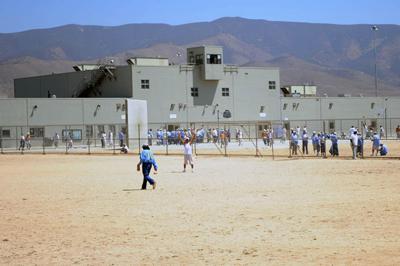
A psychiatrist working in the Salinas Valley State Prison raked in more than $800,000 last year, bringing national attention to California public employees’ high salaries and benefits. But there’s another cost the issue brings to mind—that of providing health care to prisoners.
Prison health-care costs in California could be higher than in any other state, according to a recent report from the state Legislative Analyst’s Office.
Psychiatrist Mohammad Safi—who according to Bloomberg was paid almost five times as much as Gov. Jerry Brown (Safi’s compensation included weekend and on-call pay)—works for the Department of State Hospitals, not the prison, so his pay is not directly reflected in prison health-care costs. But pay for prison employees, including doctors and psychiatrists, does factor into the state’s high prison expenses, says Aaron Edwards, analyst at the Legislative Analyst’s Office.
The legislative analyst’s report showed that in 2009, the state spent about $16,000 per inmate for health services, while other states spent an average of $5,000.
Costs have fallen since then, but it’s not yet certain if California spending has dropped below other states, Edwards says. During the 2010/2011 fiscal year, it cost about $14,000 per inmate for health care.
Part of the expense comes from more prison medical staff, and increased salaries. In 2006 the inmate medical program was put into receivership after a federal court found California was not providing prisoners with adequate health care.
Because it was difficult to attract medical professionals, the prisons made their salaries more competitive. Between 2005 and 2009, more than 1,000 additional medical staff were hired, partly due to court order.
“We incarcerate people in California at a rate higher than any other society in the world, including Russia and Iran,” says Michael Bien, an attorney who represents prisoners. “One of the things we have to pay for is health care. Doctors and nurses only (work) in these places if you pay them.”
Dr. Safi’s case is an “oddity,” Bien says, adding that medical staff working in prisons are maybe not paid enough.
Statewide, there’s a 9 percent vacancy for medical positions and 22 percent for mental health positions. Those would be filled if compensation was enough, Bien says.
The annual base salary for a physician or surgeon at Salinas Valley State Prison is upwards of $220,000; for a psychiatrist it’s more than $228,000, according to government documents. This doesn’t include overtime, which could be a substantial portion of pay, Edwards says.
Other factors that contributed to the state’s ballooning prison medical and mental treatment costs were a general rise in health-care costs and more use of contract medical services, including specialty medical care provided outside of prison, Edwards says.
Between 2005 and 2009 the cost of contract services more than doubled from $394 million to $845 million.
In the past couple of years, contract medical service costs have dropped and are now less than when the receivership began, says Joyce Hayhoe, director of communications and legislation at the receiver, California Correctional Health Care Services.
Edwards commended the receiver for implementing changes, but says things could still be better.
“There are some things we are not doing as efficiently as we could be in California,” he says.


(0) comments
Welcome to the discussion.
Log In
Keep it Clean. Please avoid obscene, vulgar, lewd, racist or sexually-oriented language.
PLEASE TURN OFF YOUR CAPS LOCK.
Don't Threaten. Threats of harming another person will not be tolerated.
Be Truthful. Don't knowingly lie about anyone or anything.
Be Nice. No racism, sexism or any sort of -ism that is degrading to another person.
Be Proactive. Use the 'Report' link on each comment to let us know of abusive posts.
Share with Us. We'd love to hear eyewitness accounts, the history behind an article.