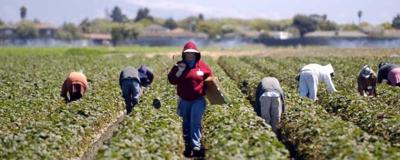
The spread of the light brown apple moth means one thing for growers, according to Monterey County Farm Bureau Executive Director Bob Perkins.
“More pesticides is what it means,” he says. “That’s the unfortunate thing about this whole situation. Farmers don’t like doin’ this stuff, and yet as we predicted we’re seeing people having to use a lot more chemicals to combat this particular pest.”
In an effort to contain the spread of the invasive light brown apple moth (LBAM), the California Department of Food and Agriculture in late July added 16 square miles near Gonzales to the state quarantine that already covers much of Monterey County’s ag land, including parts of Greenfield, Parkfield, North County, Prunedale and the mouth of Carmel Valley.
Even outside those areas, federal quarantines apply to any moth-tempting Monterey County products headed out of state.
Under the quarantines, LBAM host plants must be officially certified as moth-free before they are permitted out of the area. The federal version is a one-time inspection, along with a compliance agreement and moth trapping. The stricter state quarantine requires a new inspection with every shipment.
LBAM’s undiscriminating palate includes most fruits, along with many vegetables and ornamentals.
“A substantial area of the county is impacted, including many nurseries,” says Bob Roach, the county’s assistant agricultural commissioner. Lettuce and other leafy greens are considered low-risk for infestation, he adds, and are exempted from the quarantines.
CDFA reports the statewide LBAM infestation – which has prompted almost 3,500 square miles of quarantines since it was discovered more than two years ago – is spreading. As if in answer to critics who have long suggested the pest doesn’t actually damage crops, LBAM munched deep scars into several berry fields in the Watsonville area this spring.
One organic blackberry field sustained at least 20 percent damage, a loss of about $50,000, according to USDA spokesman Larry Hawkins. A nearby organic raspberry field took a bigger hit of roughly $1.1 million in lost value.
The USDA directs organic farmers with LBAM infestations to apply biological pesticides such as spinosad and Bt bacteria.
But Perkins suggests that might not be enough to prevent the moth’s spread: “The organic growers don’t have good protection against the moth, and when they have problems, they don’t like using the harsher chemicals.”
In related LBAM news, the CDFA released the draft environmental impact report for its moth eradication program July 31.
The DEIR, which evaluates the impacts of various options for combating the LBAM infestation, was ordered by judges in two separate cases, one of them filed by Monterey-area nonprofit Helping Our Peninsula’s Environment.
In June 2008, in the face of strong public disapproval and mounting legal challenges, the state discontinued plans to spray synthetic moth pheromones over urban areas, including Monterey County, in an effort to disrupt their mating cycles.
Instead, the hefty draft EIR looks at seven methods to combat the moth. One of the top alternatives is a plan to release sterile male moths, which are already being bred at a facility in Moss Landing. Officials plan a pilot release from airplanes in Napa and Sonoma counties later this summer, Hawkins says.
Another option involves applying pheromone-saturated twist ties on the ground, confusing the males in their search for mates. A third: gobbing a moth-luring pesticidal goo on telephone poles and trees.
Roach says growers have been long ready for the state to proceed with an aggressive, multi-faceted eradication program. “It’s frustrating for us who are dealing with the impacts of these quarantines in a daily basis,” he says.
But environmentalist critics of the LBAM eradication effort maintain that the moth is not dangerous and can’t be wiped out. “Eradication is an unachievable goal in California,” states Paul Towers, director of Pesticide Watch. “Healthy farms and healthy ecosystems create the best defenses against pests like the moth.”


(0) comments
Welcome to the discussion.
Log In
Keep it Clean. Please avoid obscene, vulgar, lewd, racist or sexually-oriented language.
PLEASE TURN OFF YOUR CAPS LOCK.
Don't Threaten. Threats of harming another person will not be tolerated.
Be Truthful. Don't knowingly lie about anyone or anything.
Be Nice. No racism, sexism or any sort of -ism that is degrading to another person.
Be Proactive. Use the 'Report' link on each comment to let us know of abusive posts.
Share with Us. We'd love to hear eyewitness accounts, the history behind an article.