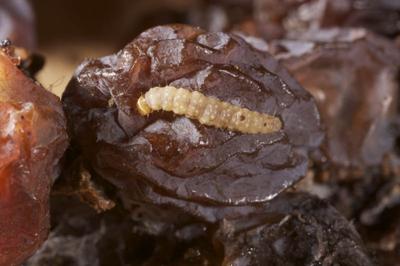
There’s a new moth in town. It’s the European grapevine moth, and according to some growers, it makes the light brown apple moth look (almost) like a fruit fly.
To date, only one has been found in Monterey County, in a vineyard northeast of Soledad. It hasn’t harmed local wine grape growing operations – a $238,082,000 crop in 2009.
But the pest has damaged crops across Europe, destroyed vineyards in the Napa Valley and caused federal quarantines in parts of Fresno, Lake, Mendocino, Merced, Napa, San Joaquin, Solano and Sonoma counties.
In an effort to eradicate the grape-gobbling moth, earlier this month the U.S. Department of Agriculture announced it will release $16.9 million in emergency funding to prevent its spread in California.
“The EGVM is a very serious insect,” Rep. Sam Farr says. “It does horrible destruction to wine grapes, and that’s one of our major industries in Monterey County, representing hundreds of millions of dollars. We’re going to do everything we can to curtail its invasiveness.”
The moth has a number of hosts, but its primary food is the fruit itself, unlike the LBAM, which eats the leaves.
“The EGVM goes right for the flowers and the fruit, so it’s a lot more damaging than the other leaf roller months we have,” Assistant Agricultural Commissioner Bob Roach says. “The first generation comes out when the grape vines are flowering and lays eggs on the flowers. The second generation eats the flower and the third generation goes right for the fruit.”
After trapping one EGVM in May 2010, county Ag Commission staff continued to set traps, but did not find any more moths, which is good news for grape growers, Roach says. “Since we only found one, we’re crossing our fingers and hoping that was it.” Roach and the staff are currently deploying traps countywide, about 1,900 total.
The traps include a pheromone lure, which attracts the male moths, and sticky goo to keep them from flying away.
They’ll set 25 traps per acre in 39,000 acres of grapes; the density jumps to 100 per square mile near where they trapped the EGVM last year. “That’s what the federal money will pay for, these survey and detection efforts,” Roach says.
Monterey County officials don’t yet know how much money they’ll get from the feds to fight the moth. The current work costs about $300,000, Roach says.
And unlike the state’s LBAM eradication plan – which included areal spraying and brought out protesters of all stripes, from conspiracy theorists to enviros and anti-pesticide advocates – Pesticide Watch hasn’t found “any significant research indicating outstanding human health and safety concerns from the pheromones” used in EGVM trapping efforts, says spokeswoman Dana Perls, adding that “Pesticide Watch is staying vigilant about the issue.”



(0) comments
Welcome to the discussion.
Log In
Keep it Clean. Please avoid obscene, vulgar, lewd, racist or sexually-oriented language.
PLEASE TURN OFF YOUR CAPS LOCK.
Don't Threaten. Threats of harming another person will not be tolerated.
Be Truthful. Don't knowingly lie about anyone or anything.
Be Nice. No racism, sexism or any sort of -ism that is degrading to another person.
Be Proactive. Use the 'Report' link on each comment to let us know of abusive posts.
Share with Us. We'd love to hear eyewitness accounts, the history behind an article.