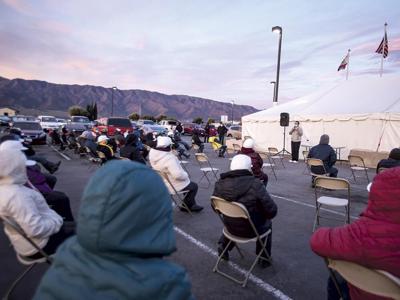

The rumor started flying locally the morning of Monday, Feb. 22, that Gov. Gavin Newsom was about to announce more Covid-19 vaccines for Monterey County farmworkers. When the announcement came that afternoon, while the governor was visiting Kern County, it was good news for the Central Valley: 11 mobile vaccination clinics and a 58-percent increase in vaccine doses from the state. No word about Monterey County.
Newsom did mention 34,000 vaccines coming specifically for farmworkers, and a California Department of Public Health spokesperson confirms those are for the entire state, not just the Central Valley. Specifics as to which counties will receive them – and how many – were not available by the Weekly's deadline (Tuesday, Feb. 23). On Wednesday, Feb. 23, the CDPH released the good news for Monterey County: It's receiving 10,600 doses this week as an agricultural county, a 114-percent increase over the previous week.
It's a start, but it's still not enough to meet the county's needs. The announcement comes one week after a coalition of local agricultural, labor and hospitality leaders wrote to him making a direct ask of 55,000 vaccine doses specifically for Monterey County agricultural workers, who number 40,000 year round, with up to 12,000 additional migrant workers who arrive each spring. It came three weeks after the Board of Supervisors asked for more vaccines as well.
In the absence of a direct answer from the state, vaccination efforts in the ag business community are pushing ahead. The first vaccination clinic as a joint effort by Clinica de Salud and the Grower-Shipper Association was scheduled to take place Feb. 25, vaccinating 400 agricultural workers at D’Arrigo Bros. in Spreckels. The clinic will follow current county eligibility requirements – those in the industry between ages 65-74.
It took a lot of effort to find 400 workers who qualified in such a narrow range, says GSA President Chris Valadez. They reached out to over 50 employers asking them to identify those that fit the age criteria; the result is that most work in processing facilities.
“It is a good response, but the population is very limited,” Valadez says, citing the need to vaccinate fieldworkers as well. (On March 3, eligibility opens up to anyone working in agriculture and the plan is to continue to host clinics as Clinica begins to receive at least 1,000 doses weekly, directly from the federal government.)
Valadez says multiple approaches are needed to address the large scale of vaccinations required moving forward, with worksite events, mobile units, pharmacies and other sources. “The prohibitive factor is you need more vaccines and mobile capability. We’re just not there yet,” he says.
Another effort to increase the likelihood of farmworkers agreeing to be vaccinated is through education currently underway, Valadez says.
One potential hiccup for getting additional vaccines for farmworkers quickly could come from the transfer of responsibility for vaccine distribution from the state to Blue Shield. The company received a no-bid contract from the state a few weeks ago, with a maximum $15 million for expenses. Some counties fell under Blue Shield’s responsibility on Feb. 21. Monterey County is slated to switch over on March 7.
Under the rules of the contract, Blue Shield will be required to meet weekly goals set by the state for administering doses to populations and communities hardest hit by Covid-19, Monterey County Health Officer Edward Moreno told the Board of Supervisors on Feb. 22.


(0) comments
Welcome to the discussion.
Log In
Keep it Clean. Please avoid obscene, vulgar, lewd, racist or sexually-oriented language.
PLEASE TURN OFF YOUR CAPS LOCK.
Don't Threaten. Threats of harming another person will not be tolerated.
Be Truthful. Don't knowingly lie about anyone or anything.
Be Nice. No racism, sexism or any sort of -ism that is degrading to another person.
Be Proactive. Use the 'Report' link on each comment to let us know of abusive posts.
Share with Us. We'd love to hear eyewitness accounts, the history behind an article.