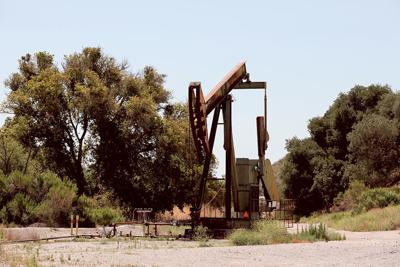

On Nov. 8, Monterey County voters will vote on a ballot initiative that seeks to ban fracking, wastewater injection and all new oil development in the county. On July 12, the Monterey County Board of Supervisors is expected to receive a report from the county auditor-controller outlining the fiscal impacts of that initiative.
Although the supervisors previously voted 3-2 against soliciting a fiscal impact report on the measure, District 2 Supervisor John Phillips brought the issue back to the forefront when he made a referral to the board in advance of its June 28 meeting, requesting county staff produce a report of their own.
County staff have a steep hill to climb, because the fiscal impacts of the initiative – if it passes – are tricky to calculate, especially in a matter of weeks.
The oil industry commissioned an analysis, released in June, that paints an apocalyptic picture in the event the initiative passes. In short, it asserts the county will be on the hook, litigation-wise, in the “low tens of millions” of dollars because the ban would allegedly result in the “taking” of property rights, or the ability to extract oil.
It even goes so far as to say, “A liability of this magnitude would likely require the county to immediately seek bankruptcy protection.”
Similar saber-rattling occurred in San Benito County in 2014, before and after its Measure J – which banned fracking – was voted in by a 59-41 margin. Subsequently, the county did not become embroiled in litigation, despite threats from the industry.
Monterey County’s initiative was crafted by a team of people that included attorney Catherine Engberg.
She counters that many of the claims in the industry-commissioned report are “preposterous,” most importantly, the claim it would “effectively ban all existing and future oil production” in the county. She points to section 6 of the initiative – which is viewable online – that states an exception can be made for any “unconstitutional taking” of property, so long as the oil company applies to the Board of Supervisors for an exception, and they approve it.
A major sticking point for the industry: wastewater injection. Presently, most wastewater produced from South County oil operations is injected back into wells. Chevron currently treats about one-third of its wastewater with reverse osmosis and lets it settle back into the ground, but initiative proponents would like 100 percent of the wastewater treated.
Karen Hanretty, a spokeswoman for California for Energy Independence, writes by email that it’s not feasible to treat all the water, in that there would still be “sediment” that would have to be disposed of. That sediment is currently injected back into the ground.
What remains open to interpretation is the initiative’s proposed ban on “impoundment” of wastewater. Arguably, that would make Chevron’s reverse osmosis operation illegal.
Attorneys from the firm who wrote the ballot initiative say as long as the water is adequately treated, it no longer qualifies as wastewater. Phillips, who requested the report due to concerns the initiative would shut down existing industry, remains unconvinced: “It’ll keep lawyers busy. That’s my concern.”
Concurrent to the initiative, there is active litigation on the topic: The Center for Biological Diversity sued the state last year, claiming thousands of wastewater injection wells were in violation of the federal Safe Drinking Water Act, because they are allegedly polluting protected aquifers. At least 55 such wells exist in Monterey County.
In records from the state Division of Oil, Gas, and Geothermal Resources, notes on one San Ardo well read: “Operator started injection without permission… District reviewing information.”
That’s part of why Kassie Siegel, an attorney with the Center for Biological Diversity, thinks the industry’s claim that California has strict oil regulations is patently false. “Regardless of what the books say, it’s not enforced,” she says.
--
Correction (7/11/16): An earlier version of this story incorrectly stated the supervisors voted 4-1 against soliciting a fiscal impact report, when in fact the the vote was 3-2. They then voted 4-1 to send the initiative to the ballot.



(1) comment
Thanks for the article. I work in the San Ardo field and all I can say is that we are discussing the eventual shutdown of the field if this passes. I will be out of a job, which is fine I had a good run, but a lot of other family members could lose their job. The ban is on a lot more than fracking which you include in your article. All I see happening from this is more dependence on foreign oil (Russia, Saudi Arabia), loss of jobs for heads of household who can support their families, and loss of tax funds for our local services (schools, police,fire). I really think people should vote no on "Z" and we could find better crafted legislation that would satisfy both sides. [thumbdown] [crying][crying][crying][crying]
Welcome to the discussion.
Log In
Keep it Clean. Please avoid obscene, vulgar, lewd, racist or sexually-oriented language.
PLEASE TURN OFF YOUR CAPS LOCK.
Don't Threaten. Threats of harming another person will not be tolerated.
Be Truthful. Don't knowingly lie about anyone or anything.
Be Nice. No racism, sexism or any sort of -ism that is degrading to another person.
Be Proactive. Use the 'Report' link on each comment to let us know of abusive posts.
Share with Us. We'd love to hear eyewitness accounts, the history behind an article.