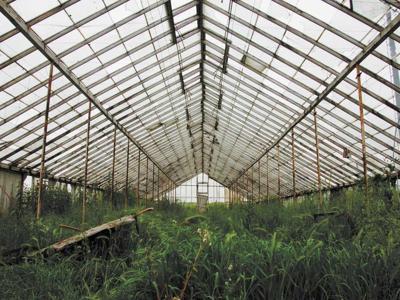

For several years, Jarod Ottley’s family worked a small cannabis farm in South County, originally under the medicinal marijuna law created by Prop. 215 in 1996. Later, after cannabis was legalized by Prop. 64 in 2016 and Monterey County created an ordinance regulating how and where cannabis could be grown, Ottley’s farm fell outside of the new regulations and had to cease growing. His land is now overgrown with weeds – the regular kind.
Then he saw a possible way forward. Congress passed the 2018 Farm Bill, which legalized growing industrial hemp, a close cousin to cannabis. The new law drew a distinct line between the two plants: Anything containing 0.3 percent or less of the psychoactive cannabinoid THC is hemp and just as legal as lettuce. Any plant containing THC above that percentage is defined as cannabis. Under federal law it’s still considered an illegal drug, but it’s legal in California, grown under tight state and local regulations.
Seeing a new business opportunity, Ottley set his sights on producing certified industrial hemp seeds to sell to farmers. It’s a daunting task, however. To be certified, strict rules must be adhered to keeping seeds pure, including a 3.1-mile buffer zone to prevent cross-pollination with other hemp and cannabis grows.
Monterey County Agricultural Commissioner Henry Gonzales says he was ready to bring hemp farmers into the ag fold as a field crop, but some in the county hesitated, arguing hemp should be as regulated as cannabis and limited as to where and how it can be grown. Some community members feared hemp odors would create a nuisance and cannabis growers worried about cross-pollination ruining their crops.
“It is the same genus and species, looks the same, smells the same, so for a lot of folks it is the same,” Gonzales says. “For me it was clear, it is hemp. So if it’s hemp it should be grown anywhere. But that’s only me, there are many voices in the county. They see the situation differently.”
On June 26, the Monterey County Board of Supervisors indicated their intention to create a one-year pilot program that would permit growing hemp on a limited basis within certain zoning areas. The Planning Commission rejected that idea on July 10, siding with Gonzales and hemp farmers in support of unlimited growth and voted 8-0 (with two abstaining) to recommend the supervisors support hemp anywhere.
On July 23, the supervisors overrode that recommendation and voted 3-1 (with Supervisor Luis Alejo against and Supervisor Jane Parker absent) to start the pilot program within 30 days. The new ordinance added an amendment for a 1,000-foot buffer zone between hemp farms and residences. The pilot is also limited to 30 farms.
Board Chair John Phillips said the one-year program would allow the county to study hemp’s impacts. But it was bad news for Ottley, whose farm is not in a designated zone, as well as at least 20 other farmers Gonzales says had told him they wanted to grow hemp.
“For the first time ever, the county is taking a position where they are trying to regulate a federally legal crop through zoning laws,” Ottley says. “This is a very new circumstance where the county is trying to treat it as cannabis – even though it’s not.”



(0) comments
Welcome to the discussion.
Log In
Keep it Clean. Please avoid obscene, vulgar, lewd, racist or sexually-oriented language.
PLEASE TURN OFF YOUR CAPS LOCK.
Don't Threaten. Threats of harming another person will not be tolerated.
Be Truthful. Don't knowingly lie about anyone or anything.
Be Nice. No racism, sexism or any sort of -ism that is degrading to another person.
Be Proactive. Use the 'Report' link on each comment to let us know of abusive posts.
Share with Us. We'd love to hear eyewitness accounts, the history behind an article.