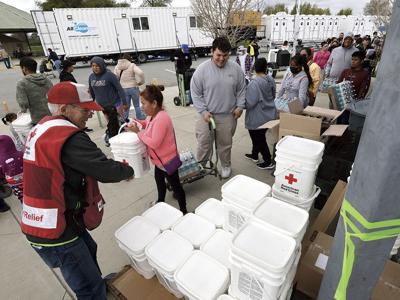

In the two months after the Monterey County Board of Supervisors approved a $728,000 disaster aid program for residents impacted by this winter’s storms, local nonprofits disbursed more than $450,000 of that money to hundreds of households and thousands of people in need of assistance.
The county implemented the program, approved by the Board of Supervisors in late April, through local nonprofits United Way Monterey County and Catholic Charities Diocese of Monterey – with the goal of swiftly delivering aid in lieu of slow-moving federal and state relief measures. The two charities coordinated to divide up coverage areas and to prevent duplicate payments through the program, which offers up to $750 to households in flood-affected areas.
United Way administered its initial phase of funds through two organizations, Watsonville-based Community Bridges and Salinas-based Door to Hope; those two focused their efforts on Pajaro and the Greenfield-King City area, respectively. Catholic Charities, which handled its allocation in-house, prioritized South County communities like San Ardo and San Lucas.
Together, the charities decided on a funding scale starting at $450 for a single-person household and moving up in $100 increments, to $750 for a household of four or more. Residents with income between 0 percent and 200 percent of the federal poverty level were eligible for payments – as were, crucially, undocumented residents.
Per county guidelines, nonprofits were required to disburse their first phase of funds by the end of the fiscal year, on June 30. On United Way’s side, Community Bridges distributed more than $170,000 to residents while Door to Hope gave out nearly $38,000; that money went to more than 330 households, with the majority (around 270) located in the Pajaro area. Catholic Charities disbursed over $248,000 to more than 350 households.
While the organizations prioritized those whose homes sustained flood damage, many others still needed help – such those displaced and forced to reside in hotels for weeks, or farmworkers who lost income due to flooded fields.
“People were waiting for months for this assistance because they were in debt, needed money and were not able to cover basic needs,” notes Angela Di Novella, executive director of the local Catholic Charities chapter.
“[The program] did meet a lot of needs that no other funding source would have been able to fill,” says Ray Cancino, Community Bridges CEO.


(0) comments
Welcome to the discussion.
Log In
Keep it Clean. Please avoid obscene, vulgar, lewd, racist or sexually-oriented language.
PLEASE TURN OFF YOUR CAPS LOCK.
Don't Threaten. Threats of harming another person will not be tolerated.
Be Truthful. Don't knowingly lie about anyone or anything.
Be Nice. No racism, sexism or any sort of -ism that is degrading to another person.
Be Proactive. Use the 'Report' link on each comment to let us know of abusive posts.
Share with Us. We'd love to hear eyewitness accounts, the history behind an article.