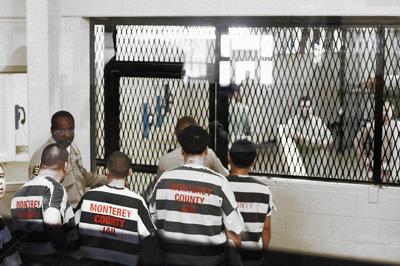
Two years ago, a federal court ordered the state to fix its prisons because massively overstuffed facilities amounted to cruel and unusual punishment. The deadline to shed more than 33,000 inmates is the end of this year.
But the California Department of Corrections and Rehabilitation – even after trying to pass the responsibility onto counties – still has about 9,000 inmates to cut, feds report.
Now the state has a last-minute plan to fix the problem, and some county officials are backing it.
Earlier this month, state legislators created a plan to address the inmates who still need to be shuffled out of the prison system. The compromise stems from two opposing bills. One, proposed by Gov. Jerry Brown in August, allots $315 million to moving prisoners out of state facilities and into private prisons and county jails. The other, by Senate President Pro Tem Darrell Steinberg, funds drug and alcohol rehabilitation programs in exchange for a deadline extension. The compromise, signed by the governor earlier this month, melds the two: If a federal panel agrees to give the state more time, officials will fund rehab programs with the money saved by not moving inmates. Otherwise, it’ll start shipping the prisoners off.
The compromise is “genius,” Monterey County Sheriff Scott Miller says. Essentially it passes back the buck from the state to the feds, who now must either enforce their order and shaft rehab programs, or give California its requested three-year reprieve.
Monterey County District Attorney Dean Flippo, president of the California District Attorney’s Association, says he and the association support the compromise. Either way, he says, criminals won’t be put back on the streets.
If you’re just catching up on this debacle, here’s a history lesson: When the feds told the state to overhaul its prisons in 2011, California officials had to act quickly. The plan they made is known as realignment. It shifted many responsibilities from the state to the counties, sentencing some nonviolent offenders to jail instead of state prison and putting some parolees under the supervision of local probation departments. Monterey County has seen more than 1,000 of those offenders, Flippo says.
But the governor says he’s unpacked as many low-risk prisoners as possible under realignment, Flippo says. It wasn’t enough. The state still didn’t know what to do with approximately 9,000 inmates whom the governor labels as dangerous. And without options, law enforcement officials feared they’d have to be released – until the compromise was reached.
“I think it would be preferable if the courts give the state a little more time to work out a thoughtful, long-range plan that enhances the funding for treatment and rehabilitative services,” says Manuel Real, the county’s chief probation officer.
Twenty years of evidence proves rehabilitation works, says Nancy Hatton, adult division director for the County Probation Department. The county’s been ramping up partnerships between probation and behavioral health services since realignment started.
“This may be part of the solution,” Real says. “It’s not the whole shooting match, but it’s part of the solution.”


(0) comments
Welcome to the discussion.
Log In
Keep it Clean. Please avoid obscene, vulgar, lewd, racist or sexually-oriented language.
PLEASE TURN OFF YOUR CAPS LOCK.
Don't Threaten. Threats of harming another person will not be tolerated.
Be Truthful. Don't knowingly lie about anyone or anything.
Be Nice. No racism, sexism or any sort of -ism that is degrading to another person.
Be Proactive. Use the 'Report' link on each comment to let us know of abusive posts.
Share with Us. We'd love to hear eyewitness accounts, the history behind an article.