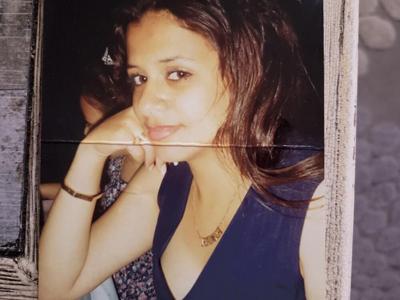

Upon her arrest on Aug. 30, 2019, 42-year-old Rania Ishak was taken to the Monterey County Jail. Instead of booking her there, jail personnel turned her away, recommending a sheriff’s deputy transfer her to Natividad Medical Center for mental health treatment as Ishak showed signs of intoxication and suicidal thoughts.
Ishak never made it to her treatment. Instead, the deputy dropped her off somewhere between the jail and the hospital. Within a few hours, Ishak was hit by a train on the tracks near the Chinatown neighborhood of Salinas, where she often spent time in homeless encampments. She died on impact.
With the clock running out on the statute of limitations, Mary Ishak, Rania’s mother, sued the sheriff’s office in August 2021 for negligence in the death of her daughter. Understanding the upfront expense and length of time required to take the case to court, Ishak took the mediation route and on June 16, agreed to terms with the county for an as-yet undisclosed amount of money, according to her attorney, John Klopfenstein.
Ishak declined the Weekly’s request for an interview, but says, despite the mediation’s outcome, she and her family will never get over the pain caused by the sheriff’s officials’ negligence.
“Neither my daughter or myself received justice and I will always feel the pain the rest of my life,” Ishak says via text. She also pointed to news reports from 2019 that outlined her side of the story. According to those reports, Ishak was unaware that her daughter was arrested and recommended for mental health treatment before she was killed on the train tracks. The coroner’s report ruled the death an accident and failed to include background on her earlier arrest, suicidal state or referral for treatment.
Klopfenstein, a former Monterey County deputy public defender whose private practice now specializes in wrongful death and wrongful termination cases, says he often recommends the route of mediation in cases like Ishak’s because it is shorter and less expensive. Although he did not offer a specific amount or range for the settlement, he says the payout through a mediated settlement often ranges from $1 to $100,000.
In the complaint against the Sheriff’s Department, Ishak was characterized as expecting that county officials would attempt to “downplay the worth of [her daughter]’s life because she was a drug addict whose prospects for a long life were stinted by her drug addict lifestyle.” Klopfenstein says negotiating the worth of a life in a wrongful death settlement often comes down to a “cold calculation.”
“There is no amount of money that can cover this and it was a difficult thing to figure out,” Klopfenstein says. “You have to justify the amount. In a good settlement, no one is happy.”
Janet Holmes, assistant county counsel, declined to comment as the case is not yet resolved – she says no settlement is reached until it is approved by the Board of Supervisors. The Sheriff’s Office referred the Weekly to County Counsel for comment.


(1) comment
Anytime there is the death of someone young, it is a tragedy. However, much about this story does not portray the complex facets that lead up to this outcome. And the narrative should not be the responsibility or blame of the Sheriff's Office alone. Society is doing itself an injustice by letting the media paint this picture.
Most of the time when someone is in a mental health crisis they find themselves at a crossroads with law enforcement. Deputies have found themselves at the forefront of the conversation– What is the best course of action to take with a person going through a mental health crisis? Frankly, society is not providing a good option. Here are the deputy's options: taking them to jail (which sometimes exasperates a person’s mental health crisis), taking them to a hospital-like Natividad (only to be released within 24 hrs or a few days at most with the cyclical problem of mental health and/or drug abuse continuing), or letting them go so they are not in a jail setting where someone that is going through a mental health crisis does not belong– all are inadequate options.
If Rania would have stayed in jail would her state be any better? Monterey County Sheriff's Office is currently looking at building a Behavioral Health Center to provide services to people like Rania Ishak so they can get real treatment both in counseling and seeing a psychiatrist, along with other evidence-based treatments. I wish this center was built already, but it’s a fairly new endeavor even in other states.
MC Weekly, I ask that you provide a more complete story about this tragic situation. The goal of the headline should not be to place blame but rather tell us the complete story and help support the discussion about real solutions or at least ask the questions that will help us get closer to the real problem(s) so we can get closer to real solutions.
Welcome to the discussion.
Log In
Keep it Clean. Please avoid obscene, vulgar, lewd, racist or sexually-oriented language.
PLEASE TURN OFF YOUR CAPS LOCK.
Don't Threaten. Threats of harming another person will not be tolerated.
Be Truthful. Don't knowingly lie about anyone or anything.
Be Nice. No racism, sexism or any sort of -ism that is degrading to another person.
Be Proactive. Use the 'Report' link on each comment to let us know of abusive posts.
Share with Us. We'd love to hear eyewitness accounts, the history behind an article.