
Gonzalo Curiel was 17 years old when he was arrested last December on suspicion of murdering two children and stuffing their bodies into a plastic container. It did not take long before Monterey County prosecutors decided he would be charged as an adult.
A proposed ballot measure, if approved by California voters Nov. 8, would change the process for accused offenders who, like Curiel, are under 18. Prop. 57 would change sentencing guidelines for certain violent adult felons, and would also shift the power to judges – away from prosecutors – to decide whether juveniles should be charged as adults.
Monterey County Chief District Attorney Berkley Brannon, who is part of the local leadership team that deliberates and decides whether to charge teens as adults, says Prop. 57 would cause delays in court proceedings for juveniles. He adds that the county rarely charges youth as adults, unless they are about to turn 18 and are suspected murderers, like Curiel.
With Prop. 57 awaiting a decision from voters, two other policies that will make changes in juvenile justice were signed into law by Gov. Jerry Brown in late September.
AB 1843, authored by Assemblyman Mark Stone, D-Scotts Valley, will prohibit companies from requiring job candidates to reveal information about run-ins with the law as youth, if the crime did not result in a conviction. It will also bar employers from using such information as a condition for employment. This new law goes into effect Jan. 1, 2017.
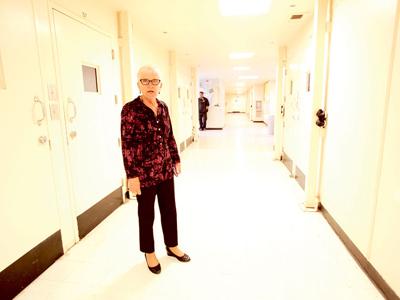
Another new law makes changes to disciplinary action in juvenile halls. Unlike prisons, which use solitary confinement as punishment, the county’s juvenile hall removes youth from group housing and places them into a room only for the purpose of protecting them from harming themselves or others, not as punishment. They’re still allowed to participate in group activities like recreation, church services and meals. SB 1143, which takes effect Jan. 1, 2018, will ban the use of room confinement as punishment or convenience at juvenile facilities.
Monterey County Chief Probation Officer Marcia Parsons says punitive measures at Juvenile Hall in Salinas won’t change much, but more training for staff will be required. Some other institutions will have to change their practices under SB 1143; to Parsons, it’s a way of honoring existing protocol.
“This is a win-win for incarcerated youth and for employees who work very tirelessly,” she says. “It will require more training and incentives to come up with other ways for behavior management, but we already use conflict resolution and behavioral intervention.”





(0) comments
Welcome to the discussion.
Log In
Keep it Clean. Please avoid obscene, vulgar, lewd, racist or sexually-oriented language.
PLEASE TURN OFF YOUR CAPS LOCK.
Don't Threaten. Threats of harming another person will not be tolerated.
Be Truthful. Don't knowingly lie about anyone or anything.
Be Nice. No racism, sexism or any sort of -ism that is degrading to another person.
Be Proactive. Use the 'Report' link on each comment to let us know of abusive posts.
Share with Us. We'd love to hear eyewitness accounts, the history behind an article.