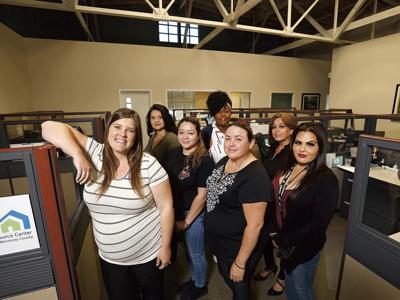

Of the many layers of the housing crisis, one layer – barriers to renting such as a past history of homelessness, poor credit history or a criminal record – has proved to be a vexing challenge to renters and the nonprofit agencies that help them. Recently some service providers have figured out a solution, and it appears to be working: Convincing landlords to take a chance on renters they previously would have passed on.
Last year, the Housing Resource Center of Monterey County launched its Landlord Gold Standard Program, in which landlords are offered cash and services to take clients with federal housing vouchers, poor credit history and other issues. They also offer services like repairs (by people vetted by HRC), and support from HRC staff when landlord-tenant issues arise. Executive Director Alexa Johnson says in the past seven months they’ve attracted 15 new landlords and reconnected with another 10 who had given up on renting to tenants with vouchers. They’ve been able to house 19 clients.
HRC is offering new and returning landlords who enter the program a $1,000 incentive. They also offer up to $2,000 toward repairs to fix damage caused by tenants, or to make a unit rentable; and they offer up to $2,000 to pay for past-due rent. To bolster its landlord support services, HRC is looking to hire a landlord outreach coordinator who will work weekends to make help available seven days a week.
The program has been well received by smaller, independent landlords who struggled financially during the pandemic amid eviction bans, Johnson says. In turn the program has helped “some of the more vulnerable families get into housing and get into housing faster,” she says. HRC staff are able to provide context to landlords about the reasons why tenants may have a poor credit history or a long-ago arrest or conviction.
Johnson serves as chair of the regional Rapid Rehousing Committee for the Coalition of Homeless Service Providers, which is focusing on landlord engagement for 2022. The goal is to create a standard for how all agencies interact with landlords. The nonprofits cannot solve the affordable housing crisis, Johnson says, “but you can invest in those relationships with landlords and build up the number of units available.”
Another regional goal, says CHSP’s executive officer, Genevieve Lucas-Cornwell, is to create a landlord mitigation fund to support property owners directly for damage to their units. It could possibly be funded by a grant from the state Housing and Homelessness Incentive Program.
A relatively new agency to Monterey County that manages Salinas’ SHARE Shelter, Bay Area Community Services, works with approximately 16,000 landlords in several Bay Area counties, says Jonathan Russell, BACS’ chief strategy and impact officer.
Currently they are working with around 20 landlords and property management companies in Monterey County. In June, Russell addressed a meeting of over 30 landlords to persuade them to consider renting to BACS clients, once chronically homeless.
“We want to help get the truth out – that when someone is helped to gain housing, everyone is helped in the community,” he says.



(2) comments
If someone is not going to ruin my rental then why offer $2,000 toward repairs to fix damage caused by tenants or to make a unit rentable; they offer up to $2,000 to pay for past-due rent. I cant rent it out when I'm spending months fixing it from tenents. Teach tenents how to respect and care for housing.
isn't this what brought about the housing crisis?
Welcome to the discussion.
Log In
Keep it Clean. Please avoid obscene, vulgar, lewd, racist or sexually-oriented language.
PLEASE TURN OFF YOUR CAPS LOCK.
Don't Threaten. Threats of harming another person will not be tolerated.
Be Truthful. Don't knowingly lie about anyone or anything.
Be Nice. No racism, sexism or any sort of -ism that is degrading to another person.
Be Proactive. Use the 'Report' link on each comment to let us know of abusive posts.
Share with Us. We'd love to hear eyewitness accounts, the history behind an article.