
Moving can be a distressing event in any kid’s life, especially if they are experiencing neglect or abuse. Having a steady presence in their life while navigating the court system and an uncertain future can have a positive lifelong impact.
That’s the role Court Appointed Special Advocates, or CASA, fills for children who are in the foster care or juvenile justice systems. CASA is a nationwide organization that’s been operating in Monterey County for 30 years. It recruits, supports and trains volunteers – known as CASAs – to become advocates for kids.
“They can absolutely change a child’s life,” says Beth Wilbur, CASA of Monterey County’s executive director.
As part of the nonprofit’s 30th anniversary, CASA is launching a “30 in 30 for 30” campaign seeking to recruit 30 volunteers in 30 days in January. (Training begins in February.)
Currently, there are 57 kids on the waiting list, the largest number since 2020. Last year, CASA helped 148 kids in Monterey County; 13 of them were in the juvenile justice system.
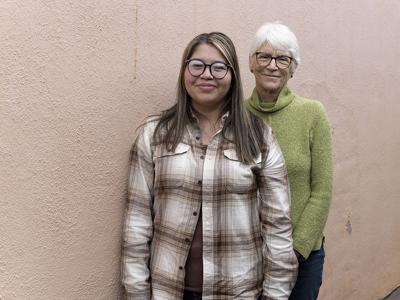
There is more than advocacy – there is mentorship and support. Chris Farmerie has volunteered with CASA for 18 years. The first youngster she was matched with was Reyna Gabot, starting when Gabot was 13. “From the beginning, we found a common interest, which was cooking, and we started baking together,” Farmerie says. (One reason she introduced the teen to baking was to help her with math.)
Gabot says Farmerie remained in her life while other adults were in and out constantly. “I remember thinking, ‘here’s another person that’s going to leave,’ and she never did,” Gabot says.
Consistency is key. “The commitment that we ask is for a volunteer to stay with a child until the case is resolved,” Wilbur says. “What we try to do in training and screening volunteers is to make them understand that if they decide to quit, that’s one more loss for that child who has really learned that he or she can’t really trust the world and can’t trust grown-ups.”
Generally, the cases of children in foster care go to a judge every six months to determine whether a child will be returned to their parents. In this process, CASAs advocate for what they believe is best for the child and report to the judge about how the child is doing academically and socially.
The volunteers are expected to meet at least twice a month with their youth, spending time on activities together like hiking or visiting an attraction like the Aquarium, helping them with schoolwork or organizing a meet-up with siblings.
Farmerie and Gabot kept in touch after Gabot left the foster care system at 21. Gabot, who is now a pastry cook at Pebble Beach Resorts, says having a CASA advocate changed her life and helped her find her passion. “I really wouldn’t be where I am,” she says.


(0) comments
Welcome to the discussion.
Log In
Keep it Clean. Please avoid obscene, vulgar, lewd, racist or sexually-oriented language.
PLEASE TURN OFF YOUR CAPS LOCK.
Don't Threaten. Threats of harming another person will not be tolerated.
Be Truthful. Don't knowingly lie about anyone or anything.
Be Nice. No racism, sexism or any sort of -ism that is degrading to another person.
Be Proactive. Use the 'Report' link on each comment to let us know of abusive posts.
Share with Us. We'd love to hear eyewitness accounts, the history behind an article.