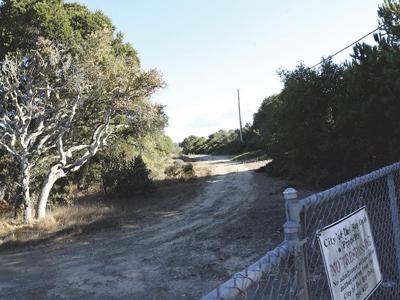

Even in the best of circumstances, building housing, or anything, on the former Fort Ord comes with a gauntlet of hurdles. And the city of Del Rey Oaks – which has about 310 acres of former Fort Ord land, 74 of which have already been sold for the development of a luxury RV resort – is not facing the best of circumstances.
But even as those challenges have become more apparent over the years, the city’s desire to develop the land remains. In December, environmental consulting firm Denise Duffy & Associates will present to the Del Rey Oaks City Council an assessment of the constraints and opportunities for its former Fort Ord land.
The primary constraint, however, has long been known – water, or lack thereof. Marina Coast Water District is the contracted water supplier to all developments in the former Fort Ord, and while it might not face the immediate constraints of a cease-and-desist order, it faces a different, immovable constraint: More than half of Marina Coast’s water supply is pumped from the deep aquifer, an ancient, 900-foot-deep water source whose water is thought to be over 20,000 years old, and is not replenishing. How much water is left in it, no one knows.
That led land-use watchdogs Keep Fort Ord Wild and Landwatch to sue MCWD in 2018 over its proposed annexation of former Fort Ord land, which resulted in a settlement that caps the total residential units at 6,160 – barring a new water supply that doesn’t come from groundwater – as envisioned by the 1998 Fort Ord Base Reuse Plan. Counting already approved and entitled projects, that cap has already been exceeded by 118 units.
But Del Rey Oaks City Councilmember John Gaglioti, who has long envisioned building housing for local teachers on some of the city’s former Fort Ord land, still believes there’s a way forward even without an augmented water supply.
“There’s always a push just to leave it all open space, but that’s not tenable,” Gaglioti says. Water usage per household has declined since the early ’90s, he adds, so the same amount of water allocated then could serve more than 6,160 units today. He also notes MCWD has given the city a will-serve letter to provide 400 acre-feet annually to its Fort Ord lands.
Michael DeLapa, Landwatch’s executive director, pushes back on that notion. “The problem is a lot worse than when the 6,160 units were established,” he says. “The total water available now is far, far less than what was available in 1998.”
A more immediate hurdle facing Del Rey Oaks is the rebuilding and realignment of South Boundary Road, which would provide access and utilities to the city’s Fort Ord lands. And while it’s already approved and funded through money the city received from the Fort Ord Reuse Authority’s recent dissolution, the city remains in settlement talks with the California Native Plant Society to resolve a lawsuit (which the city inherited from FORA) regarding the realignment, as the new intersection would impact Seaside bird beak, an endangered native plant.



(0) comments
Welcome to the discussion.
Log In
Keep it Clean. Please avoid obscene, vulgar, lewd, racist or sexually-oriented language.
PLEASE TURN OFF YOUR CAPS LOCK.
Don't Threaten. Threats of harming another person will not be tolerated.
Be Truthful. Don't knowingly lie about anyone or anything.
Be Nice. No racism, sexism or any sort of -ism that is degrading to another person.
Be Proactive. Use the 'Report' link on each comment to let us know of abusive posts.
Share with Us. We'd love to hear eyewitness accounts, the history behind an article.