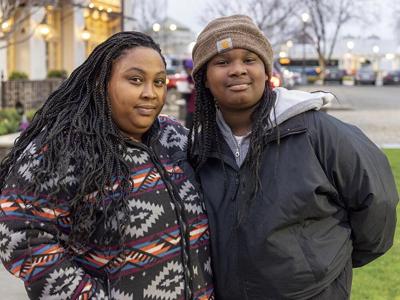

A presentation at Harden Middle School in Salinas on March 9 was meant to uplift Latinos, and educate them about how to be allies of their Black peers. It included information on why they shouldn’t sing or say the N-word. So Brandon Brown, the guest presenter and CEO of SchoolYard Rap – an organization that educates youth minorities across the county – was crushed when, during his presentation, a student accessed the Bluetooth system, and shared an emoji of a monkey with the N-word.
“I was hurt,” Brown says. “I felt attacked.” He says he took a moment to compose himself and decide whether to continue; he did. Instead of following his planned lecture, he focused on how it made him and his colleagues, three Black men, feel.
During Black History Month, Salinas Union High School District was already grappling with another racist incident. A Feb. 24 activity at Rancho San Juan High School invited students to recognize Black trailblazers’ contributions in any field, by decorating classroom doors. Instead, the assignment became evidence of how little many students knew. Some focused on soul food, with images of fried chicken and collard greens; one door showed ice cream cones, and the class used cotton to depict ice cream. (Millions of enslaved people worked in the American cotton industry.)
Art Smith, a pastor at New Hope Baptist Church in Salinas, says instead of using stereotypical food, students might have honored a well-known chef and their signature dishes – someone like Carla Hall or Augustus Jackson, known as the father of modern ice cream.
Rancho San Juan Principal Anthony Hilton shared a statement with parents and staff. “I have been, and will continue to be very reflective on things I could have done differently to prevent harm from being done to members of the RSJHS community,” he wrote.
These incidents come two years after the district made national headlines when photos were shared on social media showing students from Salinas High School mutilating a Black baby doll. After outcry, the district adopted a long-term plan focused on justice, equity, diversity and inclusion. Superintendent Dan Burns says they have started it; the first training focused on LGTBQ+ awareness and pronouns. One goal is to address racial incidents consistently. “The long-term planning is really focused around educating young people, educating staff, educating the community as well,” Burns says.
Still, Salinas High School freshman Alyssa Brown, 14, says she has faced racism at school: “I’ve been called a gorilla, a monkey. I’ve been asked if I wanted bananas,” she says.
Black History Month, she adds, should be the norm. “You shouldn’t want to be nice to me because it’s February. Once that one month is over, there’s no respect for Black people.”
Brandon Brown says the recent incidents reaffirm the district’s need to address racism on its campuses. “It makes the work I’m doing even more necessary. This is why I do the work that I do, to erase ignorance.”


(1) comment
I've been around Salinas since the late 60's and it's always been clickity for lack of a better word. I don't get it. It's completely different in other places I've lived. People of mixed race neighborhoods always got along just fine. What makes Salinas so different? It would be interesting to know what race is targeting the black students. Has that been established? I'm just curious
Welcome to the discussion.
Log In
Keep it Clean. Please avoid obscene, vulgar, lewd, racist or sexually-oriented language.
PLEASE TURN OFF YOUR CAPS LOCK.
Don't Threaten. Threats of harming another person will not be tolerated.
Be Truthful. Don't knowingly lie about anyone or anything.
Be Nice. No racism, sexism or any sort of -ism that is degrading to another person.
Be Proactive. Use the 'Report' link on each comment to let us know of abusive posts.
Share with Us. We'd love to hear eyewitness accounts, the history behind an article.