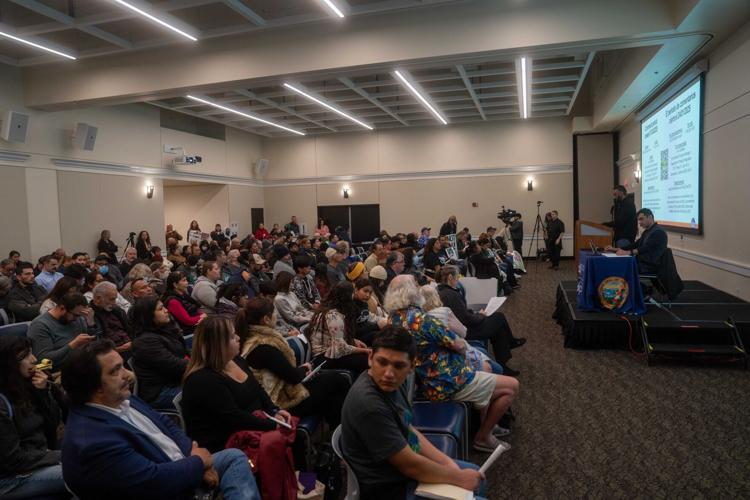
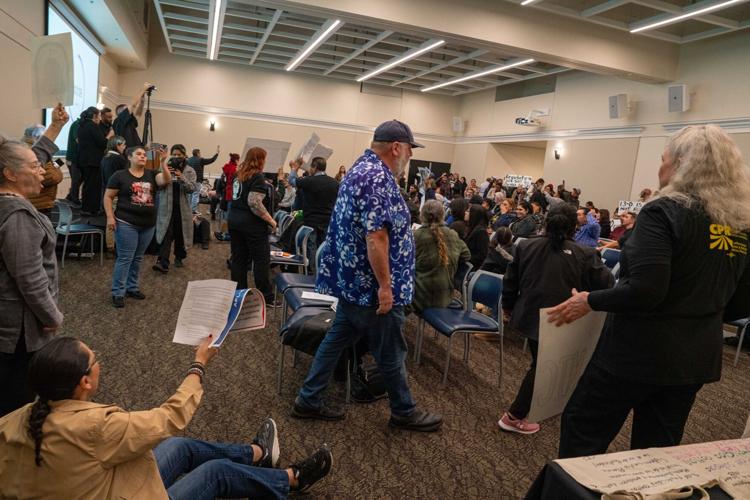
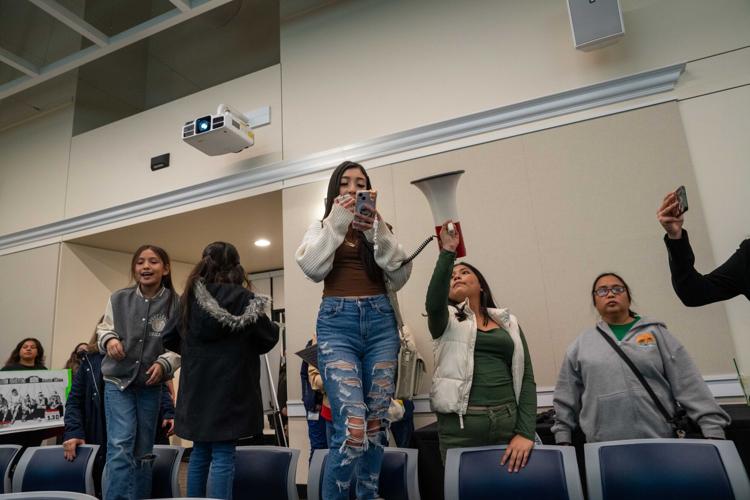

On Thursday night, Jan. 16, the National Steinbeck Center in Salinas was packed with people attending the California Department of Pesticide Regulation’s hearing on the regulations surrounding the pesticide 1,3-dichloropropene, also known as 1,3-D or by the brand name Telone. The room was brimming with farmworkers, teachers, nurses and activists from as far away as Tulare and Ventura, all lining up to deliver passionate public comments. The testimonies, spoken with conviction, conveyed a collective wave of action pushing back against a long-controversial chemical that has affected people’s lives, particularly in Monterey and Ventura counties.
“It is now banned in 40 countries, yet it is the third most-used pesticide [in California]. As the Department of Pesticide Regulation it is in your mission statement to protect human health and the environment,” said Erica Alfaro, a pediatric public health nurse who testified about the children and families she’s seen that have concerns over cancer being caused by the pesticide.
“If this has the ability to be banned, why not? If your mission statement is to protect human health and the environment, there is another option.”
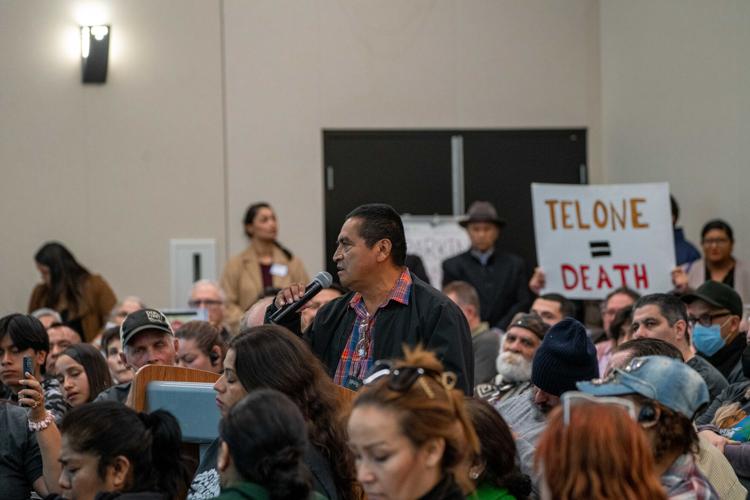
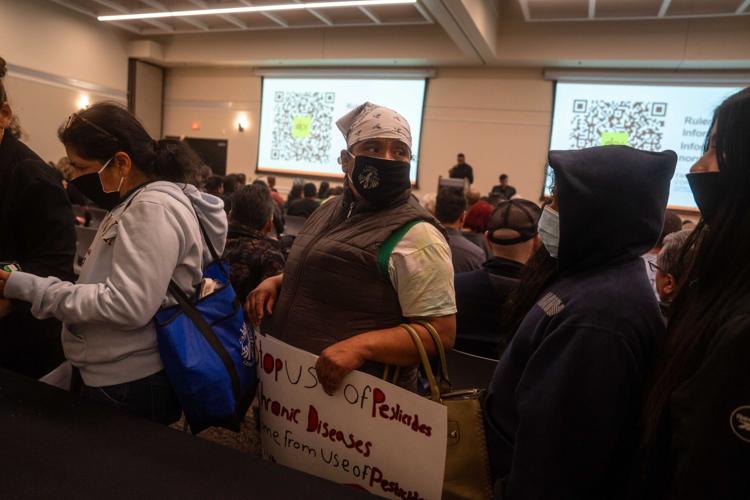
The walls in the conference center were lined with people wearing masks and holding posters with images of people who have died. The words “Telone” were written in red to emulate blood; “our kids deserve better” was written on another. Drawings of tombstones with “RIP” peered above a crowd of around 100 people.
More than 40 people spoke at the podium, criticizing the DPR’s draft rule for reshaping regulations of the chemical based on assumptions about farmworker hours and potential cancer risks from exposure.
“Where is this farmworker who only works 8am to 4pm and is never exposed to 1,3-D before or after work, including childhood and retirement?” said Ann López, executive director of the Center for Farmworker Families. “Because that’s the only person who will be protected by this regulation. In all my years, I have never met such a farmworker. This regulation will protect no one.”
Ana Rosa Rizo-Centino, senior organizer for the Central Coast region for Food & Water Action, said, “Our farmworkers deserve, at the very least, safety. They are the ones who feed you, who feed me, who feed all of us.”
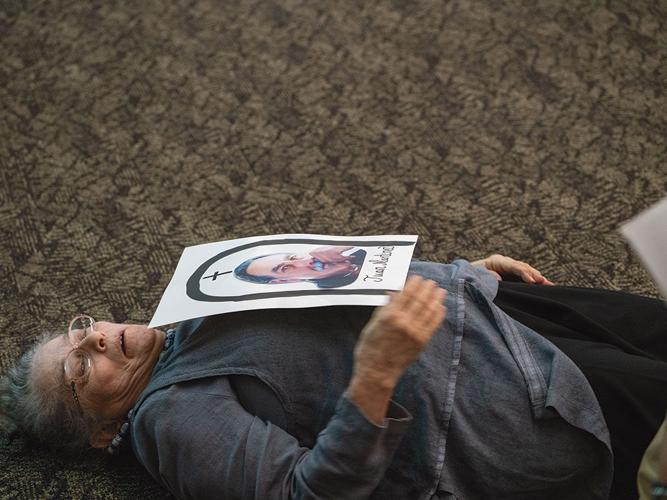
A chaotic scene erupted about an hour-and-a-half into the meeting when several protesters staged a mock “die-in,” lying their bodies on the ground near the podium. Others broke out in chorus, chanting, “DPR, you can’t hide; we can see your racist side!,” which continued for the rest of the hearing.
This meeting was one of several that DPR held to collect public comment on the first draft of this regulation. At the end of the hearing, DPR officials spoke of potential for a second draft with a comment period as early as June.
“The [DPR] appreciates the public interest and engagement in and comment on our regulatory process,” the agency said in a written statement to the Weekly. Written comments regarding DPR’s draft regulation for 1,3-D can be emailed to DPR no later than Jan. 24 at dpr24001@cdpr.ca.gov.





(0) comments
Welcome to the discussion.
Log In
Keep it Clean. Please avoid obscene, vulgar, lewd, racist or sexually-oriented language.
PLEASE TURN OFF YOUR CAPS LOCK.
Don't Threaten. Threats of harming another person will not be tolerated.
Be Truthful. Don't knowingly lie about anyone or anything.
Be Nice. No racism, sexism or any sort of -ism that is degrading to another person.
Be Proactive. Use the 'Report' link on each comment to let us know of abusive posts.
Share with Us. We'd love to hear eyewitness accounts, the history behind an article.