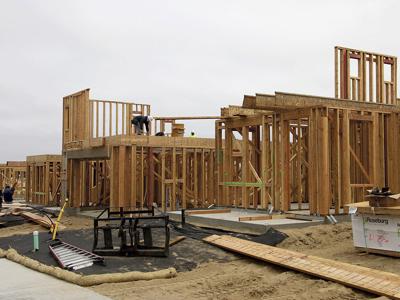

In recent years, the city of Marina has seen massive growth and development on the former Ford Ord: A new shopping center, new streets and new neighborhoods with a mix of affordable and market-rate housing. Currently, Shea Homes is building Phase 2 of the Dunes, 219 homes along Imjin Parkway; that was set to include 45 housing units dedicated to workforce buyers, defined as earning between $105,000 to $141,000 annually.
Marina city staff, however, suggested City Council toss that workforce housing obligation and instead collect what’s known as an in-lieu fee from the developer. Council accepted the suggestion, and on Aug. 3, voted 4-1 (with David Burnett dissenting) to discard the workforce housing program and collect $1.8 million from Shea Homes to develop a local low-income homebuyer program, using $1.6 million for housing and $200,000 to administer the program.
The recommendation from city staff was based on current home prices. The workforce units were set to sell at $749,000 for three-bedrooms and $800,000 for four-bedrooms, while market-rate homes at Shea’s Phase 1 project are selling at $800,000. (Part of the reason the workforce-designated homes were priced so high, says Don Hofer, vice president of community development for Shea Homes, is low interest rates of 3 to 4 percent.)
During the public comment period on Aug. 3, residents of Marina shared differing opinions about the city moving ahead with in-lieu fees instead of the workforce units.
“The $1.6 million is never going to be enough for homebuyers’ assistance,” Paula Pelot said, pointing out that they have tried that approach before.
On the other hand, Nancy Amadeo said, “The workforce housing process is unnecessary, and it’s very expensive.”
Some people see the change as a win-win – Marina will have a homebuyers assistance program and Shea Homes won’t have to spend an estimated $15,000 to $20,000 per home to verify income eligibility. Matt Huerta, housing program manager with Monterey Bay Economic Partnership, provided assistance to both parties in the negotiations, and he says it is a small win for the city.
Homes at market rate are expected to increase property tax revenue. “What we could’ve done, should’ve done maybe five years ago was re-look at the program,” Huerta adds.
Part of the workforce housing plan included a local preference policy that would have given prospective buyers who live or work in Marina an advantage in a lottery for the 45 units. With the workforce housing program gone, Hofer says they won’t be able to do that anymore: “Without the indemnity, we have to treat all buyers equally.”
Hofer say they will continue to target locals, and Huerta says the city should follow up on that because he has seen billboards promoting the homes on his way to the Bay Area. “Is there enough outreach being done to residents here in Marina and in Monterey County? I don’t know. That’s a good question for the developer and for the city.”



(0) comments
Welcome to the discussion.
Log In
Keep it Clean. Please avoid obscene, vulgar, lewd, racist or sexually-oriented language.
PLEASE TURN OFF YOUR CAPS LOCK.
Don't Threaten. Threats of harming another person will not be tolerated.
Be Truthful. Don't knowingly lie about anyone or anything.
Be Nice. No racism, sexism or any sort of -ism that is degrading to another person.
Be Proactive. Use the 'Report' link on each comment to let us know of abusive posts.
Share with Us. We'd love to hear eyewitness accounts, the history behind an article.