
One afternoon in early September, Bill Parsons checked the temperature in his Carmel Valley vineyard with concern. The thermometer peaked at 113 degrees. It was the eighth consecutive day of excessive heat.
“It seems impossible,” says the owner of Parsonage winery. “We lost most of our fruit in that heat wave.”
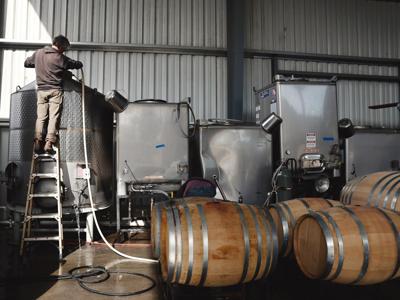
The 2022 winegrape harvest in Monterey County will wrap up at some point in November. It began earlier than normal, on Aug. 9. The sudden rush to pull fruit as a heat dome settled over the area caused a scramble for bins. Many operations were forced to rent tanks as Chardonnay came in on top of Pinot Noir. And a two-year drought ensuring low yields – the only experience shared by most growers in what has been dubbed a “weird year.”
According to Kim Stemler, executive director of the Monterey County Vintners and Growers Association, yields are down 15 to 45 percent from normal. Similar numbers are coming in from across the state.
While Parsons and others took a hit, Jeffrey Blair’s 12-acre plot on the windswept slopes of the Arroyo Seco viticultural area, which looks across the Salinas Valley to the Gabilan Range, barely suffered. While his Pinot Noir and Chardonnay clusters are short and berries smaller, harvest is on schedule.
“Where I’m at, everything is rolling along as normal,” says Blair, who heads Blair Estate. “It depends on where your vineyard is located. It’s just been strange.”
Picking a few weeks earlier than usual helped winemakers escape the worst of the heat damage. An extended heat wave at the wrong time – in other words, harvest – causes vines to essentially shut down. Depending upon the variety, if grapes nearing ripeness endure temperatures in the 90s and above for several days, the sugars and acidity that account for flavor can become stunted. Garrett Bowlus, who tends the Albatross Ridge vineyards off Laureles Grade, had started bringing in grapes just before temperatures spiked. He decided to ramp up the process.
“All of a sudden the harvest got real quick,” he says. “We got 40 percent in before the heat started.”
Albatross Ridge’s Pinot Noir pulled early came in at 21 brix, an expression of sugar levels – in this case slightly on the low side. Sugars in fruit left to recover after the heat subsided climbed to 25 brix, above the target. Bowles plans to blend the two.
“Hopefully it will balance out,” he says. “We’ll see.”


(0) comments
Welcome to the discussion.
Log In
Keep it Clean. Please avoid obscene, vulgar, lewd, racist or sexually-oriented language.
PLEASE TURN OFF YOUR CAPS LOCK.
Don't Threaten. Threats of harming another person will not be tolerated.
Be Truthful. Don't knowingly lie about anyone or anything.
Be Nice. No racism, sexism or any sort of -ism that is degrading to another person.
Be Proactive. Use the 'Report' link on each comment to let us know of abusive posts.
Share with Us. We'd love to hear eyewitness accounts, the history behind an article.