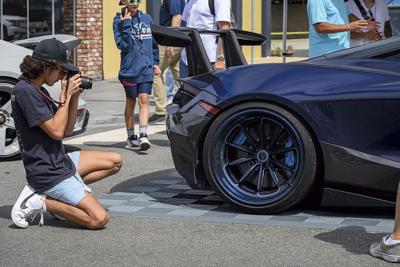

WHEN MOST PEOPLE THINK OF CAR COLLECTORS, they might think of those who meticulously maintain their collection in a climate-controlled garage, wiping off every flake of dust. Actually driving them? Forget about that.
That may be true for many of the baby boomer-aged collectors. But the collector world is in the midst of a transition, where a new generation of enthusiasts are buying older vehicles to – *gasp* – use them.
Jeremy Malcolm, public relations manager at Hagerty, a company that provides insurance for classic vehicles and tracks market trends, falls squarely in the millennial generation as a 31-year-old. Malcolm has been involved with many events surrounding Car Week, such as interning at the Pebble Beach Concours D’Elegance. Yet Malcolm loves his 2003 Porsche Boxster S, a car that can be had for well under $20,000.
“It’s affordable to maintain and it’s reliable,” he says. “I’m the type of enthusiast that drives as much as possible. I love to just be going places.”
That’s important for millennials (used to describe those born between 1981 and 1996), a generation that’s generally had less disposable income than its predecessors. A 2024 study published by the University of Chicago found that the average millennial has 30-percent less wealth at 35 years old compared to baby boomers at that age.
Millennials crave experiences on the cheap. Malcolm says rugged SUVs such as Ford Broncos and Chevrolet Blazers from the 1960s-’70s are particularly of interest among millennials, as well as Gen-Xers who want to go off the beaten path in a relatively simple vehicle that doesn’t require specialized training to maintain.
Millennials also grew up on a healthy diet of racing video games such as Gran Turismo and movies such as The Fast and the Furious, and their car-buying habits are reflective of that – Mitsubishi Lancers and Nissan Skylines are high on Hagerty’s list of the vehicles showing the most interest among the generation.
In 2023, Hagerty reported that Gen-Xers surpassed boomers as the generation that requested the most insurance quotes for a classic vehicle. Millennials and Gen Z (born between 1997-2012) combined were approaching boomers, with 30 percent of the share compared to 32 percent.
In July, Hagerty released the results of its “Future of Driving” survey, which showed that 60 percent of Gen Z respondents said they were interested in owning a classic car, compared to only 31 percent of boomers.
The Mazda Miata from 1990-1998, a zippy little roadster made in Japan, is the most common car Gen-Zers request insurance quotes for from Hagerty. These cars are ubiquitous, affordable, simple and reliable. “The answer is always Miata” is a popular saying among enthusiasts looking for a fun car to own.
Across any generation, buying a collector car is based on emotion. Nostalgia is a big part of that. For millennials who grew up in the ’80s and ’90s, they are drawn to that era as a reminder of their childhood years. Events such as RADwood, held throughout the country, capitalize on that, a celebration of the lifestyle from those decades – all the way down to the fashion (flannel abounds) and, of course, the vehicles.
Gordon McCall is the director of motorsports at The Quail in Carmel, which has been putting on The Quail, A Motorsports Gathering during Car Week for more than 20 years. He says the generational shift among the collector world is well underway. But how younger collectors enter the market is different from their predecessors, he notes.
You probably won’t see too many millennials or Gen-Zers sitting in the front row of a live auction bidding on cars, McCall says. Rather, the internet is where many are buying, such as through Craigslist, eBay, Facebook Marketplace and other websites. Most auctions now devote a team to accept internet bidding.
As values increase, younger collectors are faced with a higher cost of entry into the market, McCall says, and the cars that they are interested in are newer and more complicated due to government regulations, therefore difficult to work on themselves.
McCall echoes Malcolm on the importance of usability when it comes to collections – younger people want something practical and capable of going places on and off the road that won’t break the bank.
McCall says programs such as Rancho Cielo’s classic car restoration classes, which teach young people how to maintain vehicles pre-1982, are critical to the future of the hobby. He recommends beginning collectors buy cars that they love, not the ones they think will go up in value. The joy of owning a car comes from actually driving it.
“If you’re buying something because you think it’s going to go up in value, it’s the wrong way,” he says. “That’s secondary. If it happens to go up in value, you’ve won the lottery. But the use of it is a value.”
Malcolm says he is excited about the future. Social media has made it more accessible for younger people to get into classic cars.
“It has been a huge benefit to the diversity of the hobby,” he says. “The future’s bright for this next generation of enthusiasts.”
McCall says that for anyone who thinks the passion for driving is dying in the younger generations, visit Exotics on Broadway in Seaside during Car Week and watch the kids excitedly check out the cars. Or go to a race at WeatherTech Raceway Laguna Seca and witness the smiles on children’s faces as a “1,200-horsepower car goes flying by. They’ll never forget that.”
“A lot of people like to say it’s going away, that kids are on their phones and don’t care,” he says. “I disagree with that. For those of us who have been around for a while, it’s on us to pass it down.”


(0) comments
Welcome to the discussion.
Log In
Keep it Clean. Please avoid obscene, vulgar, lewd, racist or sexually-oriented language.
PLEASE TURN OFF YOUR CAPS LOCK.
Don't Threaten. Threats of harming another person will not be tolerated.
Be Truthful. Don't knowingly lie about anyone or anything.
Be Nice. No racism, sexism or any sort of -ism that is degrading to another person.
Be Proactive. Use the 'Report' link on each comment to let us know of abusive posts.
Share with Us. We'd love to hear eyewitness accounts, the history behind an article.