Jazz was America’s most popular music beginning in the Roaring ’20s, and like the universe itself, hasn’t stopped expanding. It is acoustic, electric, fusion, swing, big band, bebop, brass, bluesy, moody, often transcendent.
The storied Monterey Jazz Festival is a mecca for aspiring jazz musicians and seasoned masters alike, and the fairgrounds becomes a surprisingly divine space for one weekend a year. MJF’s 59th, presents Grammy winners to the best young players, delivered relentlessly on eight stages. This year, MJF features acclaimed guitarist Pat Metheny, 13-year old Bali phenom Joey Alexander, 83-year old legend Wayne Shorter (playing a piece commissioned by the festival), Joshua Redman, Quincy Jones, plus more than 500 other artists.
In the following pages, we bring you the stories of a few standout artists at various stages of their careers, a small jazz sampler. Monterey Jazz will surprise and delight.
– Bradley Zeve
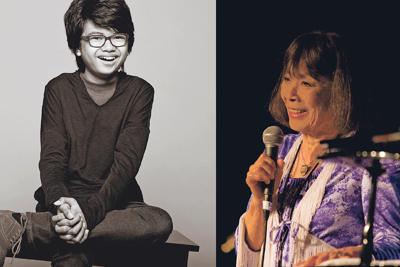
It was a quiet afternoon with family all around, at home in the living room playing games, eating, drinking tea, laughing. All of a sudden the youngest in the room climbs up onto the piano bench for the very first time, and out comes jazz music: real, live, full-blown piano jazz – from a 6-year-old. “Even when I was a baby I was listening to music all the time,” recounts Joey Alexander. “I just heard something in my head that day. My dad plays piano so I thought I would give it a try.”
He’d been playing on a few children’s keyboards since he was very young, but this was his first time on the bench, at a real grown-up piano. His surprised family members decided to encourage Alexander’s exceptional musical talent.
Now living in New York, Alexander, a Bali native, is being homeschooled by his dad and learning English as a second language. He also spends three to four hours per day practicing piano, and can already play famous tunes by the jazz masters as well as anyone, even though he stands barely as tall as the keyboards upon which he wails. Alexander turned 13 on June 25, and says he really likes hamburgers, movies and video games. But he sounds grown-up when he reflects on what he likes most about playing: “Being swept away to another place,” he says. “It’s just a part of the music.”
Just as classical has its masterpieces, jazz has its standards, and both fill similar functions within each genre. In jazz, they call them standards because encoded within the written music are specific instructions as to how the players create the sound we think of when we think of jazz; tunes so widely known they’re etched into the collective unconscious of listeners. Think “My Favorite Things” or “Georgia On My Mind.”
Even young Joey Alexander displays a reverence for these old-school greats, as evidenced in his latest disc Countdown, on which all but three of the cuts are jazz masters’ standards. It all reads like a fairy tale for him these days: He has already garnered two Grammy nominations, and became an overnight sensation after appearing at Wynton Marsalis’ Jazz at Lincoln Center Gala in 2014. He performed at both the Montreal and Newport jazz festivals last year for the first time, at age 12, and he makes his first Monterey Jazz Festival appearance this weekend at age 13.
His first album, My Favorite Things, was released in May 2015 when he was just 11, and he’ll celebrate the release of his second disc, Countdown, with a gig at the historic New York City jazz club Dizzy’s later this month. “I just want to play around the world, sharing my music with the world,” Alexander says.
“You can’t learn jazz from a book.”
And he’s still learning from the greats: “I’m still listening to all the great masters I always have: Monk, Coltrane, Miles, Wayne, Herbie. And now, I’m listening to gospel music,” he adds. “Oh yeah, gospel – I love it!”
Add to that list the celebrated jazz pianist Toshiko Akiyoshi, who is also appearing at the Monterey Jazz Fest this weekend. Alexander says he’s heard a lot about her in the New York City jazz circles they both frequent.
While both pianists started playing at nearly the same age in life – at 7 and 6 – Akiyoshi is now basking in the afterglow of an illustrious life-long career as a bandleader, composer and solo pianist which has spanned the past seven decades. Her family moved from her birthplace in Manchuria, in northeastern China, to Japan in 1946. It was the time of the Allied occupation, and there were separate dance halls for the American and Japanese troops. She was hired to play at the Japanese dance hall, where she met a jazz record collector who played Teddy Wilson’s classic “Sweet Lorraine” for her, and it changed her musical life.
“Suppose that he had played Thelonious Monk,” recalls Akiyoshi. “I don’t think I could’ve understood that because his music was too sophisticated for my ear, since I had never even heard jazz before.”
But tunes by Wilson, an older swing player, were different. “His music was clean, beautiful piano that really appealed to me because I was classically trained,” Akiyoshi says. “When I heard that, I thought, ‘I wanna play just like that.’ So that was my entry into the jazz world.”
Akiyoshi first came to the U.S. in 1956. At that time, all the jazz clubs were different. “Each group would stay for a week,” remembers Akiyoshi, “and they often would play five sets per night, unlike now when groups stay a night or maybe two, and play only two sets per night.”
This difference created myriad opportunities to sit in with the greats, and that is exactly what Akiyoshi did, rubbing elbows and jamming with the likes of Max Roach, Clifford Brown, Sonny Rollins and Miles Davis in Chicago, Boston and New York before permanently moving to New York in 1972. “This year is significant to me,” she says. “I came to the U.S. exactly 60 years ago, so I’m a little sentimental about that and I’m very happy and grateful that I was invited to play at the jazz festival this year.”
In some ways, she’s coming full circle from 1972, a year dominated by hardship. “I was in New York, and all I could think of was how I was going to get the next month’s rent. I was barely surviving, and struggling,” Akiyoshi says.
All that began to change for the better when another celebrated pianist, the great John Lewis of Modern Jazz Quartet fame, and then music director for the ’72 Monterey Jazz Festival, called and invited her out to perform with himself, Dr. Billy Taylor and Erskine Hawkins.
“It was quite an experience,” Akiyoshi says, “and after that the jobs slowly started to trickle in. Luckily I was able to make it.” She also founded the 16-person Toshiko Akiyoshi Jazz Orchestra ensemble in 1972, a project that spanned some 30 years.
“We have a saying,” Akiyoshi says, “‘You can’t learn to swim on a tatami (a Japanese floor mat).’ In other words, you can’t learn jazz from a book. You have to play with the players, and that’s how you learn. I was very fortunate to come at a time when that was easily possible. You can’t do that so easily today. It is just not the same. That experience is my asset.”
There will always be the succession of generations and often the music is its own reward. At this year’s Jazz Festival, the generations will be on full display.
In spite of their differences, Alexander and Akiyoshi share this: a simple desire to play jazz. Asked about her future plans, Akiyoshi says, “I don’t really have any goals or dreams. Remember, I had my own big band for over 30 years and it was a fully realized vehicle for my own personal expression. I just want to play now – solo, duo and I’m bringing a trio to Monterey. I have been very, very lucky,” offers Akiyoshi, “and I am very, very grateful.”
Asked about his future plans, Alexander echoes, “I’m just grateful for the now, and very thankful to God for my gifts.”


(0) comments
Welcome to the discussion.
Log In
Keep it Clean. Please avoid obscene, vulgar, lewd, racist or sexually-oriented language.
PLEASE TURN OFF YOUR CAPS LOCK.
Don't Threaten. Threats of harming another person will not be tolerated.
Be Truthful. Don't knowingly lie about anyone or anything.
Be Nice. No racism, sexism or any sort of -ism that is degrading to another person.
Be Proactive. Use the 'Report' link on each comment to let us know of abusive posts.
Share with Us. We'd love to hear eyewitness accounts, the history behind an article.