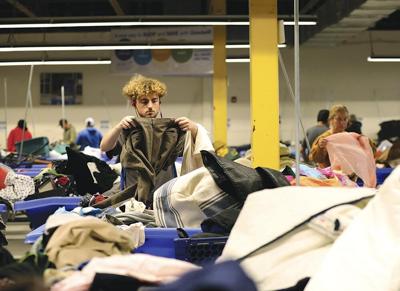

THRIFTING HAS CAREENED INTO THE REALM OF THE COOL OVER THE PAST DECADE. Whether this trajectory began with Macklemore and Ryan Lewis’ 2012 hit song “Thrift Shop,” or with the still-growing backlash to fast fashion that grew out of the 2013 Rana Plaza garment factory collapse in Bangladesh – or with something else entirely – is hard to say. Still, it’s clear that what was once viewed as a deficiency in the world of fashion is now a mark of creativity, trendiness and eco-consciousness.
According to the 2022 Fashion Resale Report by the online secondhand marketplace ThredUp, the secondhand fashion market in the U.S. has been growing steadily since 2012. In 2021 it was valued at $35 billion, and that number is expected to more than double by 2026. Also in 2021, 244 million American consumers said they either have, or are open to, shopping secondhand. And younger generations seem to even take a secondhand-first approach – 62 percent of Millennials and Gen Z say they look for an item secondhand before buying it new.
When asked by the GlobalData Consumer Resale Survey why they buy secondhand instead of new, consumers identified cost as a primary reason – buying secondhand clothing is generally cheaper. But there were more emotional and environmental reasons too – the appeal of finding one-of-a-kind items and (for younger generations especially) reducing their carbon footprint were also top motivations.
I’VE ALWAYS HATED SHOPPING BUT LOVED A GOOD THRIFT STORE. Sometimes my secondhand shopping is practical – I need a new pair of pants. At other times, and these are the best times, it feels like an activity divorced from consuming entirely – just a treasure hunt in which I might encounter a beautiful blue linen shirt, or a $5 cashmere sweater, or maybe, probably, nothing at all.
And so when I found myself in need of a dress to wear to a wedding recently, I knew exactly what I would do. But when the first store (and then the second, and the third) yielded nothing, I began to doubt the wisdom of my approach. Thrifting often requires time, and I didn’t have much of that.
At the fourth store I visited, though, I found options I deemed close enough to what I was looking for to take into the dimly lit dressing room. Really, the only thing these dresses had in common was that they were dresses. Unlike stores selling new clothing, which tend to present a shifting palette of the current trend, crafted by the brand’s designers and informed by consumer demand, secondhand stores are a potpourri of brands and styles and eras of fashion. This is part of the fun.
I slipped in and out of the dresses, debating the merits of each. Could I pull off a tight, pink velvet slip dress, or did it make me look like a sausage? Is this unusual shade of mint green flattering, or just unusual?
AS THRIFTING HAS GROWN IN POPULARITY IN THE PAST FEW YEARS, a chorus of think pieces has blossomed alongside, questioning whether this is a purely positive development for consumer capitalism. There’s concern about the “gentrification” of thrift stores, essentially people with higher incomes shopping at secondhand stores because it is “cool” and thus driving prices out of reach of the lower-income consumers who have traditionally relied on these stores for affordable clothing and household goods. Proponents of this idea point to the proliferation of online platforms like Depop or Mercari, peer-to-peer used fashion sites where users can, and do, set up “shops” selling thrifted goods at significant markups.
At the Goodwill outlet in Salinas – a regional headquarters for a 16-store region – e-commerce Manager Rocquel Chagolla says some customers come daily to shop for discounted clothing by the pound. Many regulars take their items outside to the parking lot, photograph them and post them online for resale within minutes.
Seen one way, Depop sellers are providing value by taking on the time and energy of sorting through goods and offering customers the ability to buy exactly what they are looking for. These sellers are then paid, through the markup, for this service. Critics, however, say this is driving an increase in thrift store prices.
Another critique questions whether the environmental promises of shopping secondhand are actually borne out. Rabid consumption of used clothing items already in circulation seems at least somewhat better than rabid consumption of new items, but are we just patting ourselves on the back without really changing our behavior?
It’s true that thrift store prices have risen, but is that because of sites like Depop, or is it due to inflation or rising rent and labor costs or some combination? And is over-consumption of secondhand goods (the “thrift hauls” seen on YouTube and TikTok) really a problem, or is it just visible due to social media?
The problem with these questions is that there’s no clear answer. But for thrift store managers like Freya Read and Tori Olson of Last Chance Mercantile, grappling with big, thorny concepts like value and price and fairness – and how these concepts intersect – is all in a day’s work.
The philosophy at Last Chance goes like this: “price the need-to-haves low, the nice-to-haves – price them what they’re worth,” Olson says. “We’re trying to walk the walk between community support and having a successful business,” Read adds. “It’s difficult.”
The complexity of these questions is also part of their value. Shopping secondhand exists in the same messy ecosystem as the rest of capitalist consumerism. It’s possible to partake both more responsibly and less so
THE FINAL DRESS I TRIED ON TURNED OUT TO BE THE ONE. It slipped on like a piece of clothing I’d owned for years – and I could see myself transformed in the mirror, from Wednesday afternoon comfort to Saturday night, living it up on the dance floor.
Maybe one day it will give another thrifter that same experience.


(0) comments
Welcome to the discussion.
Log In
Keep it Clean. Please avoid obscene, vulgar, lewd, racist or sexually-oriented language.
PLEASE TURN OFF YOUR CAPS LOCK.
Don't Threaten. Threats of harming another person will not be tolerated.
Be Truthful. Don't knowingly lie about anyone or anything.
Be Nice. No racism, sexism or any sort of -ism that is degrading to another person.
Be Proactive. Use the 'Report' link on each comment to let us know of abusive posts.
Share with Us. We'd love to hear eyewitness accounts, the history behind an article.