
In November 2019, Mariana Jurado had everything in the world to look forward to.
At 26, she was months away from giving birth to her first child and growing a family with her husband in their apartment on Clay Street in downtown Salinas. She worked at a bank in Carmel, with people who liked her and respected her upbeat, can-do attitude, and was just days away from switching locations and starting a new job at a bank closer to her home. She donated to the SPCA and she loved animals. Most of all, her mother says, she stood up; if she saw someone being unfair or taking advantage of someone else, she was never afraid to say what was happening wasn’t right.
In November 2019, Garrett Scheff didn’t have much of anything to look forward to.
At 43, he alternated between homelessness and incarceration, sometimes high on cocaine or meth, and sometimes – during stints in jail, prison or a state psychiatric hospital for crimes ranging from vandalism to burglary – sober.
At the First United Methodist Church in Oldtown Salinas, where in 2018 he occasionally grabbed a hot meal, Scheff was described as a quiet loner who got his tray, sat by himself, said nothing to anyone and left when he finished eating. On social media, his presence vacillated between that of a man looking for a pretty woman to call his own, or that of a tough guy. He poses in photos, bare-chested and wearing a beanie and sunglasses, his chin tilted upward toward the camera with a tattoo reading “Salinas” inked across his stomach. He calls himself a “Nor-Cal Peckerwood” – it’s a white supremacist gang with a presence in the state prison system, but it’s not clear whether Scheff was actually a member or just a wannabe.
But in another post, from 2012, he writes plaintively, “Desiree is always on my mind, even when I sleep. I will never be happy till I see her only.”
In November 2019, Jurado and Scheff crossed paths on a morning best remembered for its horror and destruction. As Jurado left her apartment just after 9am on Nov. 19 and walked to her car to go to work, she encountered Scheff on the street. For reasons that likely exist only within his own troubled mind, he allegedly confronted her with a knife and stabbed her at least three times.
Her agonized screams brought out a neighbor, who called 911 and trailed Scheff down the street while on the phone with dispatchers. Her screams also brought out her husband. Jurado lived long enough to describe her attacker, and long enough to be loaded into an ambulance and taken to the trauma center at Natividad Medical Center.
There, just a short time after she arrived, Mariana Jurado and the fetus she carried were pronounced dead. Salinas police arrested Scheff a block away from her apartment; they found the knife used in the attack dropped under a nearby bush.
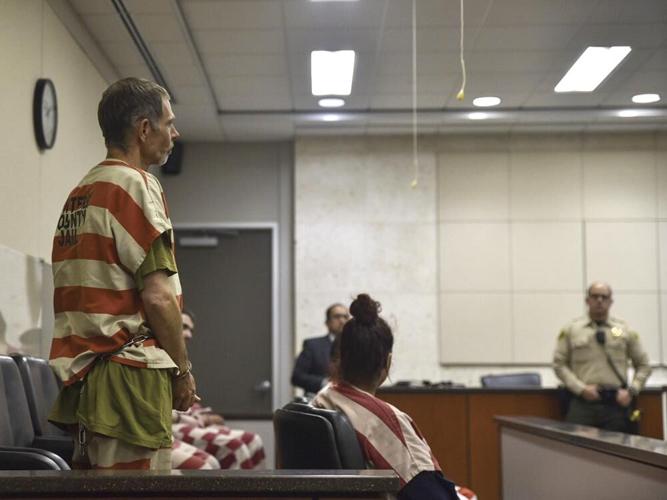
Now, one year later, Scheff’s case has barely proceeded through Monterey County Superior Court, where he’s charged with two counts of murder – one for Jurado, one for her fetus – in a case that could bring a death sentence if he’s convicted under the special allegation that he committed multiple murders.
Part of the slow movement of his case is due to the pandemic, but a larger part is due to his mental health. In January, before the pandemic struck California, Scheff’s competency was called into question and Judge Mark Hood ordered him to undergo a mental health evaluation to determine whether he was competent to stand trial.
He was found not competent.
Now Scheff is in something of a holding pattern. Officials aren’t allowed to say what kind of mental health therapy he’s receiving, but based on public information available on the Monterey County Jail’s website, he’s being housed in a unit specifically reserved for inmates enrolled in a new program. Called Jail-Based Competency Treatment, or JBCT, it’s where psychologists, psychiatrists and social workers, using medication and therapy, will attempt to restore him to competency so he can proceed to trial.
If the jail program can’t restore him to competency, he will be sent to a state hospital for longer-term treatment. If a state hospital stay can’t restore him to competency, it’s possible the criminal case could be dismissed and Scheff could be “conserved,” or made a ward of the state and face civil commitment to a hospital.
But that doesn’t mean he would remain hospitalized or even incarcerated for the rest of his life.
When it comes to defendants with serious mental health issues accused of committing crimes, “there is,” says Monterey County Jail psychologist Kim Mitchell, “no throwing away the key anymore.”
UNDER CALIFORNIA LAW, A DEFENDANT IS CONSIDERED IST – INCOMPETENT TO STAND TRIAL – if, as a result of a mental disorder or developmental disability, he can’t understand the nature of the criminal proceedings against him and he can’t assist his attorney with his defense in a rational manner.
In short, the U.S. Supreme Court decided, competence to stand trial means a defendant has “sufficient present ability to consult with his lawyer with a reasonable degree of rational understanding” and have “a rational as well as factual understanding of the proceedings against him,” according to Disability Rights California, a nonprofit that advocates for the civil rights of mentally, physically and intellectually disabled people, including those in juvenile and adult detention facilities.
It’s a mixed bag. A defendant might understand why he’s in court, and might be able to understand the role of the judge, the prosecutor and the defense attorney, but might not be able to assist his attorney during proceedings. Or the defendant might not understand the roles of the judge, prosecutor and defense attorney, but might understand he’s in court because he’s been charged with committing a crime.
To proceed through the system and either plead to a crime or seek a verdict through a trial, a defendant has to understand both.
Not every defendant living with a mental illness has a competency issue, either – in fact, the majority don’t. Over the course of his 40-year career, Monterey County defense attorney Steve Rease estimates between 60 percent to 70 percent of his clients have had a mental health issue, ranging from minor or serious depression to bipolar disorder or schizophrenia – in some cases diagnosed and treated, but in many cases, undiagnosed and never treated.
Defense attorney Scott Erdbacher says the system doesn’t do much for defendants with mental health issues: “You try to direct them to treatment and try to get them a diagnosis if you can. It’s always up to the individual to follow up, but more often, that follow-up doesn’t happen,” Erdbacher says. “And they could be capable people if they had treatment.”
The lack of follow-up, Rease says, often happens because a defendant lacks a support system, insurance, the wherewithal to get help or a combination of all three. Worse than lacking a support system, they also may have a family dynamic that actively disbelieves mental health issues are a real thing and eschews treatment.
“When they go untreated, they sometimes resort to antisocial behavior, and our system is oriented to punishment, not treatment,” Rease says. “The clients go to jail, they have issues, they eventually get out and go back into the community as homeless or in a home environment not oriented to getting treatment.
“There may be nobody to guide them through the mental health system,” Rease says, “so the jails and prisons become the default place where these folks end up. If you’re dealing with bipolar disorder or schizophrenia, being in Judge Butler’s court at 8:30am isn’t high on your radar. It’s nothing personal, it’s just not where their focus is.”
IT GOES BACK TO 1967. That’s when California’s then-Gov. Ronald Reagan (in a move that, depending on whom you ask, was either meant to save money or meant to serve as a patient’s bill of rights) signed the Lanterman-Petris-Short (LPS) Act. Part of the state Welfare and Institutions Code, the act went into full effect in 1972. Its intent was multi-faceted, but included ending indefinite and involuntary commitment of people with mental health disorders or intellectual disabilities and to provide individualized treatment, supervision and placement services through conservatorship programs for the gravely disabled.
If you’ve ever heard anything on the theme of opening the floodgates on mental hospitals or closing down mental health facilities in California, that was it.
In 1963, more than 35,000 patients were being treated in the state’s 14 mental hospitals. LPS put the onus on counties to treat patients and state hospitals began to close, releasing – as the National Alliance on Mental Illness put it – “thousands of ill, confused and vulnerable individuals into communities that were simply unprepared to provide the services and support envisioned” by the authors of LPS.
According to a 2016 story by KQED, the year after LPS went into effect, the number of mentally ill people entering the San Mateo criminal justice system doubled. In his 2014 book American Psychosis: How the Federal Government Destroyed the Mental Illness Treatment System, psychiatrist E. Fuller Torrey recounts how when Reagan ascended to the presidency, he took his California experiment nationwide and gutted Jimmy Carter’s Mental Health Systems Act, which was meant to fund community mental health centers.
Torrey writes about a legislative panel in 1973, when then-California Department of Mental Health Deputy Director Andrew Robinson justified the LPS Act.
“People whom we have released have gone out and killed other people, maimed other people, destroyed property; they have done many things of an evil nature without their ability to stop… that sounds bad, but let’s qualify it.”
The qualification: Chances are, nobody was going to get hurt.
Erdbacher, who’s been in practice as long as Rease, thinks Rease’s estimate on how many of his clients suffer from mental illness might be low.
“For me, it’s probably 100 percent of my clients that have some form of mental illness,” he says. And like Rease, many of those clients have gone undiagnosed and untreated, for everything from bipolar disorder to schizophrenia.
In most cases, they just live with it and suffer.

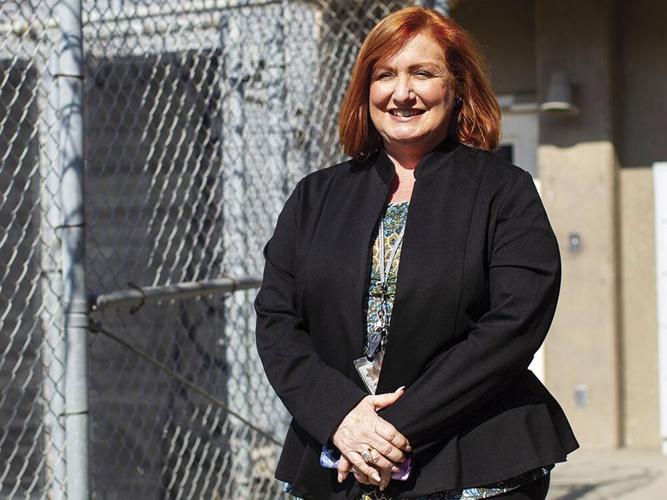
Psychologist Kim Mitchell runs the Jail-Based Competency Treatment program at the Monterey County Jail, where she, a psychiatrist and two social workers try to restore competency to defendants who have been found not competent to stand trial. Ten defendants at a time are enrolled in the program, which launched in May.
SOMETIMES, THEY LASH OUT. But sometimes, aided by a small army of attorneys from the ACLU and other civil rights organizations, defendants also sue.
In Monterey County, that happened in 2013, when 22 current and former Monterey County Jail inmates sued the county, the Sheriff’s Office and jail’s then-medical provider, California Forensic Medical Group, claiming conditions at the jail constituted cruel and unusual punishment.
The federal class action lawsuit, Hernandez v. Monterey County, claimed the conditions at the jail violated state and federal law due to failure to protect inmates from violence, failure to provide reasonable accommodations to prisoners with disabilities and failure to provide adequate medical and mental health care. In 2015, the same year five inmates died at the jail, both sides agreed to settle and the jail agreed to set new standards for inmate medical and mental health care.
Here’s where the distant past (Reagan), the recent past (the Hernandez suit) and the present meet.
Right now, there’s a list of 1,000 jail inmates in California waiting for a state hospital bed. A piece in the academic journal CNS Spectrums notes that some states have been held in contempt of court for violating limits on how long incompetent defendants can be held in jail while they wait placement. Once a defendant is found competent, meanwhile, the system has 10 working days to return that defendant to court for a judge to declare them competent and move their case forward.
It led the Department of State Hospitals to develop and fund, with $19 million in the 2019-20 budget, the jail-based competency programs as a way to alleviate the long waits for hospital placement. Per the DSH, the in-jail program is supposed to last 90 days and if an inmate can’t be restored to competency in that time, the inmate is then supposed to be transferred to a state hospital.
The Monterey County Jail began accepting patients into its JBCT in May.
District Attorney Jeannine Pacioni says one of the historic problems has been waiting for state hospital beds, transferring defendants when a bed is available, having them restored to competency and then seeing that defendant lose competency again in the time it takes them to return to court.
“Our program is new, but we’re optimistic it will shorten the time it takes to return to court,” Pacioni says. “The jail-based competency program became very important. The defendant is already in custody, in most cases, so you don’t have to transport them, there’s no waitlist, and they can initiate treatment immediately.
“It’s more efficient and it’s more humane,” she says.
AT THE MONTEREY COUNTY JAIL, THERE ARE 10 INMATES – the maximum number allowed – enrolled in the jail-based competency program, with several others waiting to come in as spaces become available. Psychologist Kim Mitchell is an employee of Wellpath (see sidebar, at right) who came to the jail in February after years of working in the state prison system, and works with those inmates.
“It’s really intensive,” she says of JBCT. “All they do all day long is competency and mental health treatment.”
The purpose is for a defendant to return to court, know their rights and meet the standards laid out by the Supreme Court – to be able to work with their attorneys, assist in their defense and understand the court proceedings. All of the defendants in the Monterey County Jail’s program are men (there’s currently no program for female defendants), and the program accepts defendants from Santa Cruz and San Benito counties as well.
On staff specifically for the program are a licensed clinical social worker, a licensed-vocational nurse, a psychologist, two sheriff’s deputies, a psychiatrist who meets with participants once a week (and is available by phone the rest of the time), and an administrative assistant. The program combines clinical treatment that includes teaching impulse control and coping skills; depression and psychosis management; post-traumatic stress disorder treatment and anger management skills.
It teaches citizenship and cooperation, such as cleaning their housing unit’s common areas, supporting each other’s efforts and learning acceptance. Good citizenship enables them to earn rewards or incentives. But it also teaches defendants legal terminology, understanding legal pleas and their implications and what their rights are.
Once a month, the program holds a mock trial in order to get the participants familiar with what happens in court.
“The staff members act as court officials and we take them through the beginning of a hearing and who would do what. They have to know what each person does,” Mitchell says. “We don’t do specifics of their case – that’s private – but it gets them used to being in front of a judge.”
Medication also plays a key role. Most of the program’s participants, Mitchell says, have some sort of psychosis or other serious mental illness, and the medication is necessary to calm them down and enable them to listen, absorb information and focus.
“Pretty much everyone is on some type of medication. It’s not necessarily super-strong, but it helps balance them out,” she says. Not all of the participants take medication voluntarily; if a psychiatrist recommends it, a judge can order a defendant to be involuntarily medicated to help restore competency.
SO FAR, THE JBCT IN MONTEREY COUNTY HAS RESTORED 14 DEFENDANTS to competency and sent two defendants to state hospitals for further treatment. The average time a defendant has stayed in the program is 54 days.
“They are getting a lot of therapeutically oriented attention. Someone is with them from 6am to 5pm and they’re treated humanely, they’re treated like patients and they’re sick, and they can’t help what they have because they’re ill,” Mitchell says. “It’s a non-threatening and accepting atmosphere and it lets them be able to discuss their issues and feel safe about it.”
Once a defendant leaves the JBCT, because competency has been restored, they’re not monitored in the same intensive way – and it provides another opportunity for some to go off their medications and once again lose competency before they can go back to court.
In the general jail population, which pre-pandemic sometimes reached 900 inmates or more, there are just two full-time social workers who run specific mental health programs and try to get defendants connected to services and counseling.

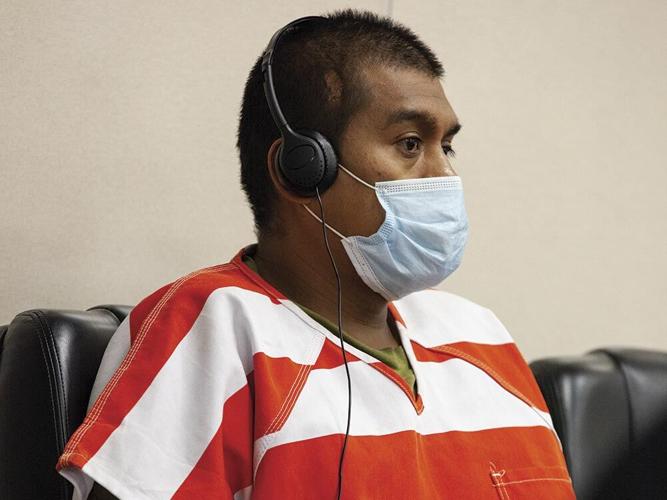
Ivan Gomez listens to testimony during his preliminary hearing on Oct. 29 in Monterey County Superior Court. Gomez is accused of starting the massive Dolan Fire in Big Sur. Defense attorney Mike Belter raised an issue of Gomez’s competency to stand trial, and after a psychological evaluation, Gomez was found competent.
For a time, Ivan Geronimo Gomez, the man accused of setting the Dolan Fire in Big Sur, straddled both populations. His attorney raised the question of whether Gomez was competent to stand trial, and he underwent a psychological evaluation, in which a psychiatrist found he was competent.
On Oct. 29, after a preliminary hearing that revealed Gomez was in Big Sur to work a large, illegal cannabis grow and allegedly set the fire either to rid the area of spiders or to cause harm to his co-workers, sheriff’s detectives testified, Judge Pamela Butler ordered Gomez stand trial.
Because of privacy laws, it’s unclear why the competency question was raised, and what mental health treatment he might be receiving as he awaits trial.
Garrett Scheff is also waiting. Again, because of privacy laws, it’s not clear that he’s participating in the JBCT program at the jail, or, if he is, to what extent he’s participating and benefiting from it.
At a hearing before Judge Hood on Aug. 11, Scheff’s defense attorneys said he was still in review status and was on the waitlist for transport to a state hospital. His next appearance in court is set for Nov. 17.
If he’s sent to a state hospital, the law gives the DSH two years, from the date he was declared incompetent, to restore him to competency, at which point he would face trial. If they can’t restore him to competency, he would go back to court and the charges could be dismissed. From there, he could be appointed a conservator, then face civil commitment.
After that, he would come back to court every two years to see if competency has been restored. If it has, he could face trial for the killings.


(0) comments
Welcome to the discussion.
Log In
Keep it Clean. Please avoid obscene, vulgar, lewd, racist or sexually-oriented language.
PLEASE TURN OFF YOUR CAPS LOCK.
Don't Threaten. Threats of harming another person will not be tolerated.
Be Truthful. Don't knowingly lie about anyone or anything.
Be Nice. No racism, sexism or any sort of -ism that is degrading to another person.
Be Proactive. Use the 'Report' link on each comment to let us know of abusive posts.
Share with Us. We'd love to hear eyewitness accounts, the history behind an article.