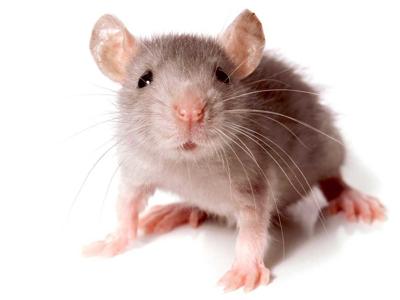

ONE EVENING, WHEN I SPOTTED A MOUSE quietly surveying my living room, I wanted to destroy it with the ferocity of Conan the Barbarian. But instead I set out a live trap, and was surprised to find the next day not one mouse but two in there. I showed them to my family and walked the mice to an empty field away from our home to release them, feeling proud for having spared their lives.
How you deal with pests can reside on a moral and philosophical spectrum. Spiders are beneficial to humans, but some humans will swat them on sight. Some people put out squirrel feeders; others shoot at squirrels. Some people think mice are cute. But researchers have discovered New York City mice carrying pathogenic bacteria and antibiotic resistance genes in their poop. Some people think of deer as really big and really fast vermin.
The methods of ridding the home and garden of pests runs the gamut from Buddhist benevolence to Jigsaw-type violence. We’ve heard of people throwing up their hands and giving over their plots of land to gophers’ voracious appetites. We’ve heard of people attempting to impale, drown, suffocate and poison them to save their lawns and gardens. Broken eggshells or coffee grounds around plants and flowers will repel slugs and snails. A saucer of beer will attract them – to their deaths.
Maybe you would rather seek humane ways to dispose of unwanted critters. (Humane meaning, per the Canadian Association of Humane Trapping, “the least amount and shortest duration of pain and distress.”) What are your options? We asked three pest control specialists who work in and around Monterey County.
Paul Sanna is the manager of O’Connor Pest Control in Watsonville (753-6170), Ed McWhinnie is a sales tech at Ailing House Pest Management in Carmel (624-8211), and Tony Stilwell is the general manager of Monterey Bay Pest Control (394-7378).
Sanna defines pests as “anything that crawls, causing destruction or distress.” (Babies excluded.) They handle insects, vermin, bees, wasps, bats, birds, and they’ve done so from Pebble Beach to Carmel Valley to Marina.
“The industry is leaning, for the last five or seven years, toward integrated pest management,” Sanna says. “No longer just spraying arbitrarily [but] determining why a specific pest has become problem.”
He’s talking prevention and abatement. Like getting rid of wood piles in a yard or cutting back trees and shrubs to discourage rodents from reaching the house. Or cleaning up sugar in the pantry to get rid of ants. But they’re no pacifists.
“It’s actually more humane to kill rodents than allow their populations to explode,” Sanna says.
They’re a disease carrying animal, he reasons, and can cause outbreaks which could precipitate having to wipe out greater numbers of them. It’s more humane to kill a smaller colony. And as for gophers and voles, not seeing any benefit to humans or the environment, they poison them.
What about bees? They are super-beneficial to both humans and the environment. But maybe a homeowner wouldn’t like them amassing over their front door?
“That’s a tough one,” Sanna says. A lot of times they’re just resting in a “satellite” swarm while looking for a permanent home, so he’ll recommend a homeowner just wait them out for two to three days. If they have to go now, he’ll defer to a beekeeper.
For insects in the home, they try for more noninvasive treatments, but will escalate up to bombing a house and spraying everything down. That scorched-earth approach is how they deal with spiders, too. By killing the insects that they feed on, it creates a food desert, which sends the spiders packing.
Ed McWhinnie of Ailing House Pest Management says they treat mostly rodents.
“It usually starts in your garden, and then they go into the house,” he says. “If you stop them at the garden, they won’t go into the house.”
Once inside, sanitation isn’t the only concern; McWhinnie says they can chew off wiring insulation, sparking an electrical fire.
For homeowners – or owners of homes harboring rodents – who would prefer more humane live traps, McWhinnie says they can set landscape bait boxes that don’t use poison. That spares the creature. But if the homeowner then has to release them, they need to go far enough away from their own home (and, presumably, the homes of others) to discourage them from breaking and entering again. And they can bite upon release, so wear gloves and a mask he cautions.
They don’t do relocation. McWhinnie doesn’t even put much stock in live traps being more humane.
“You want to hear something gnarly?” he says. “They cannibalize one another in a trap if you don’t release them in time. Or else you see maggots [on] their bodies.”
Tony Stilwell of Monterey Bay Pest Control says that live rodents, wily as they are, can find loopholes that allow them to take a trap’s bait without getting caught. But he’s also not a believer of the live trap being karmically nicer.
“Rodents in small cages don’t last very long,” he says. “A rodent will struggle so much that it will overheat and expire.”
He recommends going with the flow of the creature’s nature, so they suggest sealing entryways to the house, forcing them back into their natural habitat – outside.
He tells of a growing trend in the industry of using birth control bait, which makes the pest (pigeons, rodents) sterile, decreasing the overall population over time.
“A lot of people aren’t looking for eradication, but control. There’s a certain amount you’re going to allow, understanding we live in a wild area.”
He says they are using a multi-prong approach that he describes as biological, mechanical and cultural, the last one being instead of changing the habits of the creatures, changing the habits (cleaning, garbage disposal, clutter) of the humans. A poem by e.e. cummings catches the author in repose as he’s staring at a poisoned mouse that is looking back at him with eyes that ask, “What have I done that you wouldn’t have?”
Because nature is going to do what comes natural.
Those two mice I humanely released in a field? Looking back, I saw two hawks swoop down to where the mice were and, presumably, they did what nature does.



(0) comments
Welcome to the discussion.
Log In
Keep it Clean. Please avoid obscene, vulgar, lewd, racist or sexually-oriented language.
PLEASE TURN OFF YOUR CAPS LOCK.
Don't Threaten. Threats of harming another person will not be tolerated.
Be Truthful. Don't knowingly lie about anyone or anything.
Be Nice. No racism, sexism or any sort of -ism that is degrading to another person.
Be Proactive. Use the 'Report' link on each comment to let us know of abusive posts.
Share with Us. We'd love to hear eyewitness accounts, the history behind an article.