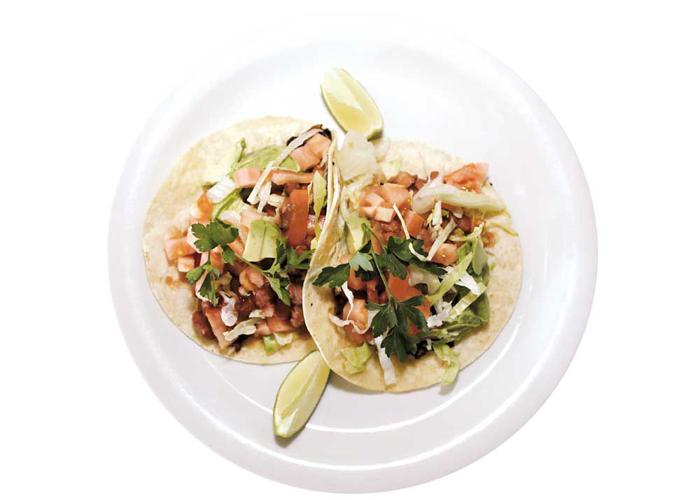
It can be outright alien what humans will do in the name of health. For this issue, Weekly reporters sought out some of the more otherworldly food regimens in the current consciousness. For three days, they ended up waiting in cafeteria lunch lines back at high school, digging in the garbage and eating raspberry tacos, all for the sake of understanding and exploration.
* • . • * • . • *
Fruitarian
By David Schmalz

Fruitarian
Ground Rules: It’s complicated. Broadly, over a period of 72 hours, it was to eat only what are botanically considered fruit, which surprisingly also includes nuts, seeds, legumes and plants commonly thought of as vegetables, like squash. Botanically, grains are also considered fruits, but eating them does not seem in keeping with the spirit of the diet, so those were off-limits, and by the same logic, consumption of legumes was kept to a minimum.
Highlight: Slight weight loss, discovery of “enzyme-activated” walnuts.
Lowlight: Eating mostly cold, raw food in the heart of winter.
Takeaway: I first heard about the diet in college, when a friend taking a nutrition class said a fruitarian – the strictest kind, only eating fruit that falls to the ground – spoke to his class one day. He reported that the speaker looked like he was about to keel over and die. I then met a fruitarian myself in 2006 in Bangkok, an American expat in who subsisted primarily on the famously malodorous fruit durian – the only fruit, he said, that provided a balanced meal. In fact, he would only live in places where he could easily find it.
That’s all well and good (he did appear healthy), but I don’t live in the tropics, and I can’t traipse through fruit orchards to collect my bounty. Add to that, the more I thought about it as I ate, there could hardly be a more unsustainable diet in forever-drought-stricken California: Nuts and fruits are among the most water-intensive of foods, which is fine if you live in Hawaii, but not Monterey County.
And because it’s impossible to get all your necessary nutrients from this diet (B vitamins, e.g.), it feels absurd. Moreover, any philosophical motivations for fruitarianism seem dubious at best – vegetarianism and veganism I get, but why should someone not be allowed to eat a leaf? Or avocado toast?
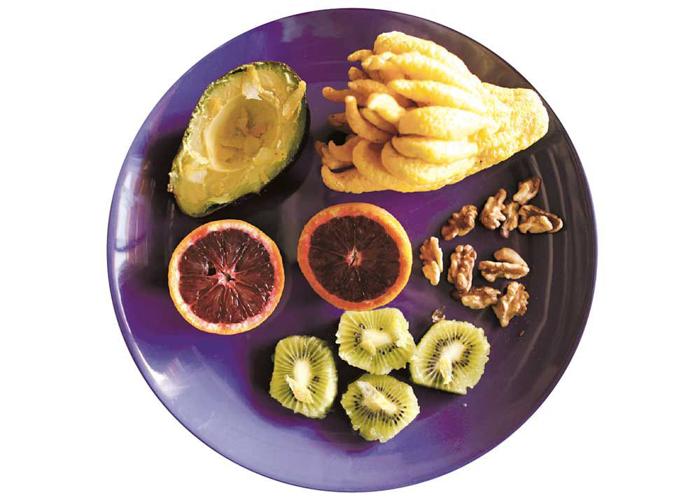
The Experience: Cold, unsatisfying and depressing. After starting off the diet with a dinner of avocado, a few handfuls of raw, soaked and dried (that’s the enzyme-activated part) walnuts, with a dessert of blood oranges, I steeled myself for a rough slog. Breakfast was easiest: Blueberries, an orange and walnuts were all I needed to get me started, but then hunger would kick in about 10am and I would start hankering for the avocado I schlepped to the office.
When I’d eat that, all I had to look forward to until dinner was more fruit – kiwis, apples, etc. – and more walnuts. I could have perhaps done some interesting soups with things like butternut squash and coconut, but the fact that I wasn’t able to use – by definition of the diet – aromatics like garlic, onion, lemongrass and cilantro, felt punitive, and silly. As it was, I operated in the kitchen more out of survival than culinary ambition, making salads like pinto beans and avocado seasoned with cayenne, pepper – both fruits – and lime juice.
Freegan
By Ivan Garcia

Freegan
Ground Rules: Can’t spend a cent on calories. Must get meals through foraging, sampling from vendors, free meals from local organizations or dumpster diving.
Highlight: A big breakfast shared with a cool crowd at the beach next to Window on the Bay.
Lowlight: Allowing fear to limit my food intake by being too timid to sift through garbage at night.
Takeaway: There is such thing as a free lunch, but the quality will vary based on what you’re willing to do. My first glimpses into freeganism were a few articles from The New York Times and Vice profiling relatively well-off adults sorting through garbage bags on city sidewalks and cooking a feast. They declared their pickings as a rejection of rampant consumer waste. I sympathize, but motivating myself to peek into the dumpster behind Lucky’s alone in the middle of the night was an entirely different thing. I roamed around Forest Avenue in Pacific Grove, prepared with a headlamp and rubber gloves, tiptoeing like a cat burglar around restaurants’ dumpsters wondering why so many businesses put Master locks on their trash. Hunger between free samples and scavenged fruits took hold, but not wanting to fully fail the freegan cause, I didn’t contribute a dollar to the food industry for three days.
It is possible to sustain oneself off a pocket packed with different flavored almonds from a farmers market vendor and fruits from someone’s front yard, but the low caloric intake and inconsistent nutrition will make you more hungry than healthy.
The Experience: Breakfast on my first day as a freegan was the only well-rounded meal I would consume in the next 72 hours. Al Siekert, whose jar of donations is a fixture of the MPC and Pacific Grove farmers markets, along with volunteers, served about 40 people breakfast at Del Monte Beach on a bright Sunday morning. A paper plate piled high with sauteed mushrooms over ribbon noodles, a quinoa-and-arugula salad, roasted asparagus and a blueberry crumble made me hopeful.
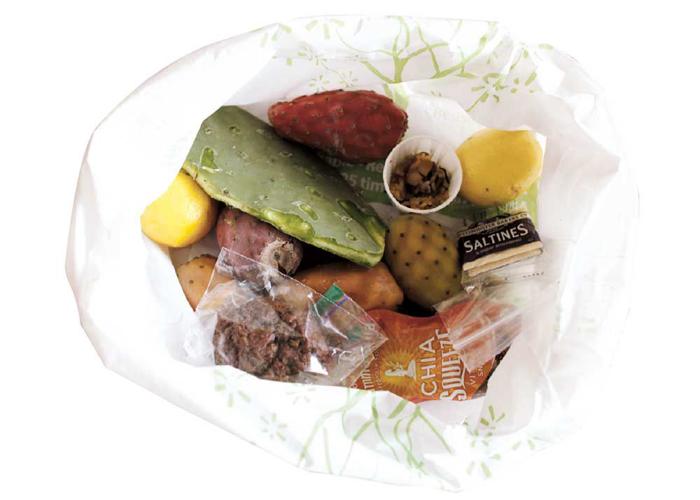
But it turned out my most reliable source of nutrition would be the cactus pads and prickly pears I covertly collected from a plant on the fringes of a front yard in Carmel Valley. Breakfasts and snacks for the following days would be two prickly pears, which I would brush with a broom to clear the skin of thorns, slice and sometimes mix with samples of granola scavenged from the samples offered at Friday’s MPC Farmers Market.
I channeled some familia traditions by grilling nopales on a barbeque, seasoned with lemons from a friend’s garden.
Fortunately for my freegan street cred, I was able to eat something I found in the garbage at the Marina Cinemark. After finishing a film, I observed fellow moviegoers as they tossed giant buckets of popcorn in bins by the exit. I quickly grabbed one of the half-full buckets and noticed it still had a sticker for a refill. Jackpot.
Paleo-Vegan, or “Pegan”
By Pam Marino

Paleo-Vegan
Ground Rules: Eat fresh, organic, sustainably raised foods, low on the glycemic index, with a focus on lots of fruits and vegetables, at least two servings with every meal. Good fats like nuts, seeds, avocados and olive oil are encouraged. Gluten is to be avoided. Whole grains are OK, and up to one cup of legumes is allowed. Treat meat as a side dish.
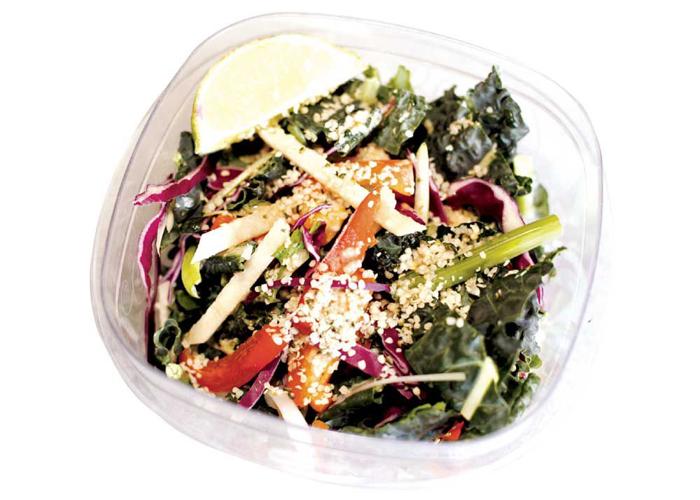
Highlight: Instead of staying away from fat, I embraced it, especially on salads with delicious homemade dressings, made from ingredients like tahini and avocados. I still lost 3 pounds.
Lowlight: In the words of comedian Kathy Griffin, “I’m hungry and bitter.”
Takeaway: This diet is neither paleo nor vegan. The monikers are in essence a form of click-bait to draw people in. It’s a basic, healthy diet that we should all be eating anyway (although I can handle gluten just fine, thank you).
The Experience: I’ve been a pescatarian for more than two decades, often toying with the idea of going full vegan. When I heard “paleo-vegan,” I naively thought this was an opportunity to try out the vegan lifestyle. I was annoyed to learn that this diet was “made up” in 2014 by Dr. Mark Hyman, author of books like The Blood Sugar Solution and Eat Fat, Get Thin, claiming to use the best of both the paleo and vegan diets. I decided to go with my initial intention to try veganism, but it was challenging. Balancing enough protein and eating enough veggies was a time-consuming affair that included meal planning, shopping, prep and eating. (I can make and eat a peanut butter sandwich a lot faster than eating a salad.)
The night before I started the diet I was too tired after a long day at work to go to the store, so the next morning I got off to a poor start eating only fruit and nuts; I was ravenous most of the day.
The next two mornings I had oatmeal with nuts and berries and did much better. While I did get in an amazing dinner on day one, consisting of a baked sweet potato topped with sauteed kale and black beans and an avocado dressing, the next night I had no time to make the vegan enchiladas I planned, and punted by making a quick fish dish.
For day three’s dinner I grabbed a vegetarian black bean burger out of the freezer to go with my brown rice and broccoli. I was hungry almost the entire three days, and I struggled with cravings for pastries and ice cream; it was all I could do to not dip into the bag of chocolate chips in the pantry. The three days revealed to me some things about myself: As much as I like seeds, nuts and beans, I don’t want to eat them every day; I don’t have the time or desire to become vegan; and, I’m not ready to give up my lifelong love affair with eggs and milk.
School Lunch
By Sara Rubin

School Lunch
The Ground Rules: Three consecutive days of high-school lunch.
Highlight: Butternut squash ravioli and well-seasoned posole I would have been perfectly happy to eat at a restaurant.
Lowlight: Waiting for the school lunch bell to ring.
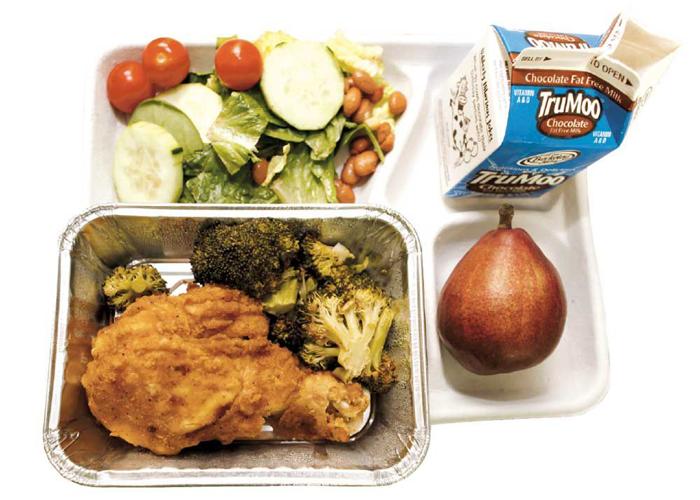
Takeaway: When you voluntarily agree to eat school lunch, you don’t expect your co-workers to have experimental diet envy. But when I showed up at the Weekly headquarters with a lunch to-go from Seaside High School – on a Friday, comfort food day – with a large fried chicken drumstick with broccoli and a fresh salad from the bountiful salad bar, all for $3 – people were jealous. It’s a sign of how far school lunch has come, in terms of culinary consciousness, as well as health and sustainability.
The Experience: The good part about the school lunch diet is that someone has done all the hard work for you: Down to the ounce, everything is measured to comply with the U.S. Department of Agriculture’s rules for what constitutes a full and healthy meal. No thinking for me beyond the basic choice of whether to swipe a small carton of milk or chocolate milk at the register. (Naturally, I chose the latter on each occasion.)
That meant Carmel High School’s recent butternut squash ravioli entree – a meatless option, part of a three-day-a-week commitment by the district to offer vegetarian lunches – had to have 2 ounces of a “meat alternative.” In this case, that was 2 ounces of romano cheese.
I joined the rush of students in line, and for $5 got a plate of filling and slightly sweet ravioli, a side salad (with pre-portioned ranch dressing, applied by a lunch lady), a soft whole wheat roll, and I did the thing the high school kids do, in violation of USDA standards – I opted not to take the banana or apple included in my lunch.
Carmel High offers burgers daily (“If we took away the hamburger bar, they’d kill us,” Foodservice Supervisor Denise Mc Gregor says), but they’re made with grass-fed, organic beef.
Monterey Peninsula Unified School District sometimes serves chili made with grass-fed beef, and abides by meatless Mondays. They’ve also completely eliminated five patently unhealthy ingredients – artificial sweeteners, colors and flavors; high-fructose corn syrup; and partially hydrogenated oil.
“That’s our commitment to parents and family,” says Nutrition Services Supervisor Micha James.
She calculated my full meal from Seaside High to be 576 calories, with 15.7 grams of fat – almost exactly one-third of what’s recommended for someone my size in a day. It was filling and lasted easily until dinner, though I guiltily skipped eating my pear – out of bounds of the USDA’s rules again.
A highlight was a meaty posole at Salinas High School, simmering in a slightly spicy broth seasoned with enchilada sauce, garlic, onions, cumin and salt. This time, I ate my USDA-mandated portion of fruit – I opted for a pre-washed, pre-packaged baggie of about 20 red grapes – and a salad I made at the salad bar. (The whole meal, again, was just $3.)
Salinas Union High School District offers a salad bar at all eight of its schools, and makes that option available to kids who can’t otherwise afford lunch; since introducing salad bars in 2012, the district has boosted annual spending on fresh produce from $8,000 to $160,000.
I broke from my school lunch plan for obvious scheduling challenges: the weekend. But the hardest part was eating on schedule; I arrived at Carmel High hungry for lunch at 12:15pm, only to learn that on Wednesdays, lunch doesn’t start until 12:55pm.
“The kids don’t seem to mind,” Mc Gregor told me.
Taco Cleanse
By Nic Coury

Taco Cleanse
Ground Rules: Everything consumed during the cleanse must be vegan. Every meal must involve a taco or taco-based recipe. Breakfast is mandatory.
Highlight: Raw breakfast tacos of cashew butter, various berries, chopped nuts and honey on corn tortillas.
Lowlight: Being tired leads to lazy purchases of frozen soy-based “steak” strips, leading to a dreary meal, the kind meat-eaters stereotypically believe the vegan diet consists of all the time.
Takeaway: Eating vegan isn’t too bad if you’re willing to give up real cheese as a taco topping and butter, which I love to use in a frying pan – but coconut oil makes a great alternative.
The Experience: I decided to make my own vegan tacos, but a few vegan options exist on Monterey Peninsula, including El Cantaro Vegan Mexican Restaurant in New Monterey.
As I walked into Whole Foods en route to the non-dairy cheeses and meat substitutes, I felt a sense of slight fear of being judged peeking into the vegan foods – mixed with a quick wave of pretentiousness that I was doing something better than others for the world, similar to driving a Prius. In the end, it’s simply a food choice for whatever reason you choose to eat it.
Often the stigma of a vegetarian diet is eating salad all the time, but fortunately, cheese and meat aside, much of the taco diet consists of a variety of vegetables, including fun ones like cactus paddles and peppers, hot and not.
Fortunately guacamole is vegan, as are plenty of good fats.
One of the biggest worries was getting enough protein, but lots of tasty options exist, like mushrooms, which can be breaded like milanesa, and slow-roasted jackfruit with barbecue sauce, which tastes similar to pulled pork and marinated artichoke hearts.
Combine these with brown rice, black beans, avocado, sweet corn – all sources of protein – and fresh salsa and you are on your way to tasty taco town, population you.
A vegan diet like this, in the form of a taco cleanse, can be a fun way to approach eating while expanding your cooking repertoire.
Another benefit: When I started only eating vegan tacos, many people asked what constitutes a “taco.” I learned the real truth is tacos cannot be contained by a definition, only tortillas.





(0) comments
Welcome to the discussion.
Log In
Keep it Clean. Please avoid obscene, vulgar, lewd, racist or sexually-oriented language.
PLEASE TURN OFF YOUR CAPS LOCK.
Don't Threaten. Threats of harming another person will not be tolerated.
Be Truthful. Don't knowingly lie about anyone or anything.
Be Nice. No racism, sexism or any sort of -ism that is degrading to another person.
Be Proactive. Use the 'Report' link on each comment to let us know of abusive posts.
Share with Us. We'd love to hear eyewitness accounts, the history behind an article.