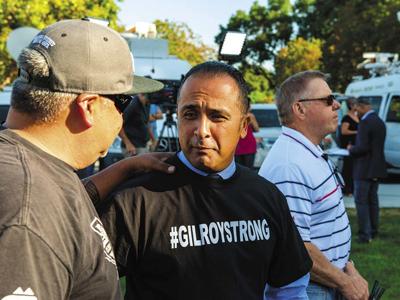
WHEN WE FACE SENSELESS TRAGEDIES SUCH AS THE MASS SHOOTING IN GILROY OF JULY 28, so often the first reaction is to assume the perpetrator is a person with mental illness. This assumption is not supported by the evidence. The American Psychiatric Association finds that mass shootings by people with a serious mental illness represent less than 1 percent of all gun-related homicides occurring on an annual basis. . As we look around for solutions to the increasing number of tragedies and violence in our communities, this is the time for us to bring people together and not further stigmatize some of the most vulnerable people in our community.
Research shows that interventions to reduce the risk of future mass shootings need to be focused on identifying individuals who have an increased risk for committing gun violence. It is essential that community members who hear of individuals who are threatening to commit harmful acts immediately reach out and report these warnings to local law enforcement. In Monterey County, we have strong collaborative relationships and have developed community supports to reduce future risk and build resilience. Many of our local law enforcement jurisdictions have heavily invested in crisis intervention training, which helps officers identify critical community needs and get individuals connected to needed services. Additionally, in Behavioral Health’s partnership with local schools, we have placed over 75 clinical professionals who work closely on campus with educational staff to identify needs early, address bullying and other stressors, and provide early intervention to students who are struggling and may be at risk for violence in the future.
This tragedy can make us all feel vulnerable and the reports circulating in a 24/7 news cycle can bring up past traumas. Many children and youth learning about this tragedy will be negatively impacted to varying degrees.
We can support our children and youth by:
• Allowing them space to express their feelings. Children may want to talk, draw or write about their feelings
• Letting them know it is OK to express sadness and anger
• Not getting angry or upset if they show strong emotions
• Limiting their exposure to news and video of the traumatic event
• Reinforcing their sense of safety and security
As children process this event, we can also reduce stressors by keeping routines in place. As adults, we need to practice self-care and use positive coping skills to address our own feelings and concerns. Staying connected to your support system and coming together with others can help during stressful times.
We will host two upcoming community conversations (in English and Spanish) about how parents, caregivers and other adults can best help children and youth who have been impacted by this traumatic event, and to share information about available resources.



(0) comments
Welcome to the discussion.
Log In
Keep it Clean. Please avoid obscene, vulgar, lewd, racist or sexually-oriented language.
PLEASE TURN OFF YOUR CAPS LOCK.
Don't Threaten. Threats of harming another person will not be tolerated.
Be Truthful. Don't knowingly lie about anyone or anything.
Be Nice. No racism, sexism or any sort of -ism that is degrading to another person.
Be Proactive. Use the 'Report' link on each comment to let us know of abusive posts.
Share with Us. We'd love to hear eyewitness accounts, the history behind an article.