A HOSTAGE SITUATION ENDED QUIETLY in the California Capitol on June 28, when lawmakers in Sacramento paid a hefty ransom to big soda companies.
The lawmakers advanced legislation under duress that would ban localities from establishing taxes on soda or sugary drinks for the next 12 years.
The soda companies were pleased enough with this ransom note that they pulled an initiative off this fall’s ballot that would have required a two-thirds supermajority across California for all local tax increases – for not just soda taxes, but all taxes.
The new legislation frees localities to continue to set their own tax policy democratically – just not on soda products until 2030.

Many sodas contain close to a teaspoon of sugar per ounce. The pending warning label bill would not apply to diet sodas, because they do not have added sugar.
Gov. Jerry Brown, after signing the soda tax ban, wrote in a statement that the proposed ballot initiative – the soda industry’s equivalent of a bomb threat – was “far-reaching” and “an abomination.” He added that mayors across that state had called him to voice their alarm, putting pressure on him to prevent detonation. “For these reasons, I believe AB1838 is in the public interest and must be signed,” Brown said.
The spectacle reflects the extreme power of money in California’s direct democracy process, where special interests use the ballot to obtain broad exemptions from the law that they couldn’t secure otherwise. For a few million dollars, you can get virtually anything on the state ballot, and those with means often use this cash to threaten the state government for ulterior motives. Initiatives bring electoral politics into play, too. Democrats worry not just that the measure will pass, but also that it will motivate more Republicans to vote in the midterms, wreaking all sorts of havoc on Democratic electoral prospects up and down the ballot. Better to just give them what they want.
Even in a relatively blue state, the Legislature can feel forced to bend to the will of a big industry.
That’s what happened in this case.
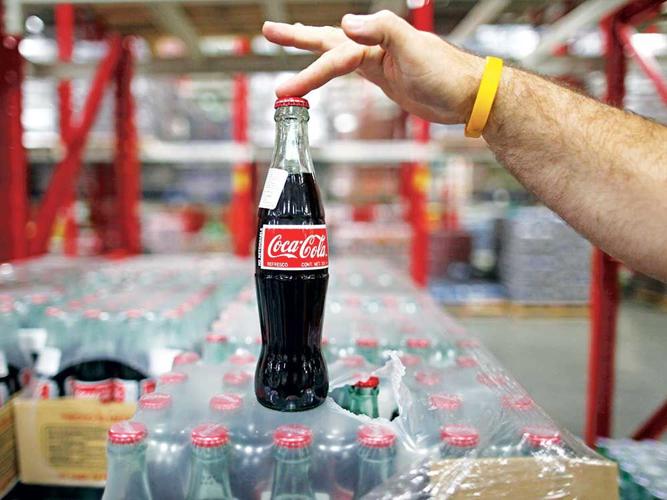
Soda companies like Coca-Cola and Pepsi had become alarmed that four cities in California had passed penny-per-ounce soda tax increases at the ballot box in recent years. Berkeley’s soda tax, the first in the nation, passed in 2014; San Francisco, Oakland and Albany followed suit in 2016. The industry spent $30 million trying to beat the San Francisco and Oakland campaigns – all of it in vain.

A 2016 STUDY OF THE BERKELEY SODA TAX in the American Journal of Public Health found that it led to a 21-percent drop in the consumption of sugary beverages in low-income parts of the city. In other words, the tax was costing beverage companies real money, and widespread adoption in the nation’s largest state beyond those four cities could be damaging to the business, however good it may be for child obesity and public health.
So the industry went to work. They spent over $7 million to put the initiative raising the threshold for all local taxes on the ballot, with $6 million from Coca-Cola and Pepsi, another $1 million from Dr Pepper Snapple Group, and $100,000 from Red Bull.
The two-thirds threshold would include tax measures passed by city governments and in citywide initiatives, a mirror image of the two-thirds majority for tax increases in the state legislature, which has debilitated the state. Some local initiatives currently require a two-thirds vote, but many do not. The ballot measure would significantly damage local budgeting options and cost millions of dollars for cities. It would also cost advocates of progressive taxation a ton of energy to fight.
A 2014 law called the Ballot Initiative Transparency Act gave the Legislature input into the ballot process, enabling initiative proponents to withdraw the measure if they work with the Legislature on a satisfactory solution. It was seen as a good-government measure to give lawmakers more power and avoid costly ballot fights. In this case, the beverage industry used it as leverage to get what they wanted.
Negotiations commenced over how to get the industry to withdraw the ballot measure. In early June, Brown had top executives from beverage companies over to the governor’s mansion; a picture from that get-together leaked to the media. Brown’s office claimed this had nothing to do with the ballot measure.
The industry made their demand: no new soda taxes for 12 years. Ballot measures that would implement penny-per-ounce soda taxes were being considered in Sacramento, Santa Cruz and Richmond, and the industry wanted to stop the bleeding.
Lawmakers had to consider the request. Raising the threshold for all new taxes to two-thirds would have been extremely disruptive and costly to stop. Plus, California already had a big tax showdown on the November ballot: a proposed repeal of an increase in the gas tax to fund $5 billion in road improvements. The money wasn’t really there to battle a second tax-related ballot measure.
The bombshell June 27 Supreme Court ruling that crippled public-sector unions, by allowing public employees to opt out of dues payments, likely played a role as well, as California liberals fund much of their campaigns through labor.
In the end, the state Assembly passed the soda tax ban 60-1, with only Republican Devon Mathis voting no. The State Senate, which needed 21 out of 40 votes to advance the bill, passed it with a bare majority of 21-7. Four Democrats voted no, including Senate Majority Leader Bill Monning, D-Carmel, who called it “a sad day for democracy in California." (See second story)
Sen. Scott Wiener, who represents San Francisco, where one of the soda taxes passed, told theLos Angeles Times, “[The industry] is aiming basically a nuclear weapon at governing in California and saying if you don’t do what we want, we’re going to pull the trigger and you are not going to be able to fund basic government services.”

THE BAN THAT WAS PASSED covers any local legislative actions or ballot measures from 2018 to 2030, including the proposed ballot measures in Sacramento, Santa Cruz and Richmond. Any current soda taxes, like the ones existing in four California cities, will stay in place. As for the soda companies, their $7 million investment in the ballot measure will pay off handsomely by stopping soda taxes and protecting their market share.
The cost to the public in quality of life and in health care spending is footing the bill for the creation of soda profits.
There’s an argument that soda taxes are misplaced because they’re regressive and fall disproportionately on the poor, and that sugar should instead be taxed at the source, putting the burden on the beverage industry to change their products to lower costs. That may be true, but that’s somewhat beside the point of the debacle in California, which saw a handful of big companies hijack democracy.
Special interests like soda companies have honed a technique to pre-empt local assaults on their profits by turning to the states to enact bans. But in California – a deeply blue state, with Democratic majorities in the Senate and Assembly, and a Democratic governor – the situation has become even more perverse. Monied companies put up harmful and dangerous ballot measures and then demand that the Legislature pass a law that’s only slightly less dangerous if they want to prevent the carnage. It’s big-money blackmail mentality that perfectly encapsulates our new Gilded Age.




(1) comment
Here's why I oppose the soda tax in its current form - these taxes are enacted to penalize the over-consumption of sugary sodas and drinks. However, when the taxes are enacted they also sweep in and include non-sugar sodas; ie: diet drinks. Hey the diet drinks and the people who drink them are not the problem and they should not be penalized when they're not the source of the problem. So fuck the legislation and the legislators who introduce these taxes. When they back the diet drinks out of the tax, I'll support it.
Welcome to the discussion.
Log In
Keep it Clean. Please avoid obscene, vulgar, lewd, racist or sexually-oriented language.
PLEASE TURN OFF YOUR CAPS LOCK.
Don't Threaten. Threats of harming another person will not be tolerated.
Be Truthful. Don't knowingly lie about anyone or anything.
Be Nice. No racism, sexism or any sort of -ism that is degrading to another person.
Be Proactive. Use the 'Report' link on each comment to let us know of abusive posts.
Share with Us. We'd love to hear eyewitness accounts, the history behind an article.