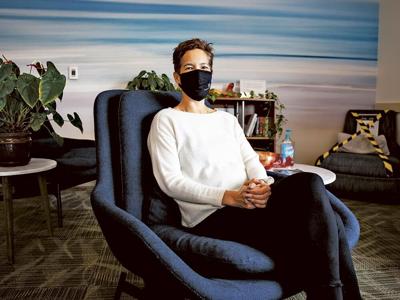

PATIENTS VISITING THE DOCTOR expect to extend an arm for a blood pressure check or step on the scale – some of us with trepidation and the usual debate about shoes on or off – to record their weight. They’ve also come to expect questions like, “Do you smoke?” or “Are you exercising?” Inside Salinas Valley Medical Clinic PrimeCare offices, patients are being asked if they ever worry about running out of food, or come home to empty cupboards.
It’s part of an initiative by Blue Zones Project Monterey County, a multi-year effort to improve the collective health of the community. There are two questions regarding food insecurity: “Within the past 12 months (have) you worried that your food would run out before you got money to buy more?” and “Within the past 12 months (did you find) the food you bought just didn’t last and you didn’t have money to get more?”
Joanna Oppenheim, a family medicine physician at SVMC PrimeCare, who serves as co-chair of the Blue Zones Food Policy Committee, spearheaded the effort to incorporate the questions throughout PrimeCare clinics, including the Diabetes and Endocrine Center. It’s been rolling out across the system since April, with a goal of eventually becoming a part of the check-up routine in every doctor’s office in Monterey County.
A positive answer to either question triggers referrals to social workers and programs where patients may access healthy foods from sources like the Food Bank for Monterey County or CalFresh, a program previously known as food stamps. Often patients aren’t aware they qualify, Oppenheim says. The questions also serve as a diagnostic tool.
“The one thing that physicians are learning now is how important the social determinants of health are,” she says. “We often see what’s going on right in front of us and put out all the fires,” instead of digging to uncover root causes.
Controlling blood sugar is a good example – connecting a patient to fresh produce and higher quality foods can bring blood sugar down significantly, resulting in better health and less emergency room visits, Oppenheim says.
“At the end of the day we want healthy patients because we’ll have a healthy community,” she continues. “That’s what we should be supporting.”


(0) comments
Welcome to the discussion.
Log In
Keep it Clean. Please avoid obscene, vulgar, lewd, racist or sexually-oriented language.
PLEASE TURN OFF YOUR CAPS LOCK.
Don't Threaten. Threats of harming another person will not be tolerated.
Be Truthful. Don't knowingly lie about anyone or anything.
Be Nice. No racism, sexism or any sort of -ism that is degrading to another person.
Be Proactive. Use the 'Report' link on each comment to let us know of abusive posts.
Share with Us. We'd love to hear eyewitness accounts, the history behind an article.