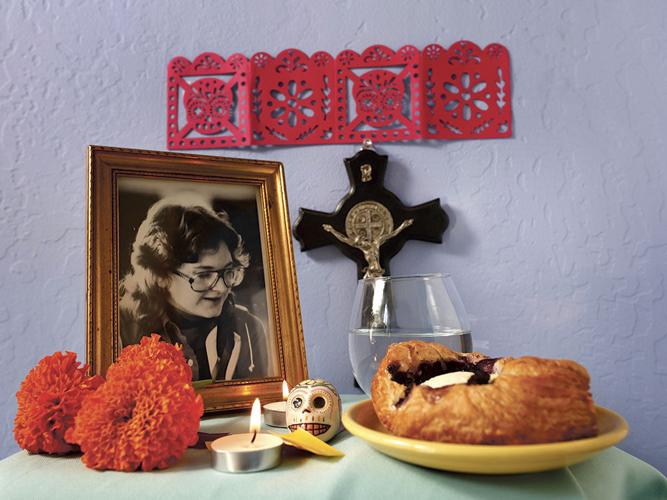
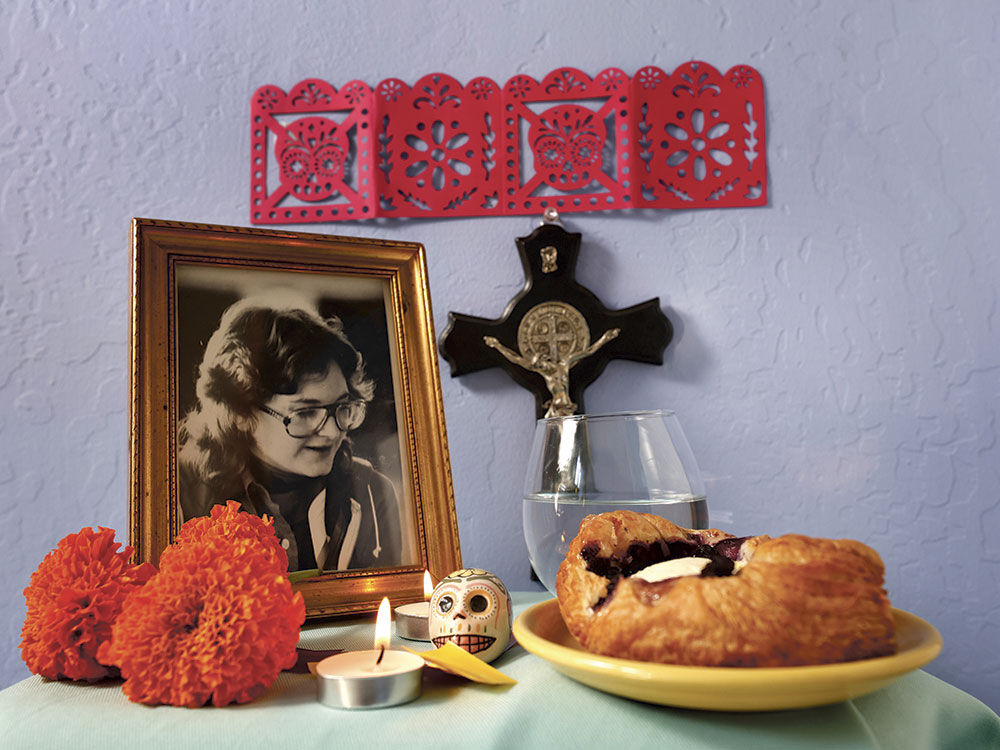
The basic components of an altar or ofrenda represent four elements: water (here, as a glass of water); fire (food or candles); air (papel picado, at top); and earth (marigolds and personal objects to remember a loved one). Crucifixes are also often incorporated, reflecting the four cardinal directions – and reflecting the significant Catholic influence on the originally Indigenous Mexican custom.
THE DAY OF THE DEAD INVITES TRADITIONS OLD AND NEW. It can be an intimate affair with a small altar and offering at a home, or a collective celebration that brings people from different cultures together. The diversity of observances is fitting, because death has no borders.
Various families, institutions and organizations celebrate the Day of the Dead collectively, inviting anyone to participate. People are encouraged to bring photographs, flowers, colorful paper, offerings and objects to build and decorate large, beautiful altars and create a bridge where people alive and dead can reunite.
Jose Ortiz, a local painter and founder of the Salinas arts nonprofit Hijos Del Sol, has celebrated the Day of the Dead since he can remember; it’s a tradition his family has observed for generations. Ortiz’s ancestors are Tepehuanes, an Indigenous group from the Mexican northwest. Their celebration lasted for several months and began in June when they planted marigold seeds in the fields, then harvested months later. “Since the idea started growing that our ancestors are coming, our grandparents would teach us that we have to receive them with an offering full of life,” Ortiz says.
Dionne Ybarra, a Pacific Grove resident and second-generation Mexican American, didn’t grow up celebrating Día de los Muertos. She reclaimed the tradition as an adult, first making a small altar at her home seven years ago. She went on to share it, and now starts a collective community altar on her front porch, where anyone can bring images and objects to honor their loved ones, and light a candle. The altar is meant to keep friends’ and family members’ memories alive. It’s also a way to share the tradition.
“I’m a minority culture in Pacific Grove. I just wanted to find a way to honor my culture and to really share it with other people,” Ybarra says.
Ybarra starts her altar on Nov. 1, while listening to Mexican music and having conversations with her late relatives, including her grandfather and Uncle Frankie, reviving happy memories.
The Day of the Dead is a tradition that has been around for more than 3,000 years. It’s a moment for people to celebrate and spend time with loved ones who have died, including friends, family, pets. It isn’t about marking absence, but instead a new phase and constant rebirth, based on the belief that their souls set off on a journey from Mictlán, the kingdom of death, to visit Earth to spend time with the living.
The Day of Dead is considered a World Heritage tradition by UNESCO and it is the most well-known Mexican tradition worldwide. In 2017, its visibility increased significantly after Pixar Animation Studios released Coco, an animated film centered around Día de los Muertos. “It opened a gate for people to get to know the celebration,” says Hector Dionicio Mendoza, a sculpture and installation professor at CSU Monterey Bay. He teaches a class focused on Día de los Muertos, and is involved in setting up an altar at CSUMB that is open for all to contribute to. “A lot of people were introduced or reintroduced to the celebration.”
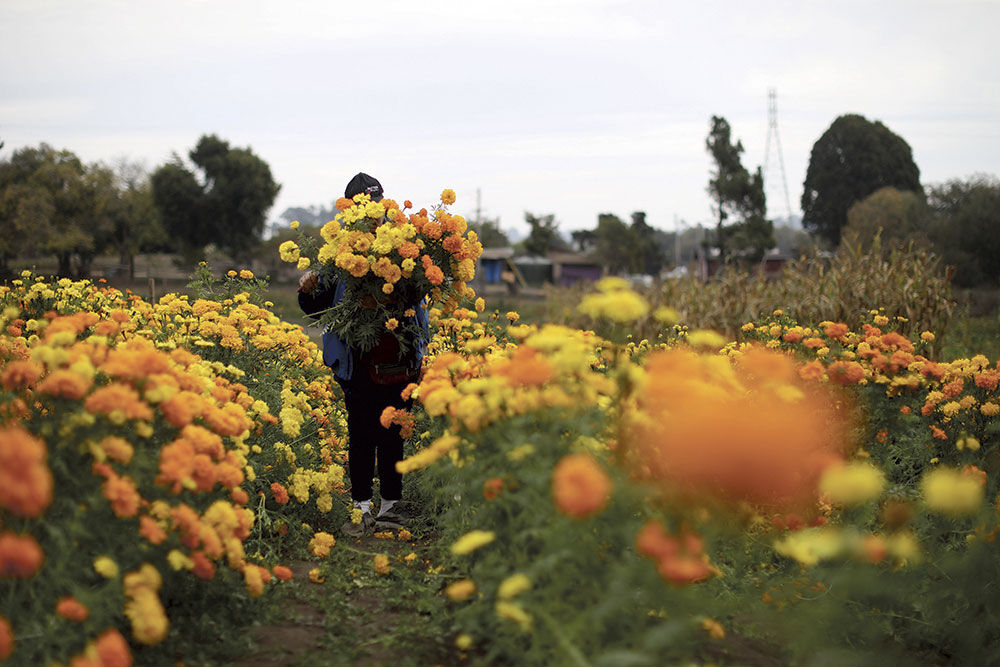
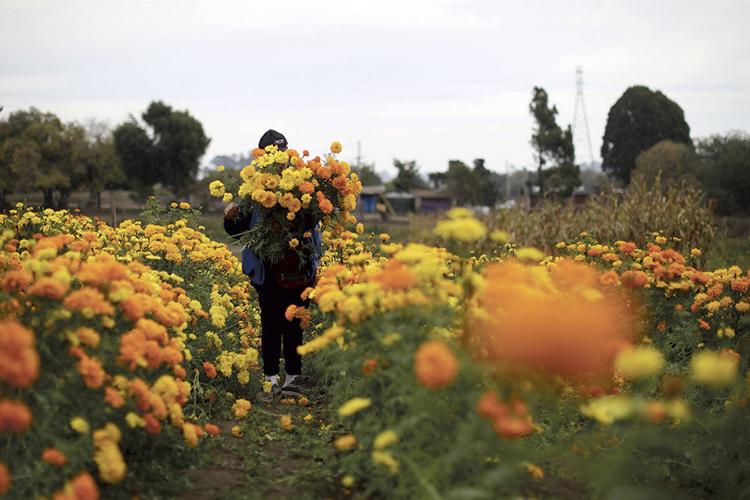
Above: Julia Vera harvests marigolds just before Día de los Muertos 2022 at Nacho’s Rancho Farm in Las Lomas. The edible flowers add flavor (and color) to beverages and food, and are widely used in ofrendas.
THIS COLORFUL MEXICAN TRADITION represents a fusion of cultures: Indigenous and Spanish, featuring elements of All Saints’ Day, a Catholic celebration that honors saints on Nov. 1. During colonization and Catholic evangelization in Mexico, the pre-Hispanic Day of the Dead mixed European traditions: the inclusion of Catholic crosses, sugar skulls and altar levels at different heights, including purgatory, came to be part of the visual customs. (An altar might have up to seven levels, symbolizing the steps that souls need to take to reach heaven.)
Ortiz says many people use the Spanish words altar and ofrenda interchangeably because during the mission period, it was considered heresy to use ofrenda, which conveys an offering. “Indigenous people faced punishment, because [Catholic authorities] said it was an abomination.”
The Day of Dead starts on the eve of Halloween, Oct. 31, and reaches its peak Nov. 1 and 2.
Cemeteries across Mexico – and the Salinas Valley – look alive with people cleaning and adorning their relatives’ grave sites with marigolds, candles, food and more.
Celebrating death is not unique to Mexican culture. Peoples around the world hold similar celebrations, including Obon, a Japanese Buddhist festival full of lights, family reunions and dancing; Thursday of the Dead or Thursday of the Secret is a Muslim and Arab Christian celebration in the Middle East in which people visit graves at dawn and make food offerings to children and the poor; Chuseok, which means autumn evening, is celebrated in North and South Korea where people honor their ancestors with food offerings and a memorial tablet that symbolizes their presence.
For Día de los Muertos, a key component of honoring the dead is through creating an altar, which features a few key elements – photographs of those who we’ve lost, and symbols representing the four cardinal points – a crucifix is one option – and the elements of water, fire (food or candles), air (papel picado, colorful cut-out tissue paper, and wind instruments) and earth (marigolds or personal objects). Other altar elements include salt and copal, a tree sap pre-Hispanic cultures used as ceremonial incense (widely available in local stores) for purification.
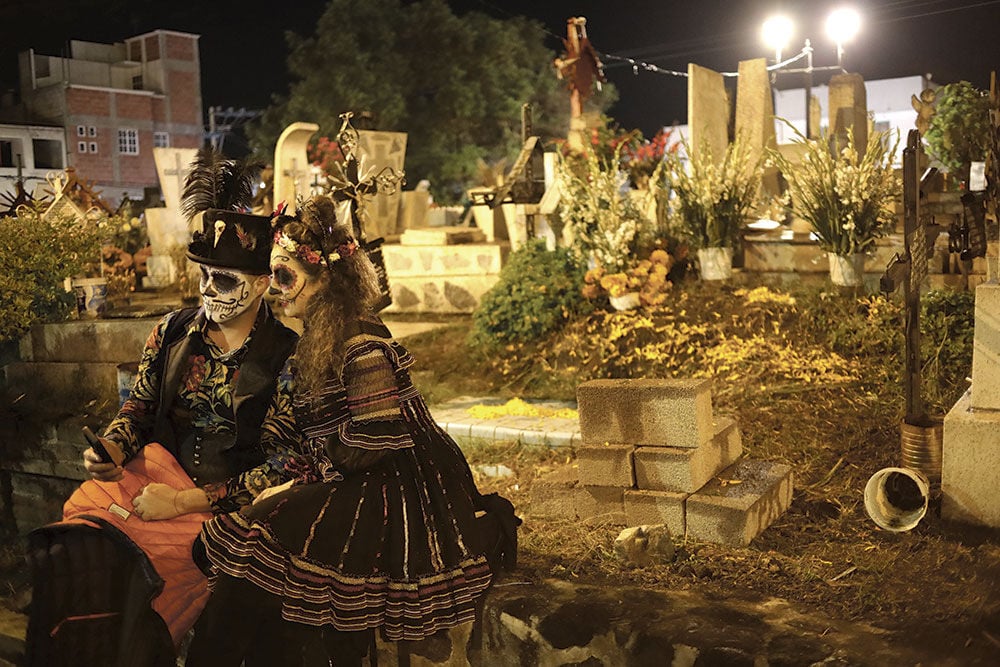
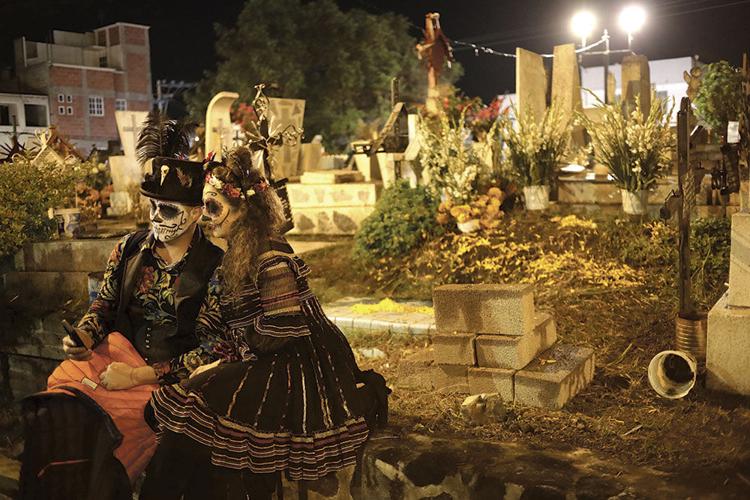
At bottom: Two people dressed as Catrin and Catrina at a cemetery on Día de los Muertos in Mexico City.
Ortiz says copal adds an important element of direction: “It’s to remember where we are and where we are going,” he says.
And the symbols bring together a similar sense of awareness – the four winds, the four seasons, the four cardinal points, the four elements. “It’s all crosses,” Ortiz highlights. “The cross is very ancient, more ancient than Christianity.”
Offerings normally include food and objects the departed enjoyed when they were alive, in preparation for their souls’ visit. “I always go and buy Olympia beer,” Ybarra says, noting her grandfather’s favorite drink.
For Mendoza, who manages CSUMB’s community altar project, the celebration isn’t exclusive to Mexican people, but an opportunity for everyone to connect and celebrate: “We all have lost someone,” he says.



(0) comments
Welcome to the discussion.
Log In
Keep it Clean. Please avoid obscene, vulgar, lewd, racist or sexually-oriented language.
PLEASE TURN OFF YOUR CAPS LOCK.
Don't Threaten. Threats of harming another person will not be tolerated.
Be Truthful. Don't knowingly lie about anyone or anything.
Be Nice. No racism, sexism or any sort of -ism that is degrading to another person.
Be Proactive. Use the 'Report' link on each comment to let us know of abusive posts.
Share with Us. We'd love to hear eyewitness accounts, the history behind an article.