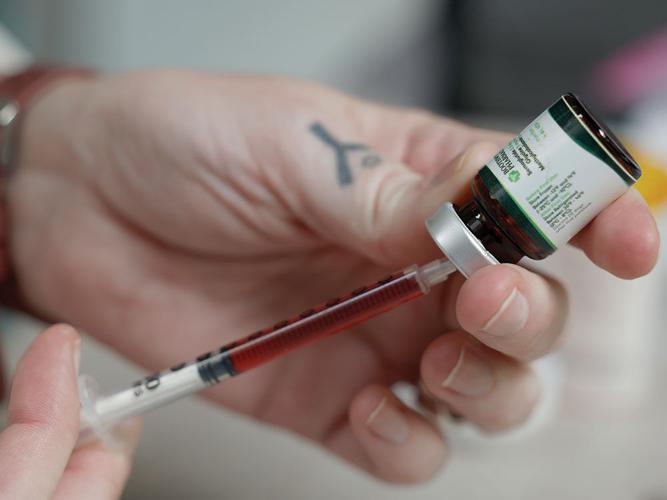

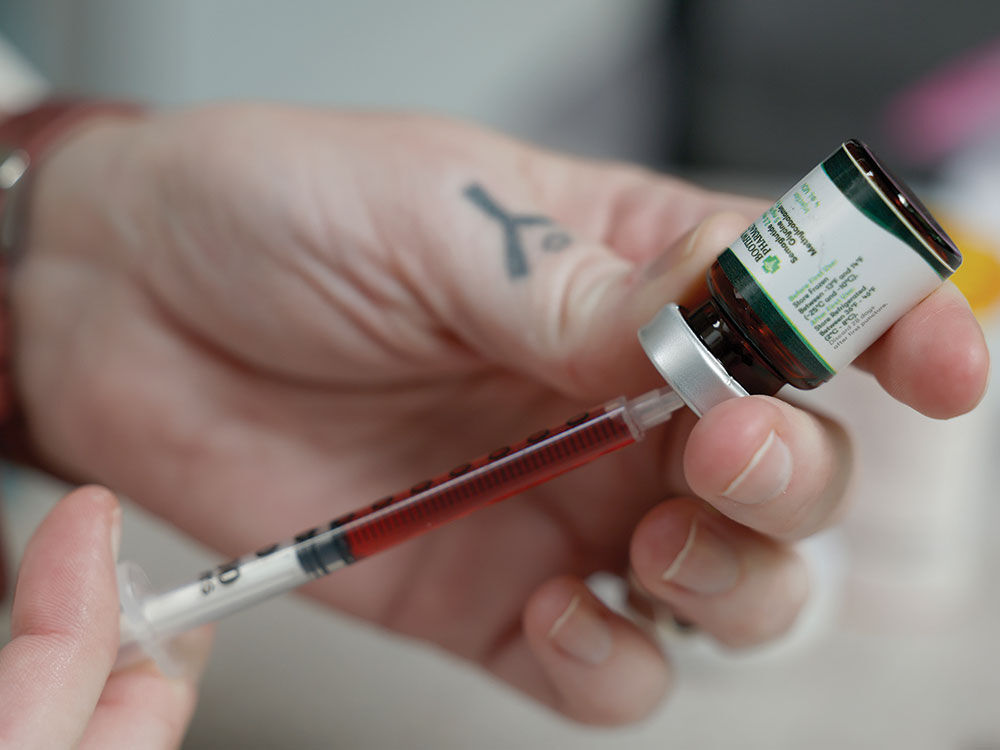
Drawing up a syringe of a semaglutide for a weekly dose.
IMMEDIATELY AFTER WORD CAME DOWN IN MARCH OF 2020 ABOUT THE SPREAD OF COVID-19, I THREW ALMOST EVERY HEALTHY HABIT I HAD OUT THE WINDOW. The stress overrode any better angels I had reminding me to eat a balanced diet, get daily movement, moderate my drinking and manage my sleep. The ease of a drive-thru had me lining up for lunch and dinner multiple times a week. My gym was closed. I drank beers at night to relax while I sewed hundreds of face masks at my kitchen table. The comfort of putting back a pint of Ben & Jerry’s in front of a movie felt like it was helping. People started joking about gaining the “quarantine fifteen.” I quietly packed on my own pandemic 75.
My weight has gone up and down my entire life. In adolescence, I flirted with an eating disorder, but through varsity athletics, learned the importance of fueling myself properly. Also in my youth I was diagnosed with Polycystic Ovary Syndrome (PCOS), a hormonal imbalance resulting in painful cysts as well as weight gain and facial hair growth that makes being a teenage girl extra-awkward. As an adult, through trial and error and enlisting the help of a physician, a nutritionist and a trainer, I found a routine that worked for me. Annual bloodwork showed that I was adequately managing my risk for diabetes, a condition to which multiple generations on both sides of my family are predisposed. PCOS continued to make it a challenge to lose weight, so I’ve generally been on the pudgier side of healthy.
When pandemic restrictions were lifted, my hard-earned healthy habits did not fall back into place. Eventually, my LDL cholesterol was too high, my vitamin D levels were basement-level, and my liver enzymes were elevated.
A friend helped pull me out of my head and out of my house, taking me on adventures and hikes in the open air and sunshine. My weight and lack of physical conditioning made getting back out on the hiking trails difficult, but I did it albeit at a slower pace and at lower elevations. The fresh air, friendship and Vitamin D-filled rays boosted my mental health. After slowly dropping 40 pounds, I decided to build on my progress and look into weight loss medications.
We’ve all seen ads for Ozempic and Wegovy, the brand-name medications for diabetes and weight loss. In 2025, The World Health Organization added Glucagon-Like Peptide-1 (GLP-1) to their list of essential medicines for the management of diabetes. The WHO has also included GLP-1 in its guidelines for combating obesity, a common comorbidity, which they cite affects more than 1 billion people in the world and was associated with 3.7 million global deaths in 2024. The WHO recognizes obesity as a chronic, progressive and relapsing disease. These medicines, combined with lifestyle changes, can be a lifeline for folks with these disorders – I realized they could be a game-changer for folks like me.
I QUICKLY LEARNED THAT NAME-BRAND OZEMPIC AND WEGOVY ARE PROHIBITIVELY EXPENSIVE IF INSURANCE DOESN’T COVER IT. There are a number of telehealth providers of compounded GLP-1 medications and after researching my options, I settled on one with good reviews and that contracted with an FDA-registered compounding pharmacy following strict manufacturing guidelines. (GLP-1 refers to a class of medications and there are a couple of different formulations: semaglutide and tirzepatide. I underwent an assessment with a doctor and due to my elevated BMI and lack of contraindications, I was prescribed semaglutide.)
I studied art history, not medicine. I’m not a doctor. I offer you my perspective and experience, not medical advice. If you have questions about GLP-1 medications, ask a doctor, and enlist the help of professionals all along the way.
GLP-1 requires a titration process, so my dose started low and was raised each four weeks until I hit a therapeutic dose. The list of possible side-effects was daunting, but the first couple of months were easy without any of the stomach problems, headaches or injection site issues I had been instructed to watch out for.
As the dose increased, I experienced gas and nausea but found those heightened when I ate something too greasy, too sugary, or if I simply ate too much. Adjusting my diet to include leaner protein and ample fiber helped manage these side effects.
Not coincidentally, adjusting my diet to include leaner protein and ample fiber was one of the goals of using these meds in the first place – and it was working. I found the process of navigating these side effects was akin to using the bumpers blocking the gutters at the bowling alley – the better my swing became, the less I hit the guardrails. It was helping me build back those healthy habits I’d abandoned during the pandemic, and then some.
I’d heard of the reduction in “food noise.” I didn’t know what that meant, precisely. But I figured it out almost immediately upon starting semaglutide. I was no longer going to sleep thinking about what I’d have for lunch the next day. The around-the-clock mental inventory of my fridge and cabinets subsided. I just didn’t spend my time thinking about food. I no longer had to carefully mete out my mental energy; there was finally some to spare on myself.
GLP-1 MEDS ALSO DECREASE A VARIETY OF CRAVINGS AND RESEARCH IS UNDERWAY AS IT RELATES TO SUBSTANCE ABUSE DISORDERS. I have never had an addiction to alcohol, but in an act with which I’m sure some readers will be familiar, I had downplayed my intake with my general practitioner. Since starting semaglutide, cracking open a cold one is no longer part of my nightly unwinding routine and I have a drink maybe once a month. Honest, doc.
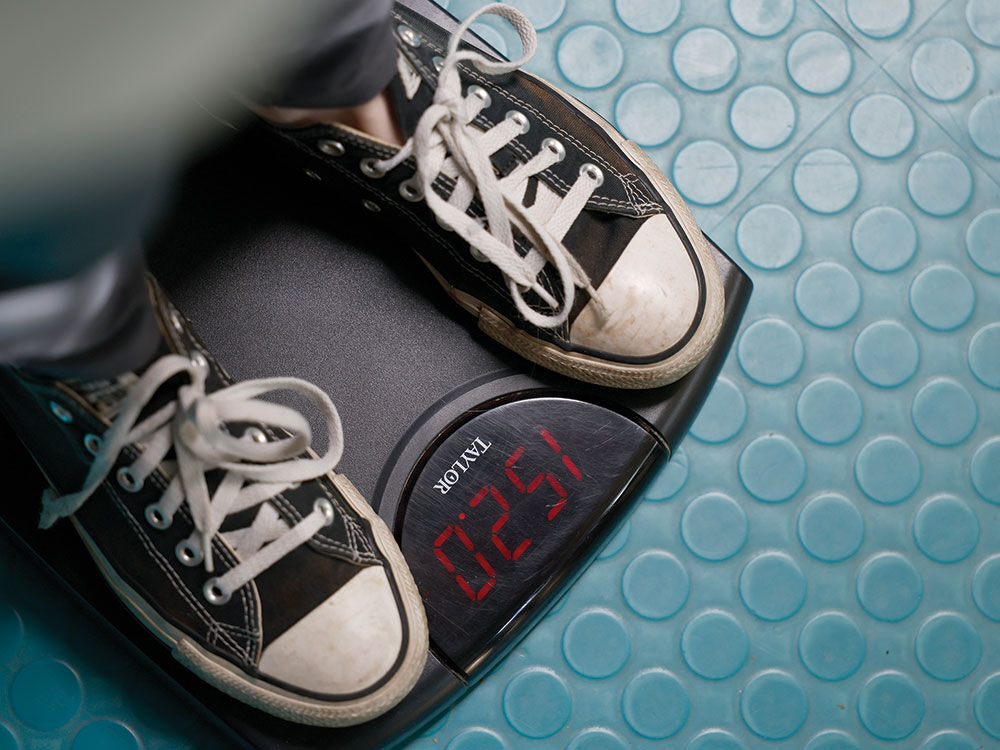
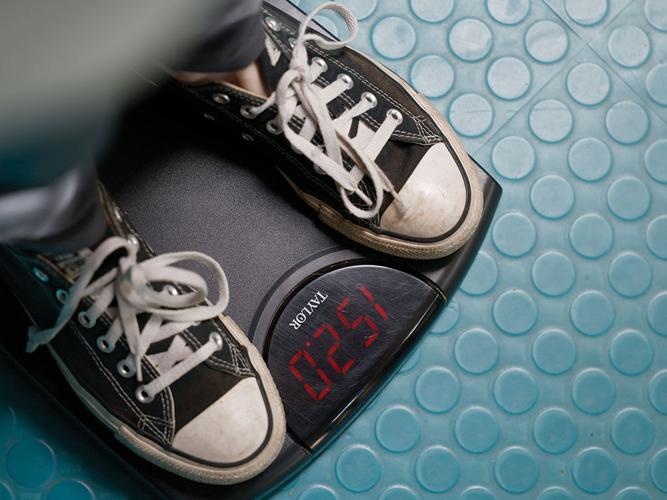
The author on the scale, clocking in at 152 pounds, close to her target weight..
At times, my appetite dropped so significantly that I knew I wasn’t eating enough, and my low energy levels supported that theory. I began to track my diet in an app that helped me count calories and the important macronutrients of carbohydrates, fats and protein. I’ve never been a regular breakfast eater, but I started having a protein shake with my coffee in the mornings. I keep fruits and vegetables for snacks in the fridge at the Weekly office. Instead of our weekly production night pizza, I bring in cooked chicken to boost the accompanying salad. I have made easy swaps and figured out a diet that makes me feel fueled, not queasy.
I’d heard tales of people on GLP-1 losing muscle alongside the excess fat, as well as concerns for bone density. As a 40-year-old woman, I’m reminded daily that my anatomical prime is in my past and that I should be concerned about muscle wasting and osteoporosis. I reintroduced weight training and bought the tell-tale signs of a perimenopausal woman: the weighted vest, the walking pad and the pedometer. I set a goal of 10,000 steps per day. I don’t always hit that number, but I try. I have lost some muscle, but I’m still strong and getting stronger.
As for my PCOS symptoms, I have had a standing appointment with a nice gal who waxed the lower half of my face every six weeks and I haven’t booked her in a year. In short, a very welcome win.
There were some downsides to this process. The aforementioned side effects were unpleasant until I learned how to keep them at bay. But perhaps the biggest hurdle was the cost. Name-brand, FDA-approved drugs like Ozempic and Wegovy are not covered by insurance for patients without diabetes. Out-of-pocket costs in that case can be upward of $1,000 a month. Telehealth companies contracting with compounding pharmacies can create a semaglutide medicine with the addition of vitamin B-12 to skirt the patent, and the one I work with is close to $300 a month. It’s a start, but still a hard line item to add to any working person’s budget.
I did some math and realized that if I stopped going to the drive-thru and skipped happy hour beers that lead to pub food dinners and didn’t pick up multiple six-packs of beer a week, I could eliminate about $500 a month from my dining-out budget.
My next step is to titrate down in dose. With my doctor, we will slowly reduce the amount of semaglutide I take each week over a course of months. Despite the cost, I may decide to continue with a small dose of the medication because of the way it eliminates my PCOS symptoms.
One year after starting, I have lost 80 pounds (in addition to losing 40 pounds in the previous 18 months). My once-high LDL cholesterol is square in the middle of the normal range. My vitamin D levels are way up, and my liver enzymes are back where they should be.
GLP-1 did not do the work for me, but was a tool that set me up for success to fine-tune my diet, drinking and exercise.
Losing 120 pounds is pretty noticeable, so people have made comments about my body. I have been vocal about my use of semaglutide. Sometimes I have been met with judgement, but more often than that I’ve been asked questions. I have a thick skin and a firm commitment to my health. Plus, I feel fabulous.


(0) comments
Welcome to the discussion.
Log In
Keep it Clean. Please avoid obscene, vulgar, lewd, racist or sexually-oriented language.
PLEASE TURN OFF YOUR CAPS LOCK.
Don't Threaten. Threats of harming another person will not be tolerated.
Be Truthful. Don't knowingly lie about anyone or anything.
Be Nice. No racism, sexism or any sort of -ism that is degrading to another person.
Be Proactive. Use the 'Report' link on each comment to let us know of abusive posts.
Share with Us. We'd love to hear eyewitness accounts, the history behind an article.