
Jevin West studies the science of science. His research, in his words, focuses on “turning the microscope on science itself.” A professor at the University of Washington in Seattle (and visiting faculty at UC Berkeley at present), he teaches classes with mundane names like “Intro to Data Science.” He also teaches “Calling Bullshit in the Age of Big Data.”
West is deeply interested in calling bullshit – and in teaching others how to call bullshit, too. He helped develop Misinfo Day, an immersive day-long experience for high school students, inviting them to learn skills in distinguishing between factual information and misinformation. Since starting in 2019, the event has been replicated elsewhere.
For the first time, Misinfo Day is coming to California when it runs in Monterey on Tuesday, May 7, hosted by the newly formed Media Literacy Coalition (of which Monterey County Weekly is a member).
Ninety students from Monterey, Marina, Rancho San Juan, Salinas, Everett Alvarez, Alisal and York high schools (plus 14 teachers) are set to participate in a day of learning. There’s fun – an Escape Room activity encourages participants to distinguish between truth and untruth in order to solve puzzles – and there’s plenty of serious stuff. James Boren, executive director of the Institute for Media and Public Trust at Fresno State, presents on how to use fact checking tools online. Daisy Martin, founding director of the History & Civics Project at UC Santa Cruz, presents on how to read and share (or not share) in the clickbait economy. West also presents, on scientific disinformation and misleading data.
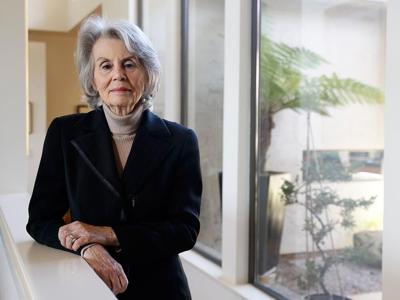
The local coalition was formed by former journalist Susan Meister, who lives in Pebble Beach and has taken up the cause of media literacy with a passion. “The forces of disinformation are overwhelming and voluminous,” she says. “It’s a symptom of the sickness of our society right now. We don’t agree on anything, especially on facts.”
She hopes that eventually the Misinfo Day curriculum in Monterey County might be incorporated throughout the state. New legislation, Assembly Bill 873, requires media literacy education to be incorporated into all K-12 subjects over time.
I hope it takes. This is all much more engaging than the dry “Current Events” activity I grew up with in school. Our task was simply to cut out a newspaper article, then stand up in front of class to present a summary of the article. It was simply a reading comprehension exercise, and one that made me wrongly think the news was boring.
Misinfo Day should be far more interactive and relevant than just rehashing – it will invite students to ask questions and think about their own thought process.
Meister expects participants to ask: “Is it trying to persuade me of something? Am I emotionally reacting to it? I know something’s fishy, and now I know how to investigate it.” (These are, of course, useful tools for adults – and programming for adults is coming from the coalition later this year.)
Meister is hopeful, about the future. “We will get back to a fact-based society,” she says. “We have a formula, and our formula is understanding what we are looking at and critically evaluating it. I think it is achievable. But it will take years. I don’t think it will be in our lifetimes. But we start with the leaders of tomorrow.”
I asked West to help me imagine this future, in which we return to a fact-based society. What does that look like?
Some of his suggestions are remarkably simple. We would pause before sharing on social media (on whatever platforms of the future don’t yet exist) – “a little more thoughtful, less speedy.”
Ultimately, we’d learn to be discerning. We would understand we can’t be experts on everything – if you have questions about a vaccine, rely on experts on vaccines. Or for questions about ballot counting, experts on elections. The question is how to know which experts are genuine, and who to trust.
It’s important to note that none of this teaching is motivated by a particular politics, but establishing ground rules that enable informed politics. “We can build a more informed society,” West says. “I think most everyone wants that.”
(0) comments
Welcome to the discussion.
Log In
Keep it Clean. Please avoid obscene, vulgar, lewd, racist or sexually-oriented language.
PLEASE TURN OFF YOUR CAPS LOCK.
Don't Threaten. Threats of harming another person will not be tolerated.
Be Truthful. Don't knowingly lie about anyone or anything.
Be Nice. No racism, sexism or any sort of -ism that is degrading to another person.
Be Proactive. Use the 'Report' link on each comment to let us know of abusive posts.
Share with Us. We'd love to hear eyewitness accounts, the history behind an article.